• HOME
  • NEWS
  • EXPLORE
    • CAREER
      • Companies
      • Jobs
    • EVENTS
    • iGEM
      • News
      • Team
    • PHOTOS
    • VIDEO
    • WIKI
  • BLOG
  • COMMUNITY
    • FACEBOOK
    • INSTAGRAM
    • TWITTER
Saturday, May 16, 2026
BIOENGINEER.ORG
No Result
View All Result
  • Login
  • HOME
  • NEWS
  • EXPLORE
    • CAREER
      • Companies
      • Jobs
        • Lecturer
        • PhD Studentship
        • Postdoc
        • Research Assistant
    • EVENTS
    • iGEM
      • News
      • Team
    • PHOTOS
    • VIDEO
    • WIKI
  • BLOG
  • COMMUNITY
    • FACEBOOK
    • INSTAGRAM
    • TWITTER
  • HOME
  • NEWS
  • EXPLORE
    • CAREER
      • Companies
      • Jobs
        • Lecturer
        • PhD Studentship
        • Postdoc
        • Research Assistant
    • EVENTS
    • iGEM
      • News
      • Team
    • PHOTOS
    • VIDEO
    • WIKI
  • BLOG
  • COMMUNITY
    • FACEBOOK
    • INSTAGRAM
    • TWITTER
No Result
View All Result
Bioengineer.org
No Result
View All Result
Home NEWS Science News

Google Award for next generation Deep Learning education

Bioengineer by Bioengineer
February 24, 2020
in Science News
Reading Time: 2 mins read
0
IMAGE
Share on FacebookShare on TwitterShare on LinkedinShare on RedditShare on Telegram

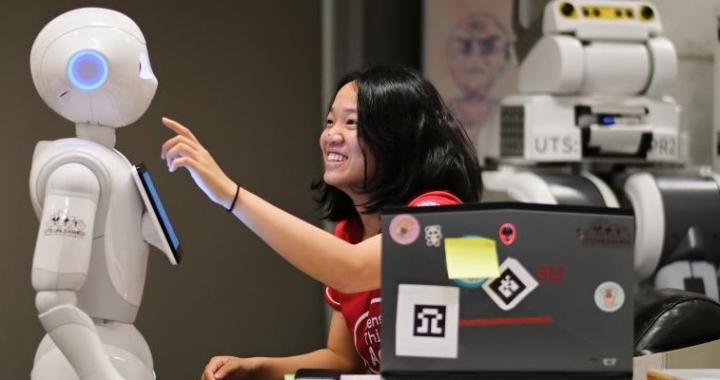
TensorFlow Award to University of Technology Sydney
IMAGE

Credit: Amos Wong

Distinguished Research Professor Mary-Anne Williams is the recipient of an inaugural Google TensorFlow Faculty Award to develop educational content with TensorFlow 2.0, Google’s open-source deep learning platform.

Director of The Magic Lab at UTS, this Award recognises Professor Williams’s position as a senior leader in the Australian and international artificial intelligence (AI) research community. It will provide financial support and technical collaboration with the Google TensorFlow team in Mountain View California to design and develop machine learning experiences, plus Google Cloud credits and access to fast Tensor Processing Units (custom-built computer chips made for machine learning with Big Data).

Professor Williams’ research is transdisciplinary, using human-centric methods from behavioural economics, choice theory, belief revision, machine learning and AI. She leads a team of researchers and students exploring advanced technologies leading to the disruptive adoption of autonomous systems that will transform business and society.

“We are increasingly reliant on the perceptions, decisions and actions of AI, and need to develop trust and confidence in AI, to be sure it is safe and reliable and that its decision – making is transparent, accountable, and trustworthy,” said Professor Williams.

“I am looking forward to working with our students to design responsible AI technologies that people can understand and trust. I will be helping UTS students develop exciting new approaches to eXplainable AI (XAI) by showing them how to use TensorFlow to teach AI to explain itself.”

The highly competitive Award is part of Google’s global program to support academics interested in teaching new, or improving existing, machine learning courses, as well as supporting Faculty working on diversity initiatives.

Marie Eftstathiou leads Google’s work with Australian universities and educators.

“We believe AI is a great tool to help tackle some of the biggest problems of our time and are excited to support Professor Williams and her team to help train Australian AI talent,” she said.

Competing under the name UTS Unleashed! a team from the Magic Lab took first place in the Social Robotics League at RoboCup 2019. This team demonstrated capabilities for human-robot interaction, voice interaction and image recognition that can develop the social behaviours and foundational skills that allow robots to see, hear, follow and talk to people using fluent multimodal robot-human communication, language, lights, sound, and gestures.

###

Media Contact
Grainne Murphy
[email protected]
61-427-564-973

Original Source

https://www.uts.edu.au/about/faculty-engineering-and-information-technology/news/new-award-supports-next-generation-deep

Tags: Computer ScienceResearch/DevelopmentRobotry/Artificial IntelligenceTechnology/Engineering/Computer Science
Share12Tweet8Share2ShareShareShare2

Related Posts

Congenital Heart Disease’s Lasting Impact on Brain Health — Technology and Engineering

Congenital Heart Disease’s Lasting Impact on Brain Health

May 16, 2026

Metabolic Stress Worsens Parkinson’s via Mitochondrial Ferroptosis

May 16, 2026

Four New Hydroxyl Fatty Acids from Bacillus sp.

May 16, 2026

Validating B-IPQ Short Form for Older Colombians

May 16, 2026
Please login to join discussion

POPULAR NEWS

  • Research Indicates Potential Connection Between Prenatal Medication Exposure and Elevated Autism Risk

    844 shares
    Share 338 Tweet 211
  • New Study Reveals Plants Can Detect the Sound of Rain

    730 shares
    Share 291 Tweet 182
  • Salmonella Haem Blocks Macrophages, Boosts Infection

    62 shares
    Share 25 Tweet 16
  • Breastmilk Balances E. coli and Beneficial Bacteria in Infant Gut Microbiomes

    58 shares
    Share 23 Tweet 15

About

We bring you the latest biotechnology news from best research centers and universities around the world. Check our website.

Follow us

Recent News

Congenital Heart Disease’s Lasting Impact on Brain Health

Metabolic Stress Worsens Parkinson’s via Mitochondrial Ferroptosis

Four New Hydroxyl Fatty Acids from Bacillus sp.

Subscribe to Blog via Email

Enter your email address to subscribe to this blog and receive notifications of new posts by email.

Join 82 other subscribers
  • Contact Us

Bioengineer.org © Copyright 2023 All Rights Reserved.

Welcome Back!

Login to your account below

Forgotten Password?

Retrieve your password

Please enter your username or email address to reset your password.

Log In
No Result
View All Result
  • Homepages
    • Home Page 1
    • Home Page 2
  • News
  • National
  • Business
  • Health
  • Lifestyle
  • Science

Bioengineer.org © Copyright 2023 All Rights Reserved.