• HOME
  • NEWS
  • EXPLORE
    • CAREER
      • Companies
      • Jobs
    • EVENTS
    • iGEM
      • News
      • Team
    • PHOTOS
    • VIDEO
    • WIKI
  • BLOG
  • COMMUNITY
    • FACEBOOK
    • INSTAGRAM
    • TWITTER
Saturday, February 7, 2026
BIOENGINEER.ORG
No Result
View All Result
  • Login
  • HOME
  • NEWS
  • EXPLORE
    • CAREER
      • Companies
      • Jobs
        • Lecturer
        • PhD Studentship
        • Postdoc
        • Research Assistant
    • EVENTS
    • iGEM
      • News
      • Team
    • PHOTOS
    • VIDEO
    • WIKI
  • BLOG
  • COMMUNITY
    • FACEBOOK
    • INSTAGRAM
    • TWITTER
  • HOME
  • NEWS
  • EXPLORE
    • CAREER
      • Companies
      • Jobs
        • Lecturer
        • PhD Studentship
        • Postdoc
        • Research Assistant
    • EVENTS
    • iGEM
      • News
      • Team
    • PHOTOS
    • VIDEO
    • WIKI
  • BLOG
  • COMMUNITY
    • FACEBOOK
    • INSTAGRAM
    • TWITTER
No Result
View All Result
Bioengineer.org
No Result
View All Result
Home NEWS Science News

Glowing bacteria detect buried landmines

Bioengineer by Bioengineer
April 11, 2017
in Science News
Reading Time: 2 mins read
0
Share on FacebookShare on TwitterShare on LinkedinShare on RedditShare on Telegram
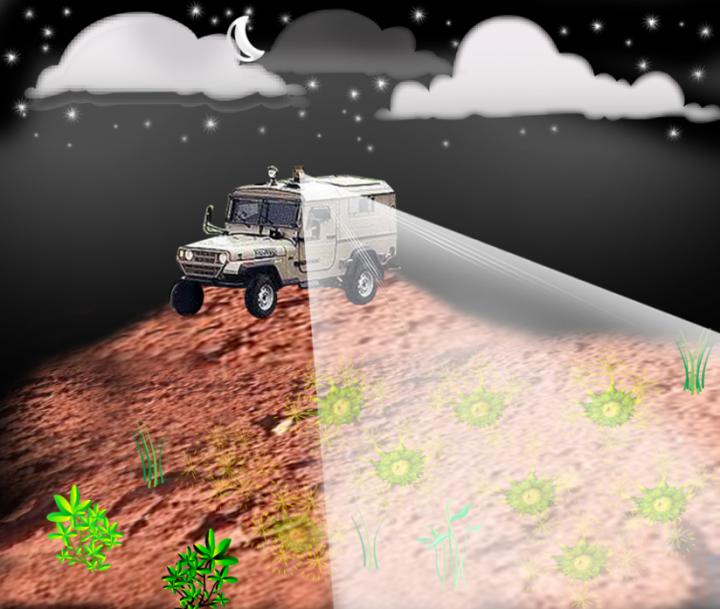
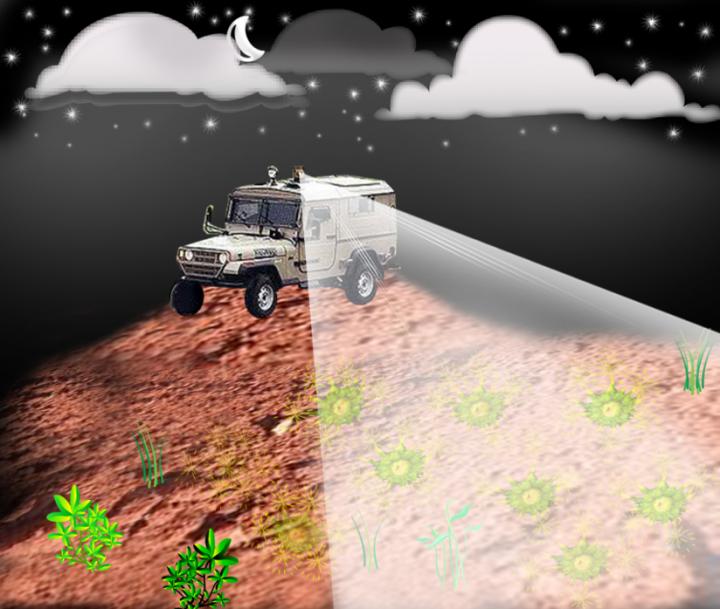
IMAGE

Credit: (Credit: Hebrew University)

The need for safe and efficient technologies for detecting buried landmines and unexploded ordnance is a humanitarian issue of immense global proportions. About half a million people around the world are suffering from mine-inflicted injuries, and each year an additional 15 to 20 thousand more people are injured or killed by these devices. More than 100 million such devices are still buried in over 70 countries.

The major technical challenge in clearing minefields is detecting the mines. The technologies used today are not much different from those used in World War II, requiring detection teams to risk life and limb by physically entering the minefields. Clearly, there is a critical need for an efficient solution for the remote detection of buried landmines and unexploded ordnance.

Researchers from the Hebrew University of Jerusalem now report a potential answer to this need. Writing in the journal Nature Biotechnology, they present a novel, functional system combining lasers and bacteria to remotely map the location of buried landmines and unexploded ordnance.

The system is based on the observation that all landmines leak minute quantities of explosive vapors, which accumulate in the soil above them and serve as markers for their presence. The researchers molecularly engineered live bacteria that emit a fluorescent signal when they come into contact with these vapors. This signal can be recorded and quantified from a remote location.

The bacteria were encapsulated in small polymeric beads, which were scattered across the surface of a test field in which real antipersonnel landmines were buried. Using a laser-based scanning system, the test field was remotely scanned and the location of the buried landmines was determined. This appear to be the first demonstration of a functional standoff landmine detection system.

"Our field data show that engineered biosensors may be useful in a landmine detection system. For this to be possible, several challenges need to be overcome, such as enhancing the sensitivity and stability of the sensor bacteria, improving scanning speeds to cover large areas, and making the scanning apparatus more compact so it can be used on board a light unmanned aircraft or drone," said Prof. Shimshon Belkin, from the Hebrew University's Alexander Silberman Institute of Life Sciences, who was responsible for genetically engineering the bacterial sensors.

###

Research groups participating in this study at the Hebrew University were led by Prof. Shimshon Belkin at the Alexander Silberman Institute of Life Sciences (genetic engineering of the bacterial sensors); Prof. Aharon J. Agranat at the Department of Applied Physics and the Brojde Center for Innovative Engineering and Computer Science (design and construction of the remote scanning system); and Prof. Amos Nussinovitch at the Robert H. Smith Faculty of Agriculture, Food and Environment (bacteria encapsulation in polymeric beads).

Media Contact

Dov Smith
[email protected]
972-258-82844
@HebrewU

http://new.huji.ac.il/en

############

Story Source: Materials provided by Scienmag

Share12Tweet8Share2ShareShareShare2

Related Posts

Palmitoylation of Tfr1 Drives Platelet Ferroptosis and Exacerbates Liver Damage in Heat Stroke

February 7, 2026

Oxygen-Enhanced Dual-Section Microneedle Patch Improves Drug Delivery and Boosts Photodynamic and Anti-Inflammatory Treatment for Psoriasis

February 7, 2026

Scientists Identify SARS-CoV-2 PLpro and RIPK1 Inhibitors Showing Potent Synergistic Antiviral Effects in Mouse COVID-19 Model

February 7, 2026

Neg-Entropy: The Key Therapeutic Target for Chronic Diseases

February 7, 2026
Please login to join discussion

POPULAR NEWS

  • Robotic Ureteral Reconstruction: A Novel Approach

    Robotic Ureteral Reconstruction: A Novel Approach

    82 shares
    Share 33 Tweet 21
  • Digital Privacy: Health Data Control in Incarceration

    63 shares
    Share 25 Tweet 16
  • Study Reveals Lipid Accumulation in ME/CFS Cells

    57 shares
    Share 23 Tweet 14
  • Breakthrough in RNA Research Accelerates Medical Innovations Timeline

    53 shares
    Share 21 Tweet 13

About

We bring you the latest biotechnology news from best research centers and universities around the world. Check our website.

Follow us

Recent News

Palmitoylation of Tfr1 Drives Platelet Ferroptosis and Exacerbates Liver Damage in Heat Stroke

Oxygen-Enhanced Dual-Section Microneedle Patch Improves Drug Delivery and Boosts Photodynamic and Anti-Inflammatory Treatment for Psoriasis

Scientists Identify SARS-CoV-2 PLpro and RIPK1 Inhibitors Showing Potent Synergistic Antiviral Effects in Mouse COVID-19 Model

Subscribe to Blog via Email

Enter your email address to subscribe to this blog and receive notifications of new posts by email.

Join 73 other subscribers
  • Contact Us

Bioengineer.org © Copyright 2023 All Rights Reserved.

Welcome Back!

Login to your account below

Forgotten Password?

Retrieve your password

Please enter your username or email address to reset your password.

Log In
No Result
View All Result
  • Homepages
    • Home Page 1
    • Home Page 2
  • News
  • National
  • Business
  • Health
  • Lifestyle
  • Science

Bioengineer.org © Copyright 2023 All Rights Reserved.