


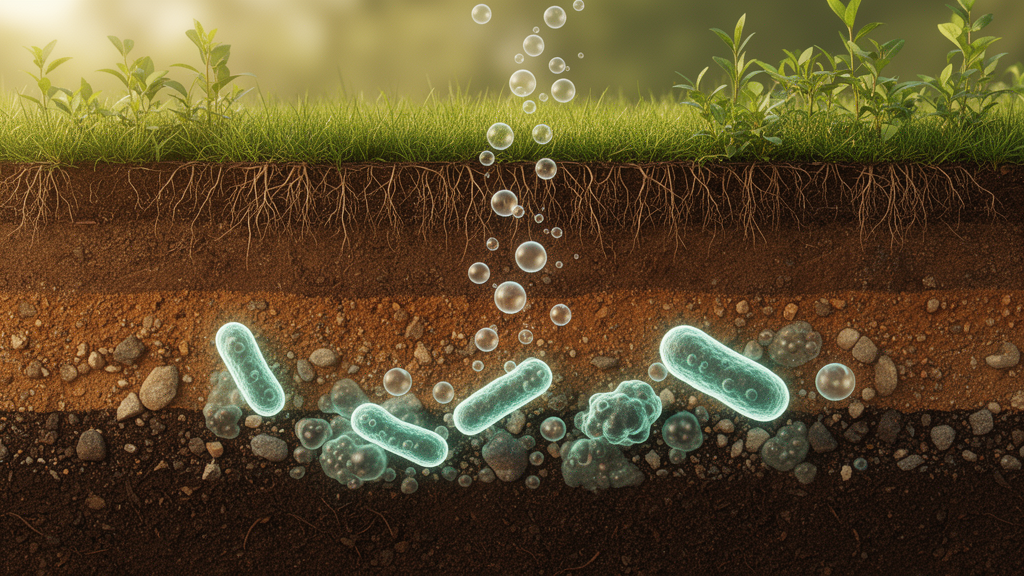
The study, published as open access research in Environmental Microbiome on 11 October 2026, analyzed 904 metagenomes spanning seven ecosystem types to characterize methanogenic pathway potential on a global scale.
The process is carried out by diverse archaeal lineages that enter the methanogenic pathway through distinct substrates. Until now, however, how this pathway potential is organized across contrasting environmental microbiomes had remained insufficiently understood, a gap the new genome-resolved analysis set out to close.
The metagenomic survey revealed a recurring hierarchy of pathway contributions across ecosystems. Yet that ordering was not uniform: the relative contributions of the three pathways varied significantly among ecosystems, and those differences were associated with soil organic carbon, pH and temperature-related variables.
To test whether genomic potential translates into actual activity, the researchers turned to metatranscriptomic data from wetland soils, peatlands and paddy soils. At the ecosystem level, pathway expression patterns were broadly consistent with the metagenomic pathway profiles, lending ecological weight to the DNA-based maps. But the transcriptomes also revealed differences between genomic potential and transcriptional activity, a reminder that the genes a community carries do not always match the work it is doing at a given moment.
The study’s second pillar was genomic. From the metagenomes, the team reconstructed 110 high-quality methanogen metagenome-assembled genomes and assigned each to one of four functional guilds: acetoclastic, hydrogenotrophic, methylotrophic and multi-pathway. This genome-resolved framework allowed the authors to connect pathway-level functional variation directly to the microbial populations capable of carrying it out, rather than inferring function from broad taxonomic surveys alone.
With those genomes in hand, the researchers found that ecosystem-specific differences in pathway composition were associated with methanogen guild composition. Intriguingly, similar guild composition patterns could be maintained by distinct taxonomic lineages, indicating substantial lineage composition variation within guilds. In other words, two communities can look functionally equivalent at the guild level while being built from evolutionarily different methanogens, a form of functional redundancy with taxonomic turnover beneath it.
The associations were not uniform across guild types. Methanogen taxa differed in how strongly they were linked to pathway composition, and taxa assigned to single pathway guilds showed stronger associations with pathway differentiation than multi-pathway taxa did.
Taken together, the findings suggest that methanogenic pathway potential across soil and sediment microbiomes is associated with three intertwined layers: environmental gradients such as organic carbon, pH and temperature; the composition of methanogen functional guilds; and lineage composition variation within those guilds. By linking pathway-level functional potential to methanogen community composition, the study provides a genome-resolved basis for understanding why methane production potential differs from one anaerobic environment to another, from peatlands to paddies to sediments. The authors note that the article is being shared early as peer-reviewed, accepted research, citable with a permanent DOI, with a final Version of Record to follow.
Subject of Research: Global variation in methanogenic pathway potential across soil and sediment microbiomes
Article Title: Environmental gradients and methanogen guild composition underlie global variation in methanogenic pathway potential across soil and sediment microbiomes
Article References: Zhang, L., Peng, J., Lu, C., Dong, H., & Ma, B. (2026). Environmental gradients and methanogen guild composition underlie global variation in methanogenic pathway potential across soil and sediment microbiomes. Environmental Microbiome. https://doi.org/10.1186/s40793-026-00973-w
Image Credits: AI Generated
DOI: 10.1186/s40793-026-00973-w
Keywords: methanogenesis, methanogens, metagenomics, soil microbiome, sediment, acetoclastic, hydrogenotrophic, methylotrophic, metagenome-assembled genomes, wetlands, peatlands, paddy soils
News Source: Violet Maxwell. (October 29, 2026). Global survey links soil methane pathways to environment and methanogen guilds. Scienmag.



