• HOME
  • NEWS
  • EXPLORE
    • CAREER
      • Companies
      • Jobs
    • EVENTS
    • iGEM
      • News
      • Team
    • PHOTOS
    • VIDEO
    • WIKI
  • BLOG
  • COMMUNITY
    • FACEBOOK
    • INSTAGRAM
    • TWITTER
Friday, July 3, 2026
BIOENGINEER.ORG
No Result
View All Result
  • Login
  • HOME
  • NEWS
  • EXPLORE
    • CAREER
      • Companies
      • Jobs
        • Lecturer
        • PhD Studentship
        • Postdoc
        • Research Assistant
    • EVENTS
    • iGEM
      • News
      • Team
    • PHOTOS
    • VIDEO
    • WIKI
  • BLOG
  • COMMUNITY
    • FACEBOOK
    • INSTAGRAM
    • TWITTER
  • HOME
  • NEWS
  • EXPLORE
    • CAREER
      • Companies
      • Jobs
        • Lecturer
        • PhD Studentship
        • Postdoc
        • Research Assistant
    • EVENTS
    • iGEM
      • News
      • Team
    • PHOTOS
    • VIDEO
    • WIKI
  • BLOG
  • COMMUNITY
    • FACEBOOK
    • INSTAGRAM
    • TWITTER
No Result
View All Result
Bioengineer.org
No Result
View All Result
Home NEWS Science News Health

Giving the immune system a double boost against cancer

Bioengineer by Bioengineer
October 30, 2020
in Health
Reading Time: 2 mins read
0
IMAGE
Share on FacebookShare on TwitterShare on LinkedinShare on RedditShare on Telegram

IMAGE

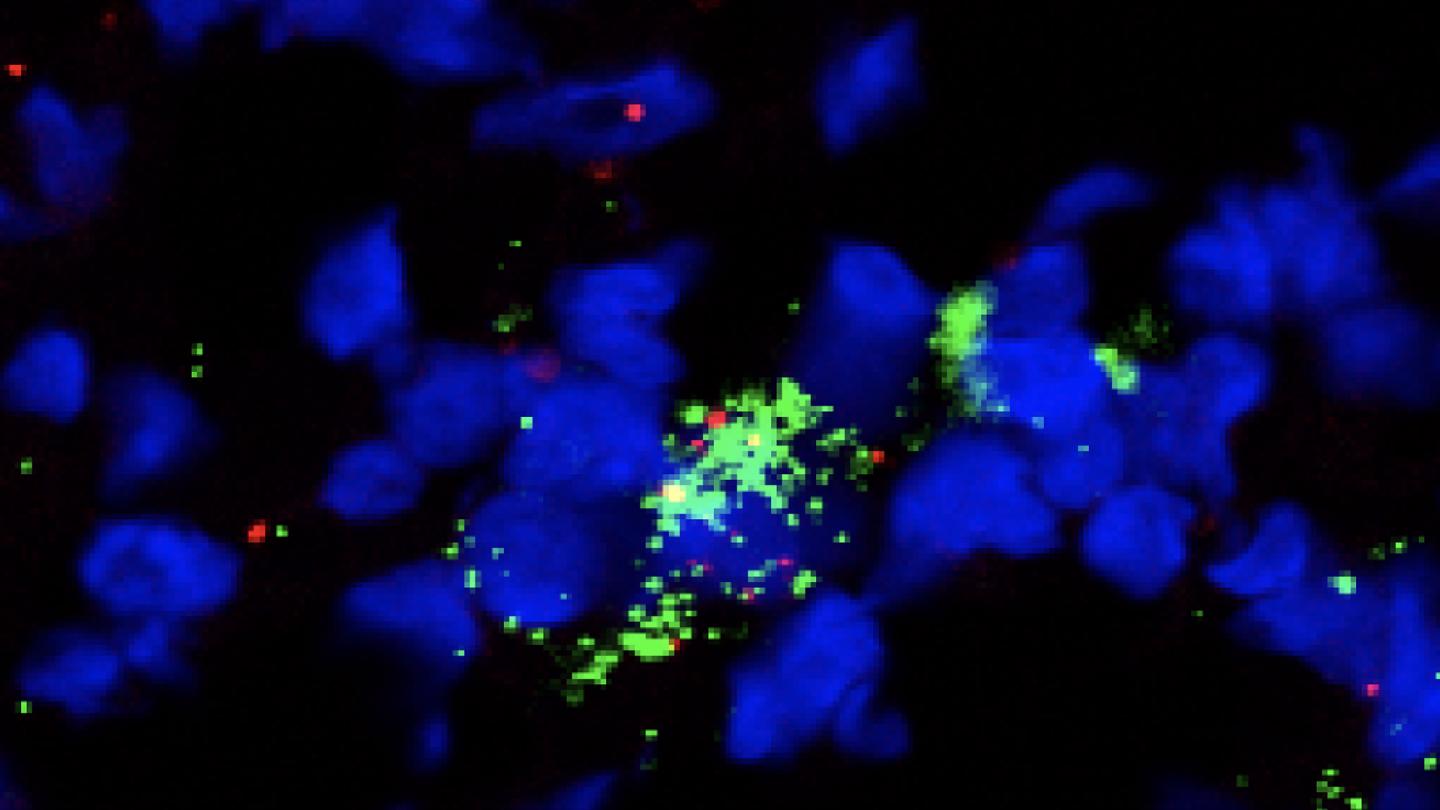
Credit: CSHL, 2020

Cancer immunotherapies, which empower patients’ immune systems to eliminate tumors, are revolutionizing cancer treatment. Many patients respond well to these treatments, sometimes experiencing long-lasting remissions. But some cancers remain difficult to treat with immunotherapy, and expanding the impact of the approach is a high priority.

In the October 30 issue of the Proceedings of the National Academy of Sciences, a team led by Cold Spring Harbor Laboratory scientists Tobias Janowitz and Douglas Fearon together with Duncan Jodrell at the Cancer Research UK Cambridge Institute and Centre, University of Cambridge reports on a clinical trial of a drug that induces an integrated immune response in the tumors of patients with cancer types that do not usually respond to immunotherapy. The researchers hope the potential treatment might make such tumors more responsive to the class of drugs known as immune checkpoint inhibitors.

Checkpoint inhibitors release natural brakes on the immune system, freeing it to find and destroy cancer cells. But they generally have not been effective against cancer cells with low levels of genetic mutation. Janowitz said:

“Those tumors often do not seem to be visible to the immune system and do not seem to be unmasked by these therapies that are currently available. And we have reasons to believe that that is because they can engage an immune suppressive pathway that keeps most of the immune cells out of the cancer cell nest.”

In this clinical trial, the research team interrupted that immunosuppressive pathway with a drug called plerixafor. The drug was administered continuously by I.V. for one week to 24 patients with either pancreatic cancer or colorectal cancer with a low tumor mutational burden. All patients had advanced disease, and biopsies were collected from metastatic tumors before and after treatment.

When the team analyzed those patient samples, they found that critical immune cells had infiltrated the tumors during the time patients received plerixafor, including a cell type known to summon and organize key players in the anti-cancer response. The finding was encouraging because the team detected changes that have also been observed in patients whose cancers responded well to checkpoint inhibitors.

Jodrell, who led the planning and patient recruitment for the clinical study, said, “I am delighted that the work of this multi-disciplinary team has translated important laboratory findings into patients, with the potential to make a difference in these hard-to-treat cancers.” A clinical trial based on this study is about to start recruitment and will test the effects of combining plerixafor with an approved checkpoint inhibitor.

###

This study included clinical collaborators at Weill Cornell Medicine.

Media Contact
Sara Roncero-Menendez
[email protected]

Original Source

https://www.cshl.edu/giving-the-immune-system-a-double-boost-against-cancer/

Related Journal Article

http://dx.doi.org/10.1073/pnas.2013644117

Tags: BiologycancerMedicine/Health
Share13Tweet8Share2ShareShareShare2

Related Posts

Unlocking the Mysteries of Alzheimer’s Disease

July 2, 2026

Linking Single-Cell Transcriptomes to Mouse Visual Circuits

July 2, 2026

Cross-Stage, Cross-Species Malaria CD8+ T Cell Antigens Identified

July 2, 2026

Food Web Complexity Drives Biodiversity Impact

July 2, 2026
Please login to join discussion

POPULAR NEWS

  • Detection of EDCs in Breast Milk and Infant Urine Up to Six Months Highlights Early Exposure Risks

    77 shares
    Share 31 Tweet 19
  • Saying Goodbye to PGY-6: Pediatric Fellowship Realities

    103 shares
    Share 41 Tweet 26
  • New Drug Candidate Developed at McMaster Shows Potential for Treating Brain Cancer

    58 shares
    Share 23 Tweet 15
  • KTU Researchers Explore Ultrasound’s Role in Enhancing Blood Flow Beyond Diagnostics

    53 shares
    Share 21 Tweet 13

About

BIOENGINEER.ORG

We bring you the latest biotechnology news from best research centers and universities around the world. Check our website.

Follow us

Recent News

Steatosis Drives Liver Metastasis Diversity in CRC

Unlocking the Mysteries of Alzheimer’s Disease

Pensoft Introduces New Peer-Reviewed Journal of Regeneration to Advance Restorative Biology Across Species

Subscribe to Blog via Email

Enter your email address to subscribe to this blog and receive notifications of new posts by email.

Join 83 other subscribers
  • Contact Us

Bioengineer.org © Copyright 2023 All Rights Reserved.

Welcome Back!

Login to your account below

Forgotten Password?

Retrieve your password

Please enter your username or email address to reset your password.

Log In
No Result
View All Result
  • Homepages
    • Home Page 1
    • Home Page 2
  • News
  • National
  • Business
  • Health
  • Lifestyle
  • Science

Bioengineer.org © Copyright 2023 All Rights Reserved.