

• HOME
  • NEWS
  • EXPLORE
    • CAREER
      • Companies
      • Jobs
    • EVENTS
    • iGEM
      • News
      • Team
    • PHOTOS
    • VIDEO
    • WIKI
  • BLOG
  • COMMUNITY
    • FACEBOOK
    • INSTAGRAM
    • TWITTER
Saturday, August 1, 2026
BIOENGINEER.ORG
No Result
View All Result
  • Login
  • HOME
  • NEWS
  • EXPLORE
    • CAREER
      • Companies
      • Jobs
        • Lecturer
        • PhD Studentship
        • Postdoc
        • Research Assistant
    • EVENTS
    • iGEM
      • News
      • Team
    • PHOTOS
    • VIDEO
    • WIKI
  • BLOG
  • COMMUNITY
    • FACEBOOK
    • INSTAGRAM
    • TWITTER
  • HOME
  • NEWS
  • EXPLORE
    • CAREER
      • Companies
      • Jobs
        • Lecturer
        • PhD Studentship
        • Postdoc
        • Research Assistant
    • EVENTS
    • iGEM
      • News
      • Team
    • PHOTOS
    • VIDEO
    • WIKI
  • BLOG
  • COMMUNITY
    • FACEBOOK
    • INSTAGRAM
    • TWITTER
No Result
View All Result
Bioengineer.org
No Result
View All Result
Home NEWS Science News Biology

Giant clams tell the story of past typhoons

Bioengineer by Bioengineer
May 24, 2018
in Biology
Reading Time: 2 mins read
0
Share on FacebookShare on TwitterShare on LinkedinShare on RedditShare on Telegram
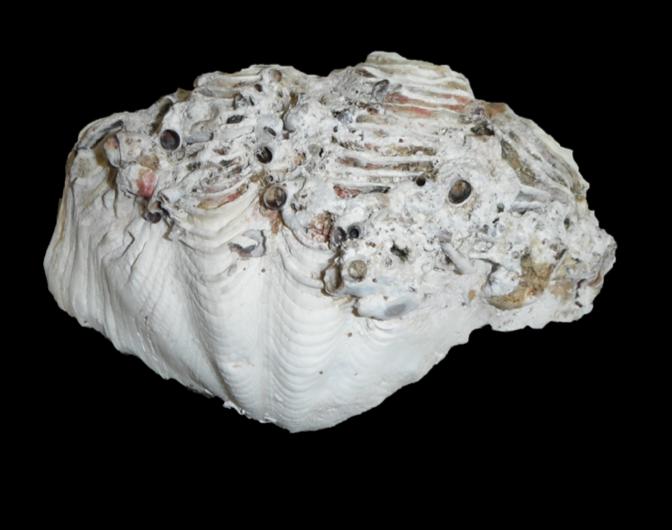
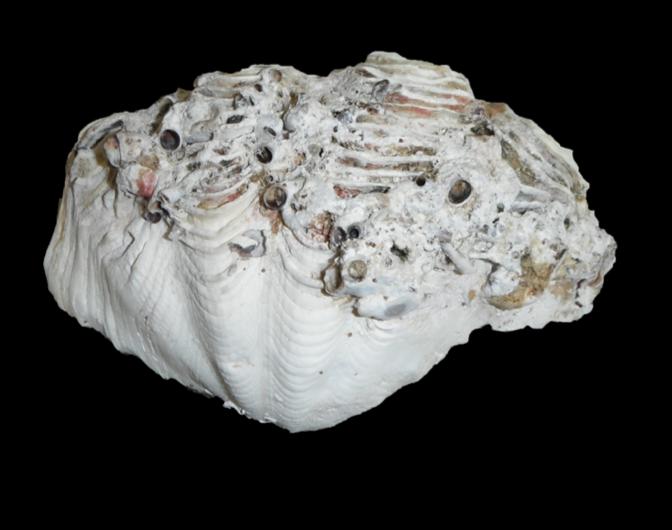
IMAGE

Credit: Komagoe T. et al., Journal of Geophysical Research: Biogeosciences, April 19, 2018

A highly precise method to determine past typhoon occurrences from giant clam shells has been developed, with the hope of using this method to predict future cyclone activity.

A team of researchers led by Tsuyoshi Watanabe of Hokkaido University has discovered that giant clams record short-term environmental changes, such as those caused by typhoons, in their shells. Analyzing the shell's microstructure and chemical composition could reveal data about typhoons that occurred before written records were available.

With the global warming of the climate, scientists are concerned that major tropical cyclones such as typhoons and hurricanes will increase. To better predict the frequency of these weather patterns, understanding typhoons in the past warmer periods of Earth's history is particularly important.

The giant clam Tridacna maxima species was specifically chosen due to its fast and highly precise shell growth rate; daily growth increments in the shell can be seen, similar to tree rings, allowing researchers to accurately investigate the clam's paleoenvironment. Live specimens were sampled from the waters surrounding Okinotori Island, which lies in the middle of a common path taken by typhoons before making landfall in Japan and other parts of Asia. The team analyzed the shell growth increment of each year, measuring its thickness, stable isotope ratio, and the barium/calcium ratio. They then compared the data with the past environmental records such as typhoons and water temperatures.

With these methods, the team found the growth pattern and chemical compositions in the shells were altered by short-term environmental changes in the area. Cooler ocean temperatures and other environmental stresses brought on by typhoons disrupted shell growth and increased the barium/calcium ratio as well as the stable isotope ratio.

"Since microstructural and geochemical features are well preserved in giant clam fossils, it may now be possible to reconstruct the timing and occurrence of past typhoons to a level of accuracy that was previously impossible," says Tsuyoshi Watanabe of Hokkaido University.

###

This study, conducted in collaboration with The University of Tokyo, KIKAI institute for Coral Reef Sciences, and Kyusyu University, was published April 19, 2018 in the Journal of Geophysical Research: Biogeosciences.

Media Contact

Naoki Namba
81-117-062-185
@hokkaido_uni

https://www.global.hokudai.ac.jp/

Original Source

https://www.global.hokudai.ac.jp/blog/giant-clams-tell-the-story-of-past-typhoons/ http://dx.doi.org/10.1029/2017JG004082


Share13Tweet8Share2ShareShareShare2

Related Posts

New discovery may help microbes withstand harsh industrial processes

New discovery may help microbes withstand harsh industrial processes

August 1, 2026
New genetic tool reveals how genes are regulated

New genetic tool reveals how genes are regulated

August 1, 2026

Scientists reveal how muscles preserve cells responsible for repair

August 1, 2026

Extracellular Vesicles May Help Weather Cytokine Storms

July 31, 2026
Please login to join discussion

POPULAR NEWS

  • Eating less protein may support healthier aging

    29 shares
    Share 12 Tweet 7
  • New discovery may help microbes withstand harsh industrial processes

    29 shares
    Share 12 Tweet 7
  • Randomized Study Tests Escalating Inhaled LTI-03 Doses for Idiopathic Pulmonary Fibrosis

    29 shares
    Share 12 Tweet 7
  • Electrical Impedance Tomography Shows Promise for Pediatric Clinical Care

    29 shares
    Share 12 Tweet 7

About

We bring you the latest biotechnology news from best research centers and universities around the world. Check our website.

Follow us

Recent News

Eating less protein may support healthier aging

New discovery may help microbes withstand harsh industrial processes

Randomized Study Tests Escalating Inhaled LTI-03 Doses for Idiopathic Pulmonary Fibrosis

Subscribe to Blog via Email

Enter your email address to subscribe to this blog and receive notifications of new posts by email.

Join 85 other subscribers
  • Contact Us

Bioengineer.org © Copyright 2023 All Rights Reserved.

Welcome Back!

Login to your account below

Forgotten Password?

Retrieve your password

Please enter your username or email address to reset your password.

Log In
No Result
View All Result
  • Homepages
    • Home Page 1
    • Home Page 2
  • News
  • National
  • Business
  • Health
  • Lifestyle
  • Science

Bioengineer.org © Copyright 2023 All Rights Reserved.
