Call to restore urban biodiversity, post-pandemic
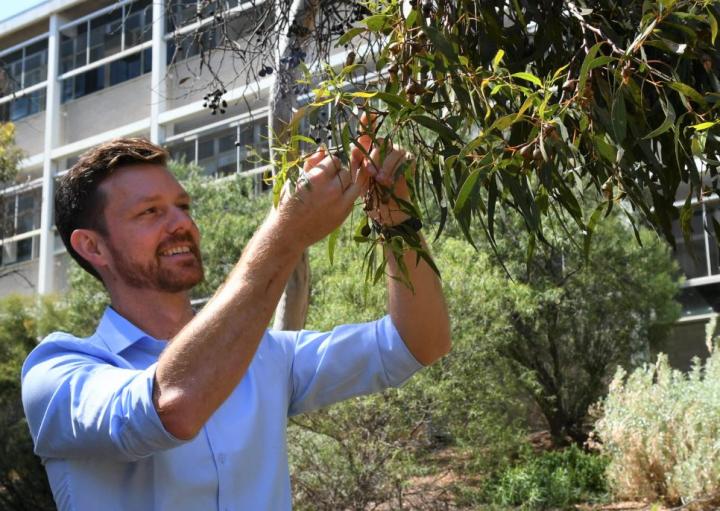
Credit: Flinders University
Billions of people using the Earth’s resources and changing or destroying ecosystems are not only creating the global environmental and climate crisis, but also compromising human health and long-term survival of our species, experts warn in an open letter to world leaders.
The #HealthyRecovery initiative, signed by more than 4500 health professionals from 90 countries, urges G20 Presidents and Prime Ministers to legislate and fund projects to enable ecological restoration for better human health as part of their stimulus packages in the aftermath of COVID-19.
One of the co-signatories, the Adelaide-based Healthy Urban Microbiome Initiative (HUMI) research group, is conducting a rearguard of research to support these vital initiatives.
“As the COVID-19 pandemic shows, global health systems are struggling to cope with the burden of disease, with scientists and health experts connecting public health interventions with ecological restoration, including for improved air quality and soil health,” says HUMI member, Flinders University scientist Dr Martin Breed in a new paper in EcoHealth.az
“An action plan to restore ecosystems for human health is imperative, and the COVID-19 pandemic presents a great opportunity to kickstart a real paradigm shift in global efforts,” says Flinders ecology lecturer Dr Breed, who is also an expert observer for the WHO Interagency Liaison Group on Biodiversity and Health.
“We now mostly live in biologically-impoverished cities, and our demand for environmental resources has led to this global environmental crisis,” he says.
“Ecological restoration is a clearly identifiable pathway to tackle some of our most critical challenges, as it becomes increasingly clear that the human and ecological health crises are intimately interwoven.
“Improved understanding of the links between ecological restoration and human health will catalyse important investments into this most fundamental of public health interventions, which will likely result in environmental and health gains that pay generational dividends.”
HUMI was established in 2016, and is a UN-backed initiative that seeks to restore the immune-restorative power of biodiverse green spaces in cities to maximise human health gains.
###
‘Ecosystem restoration – a public health intervention’ (2020) by MF Breed, AT Cross, K Wallace, K Bradby, E Flies, N Goodwin, M Jones, L Orlando, C Skelly, P Weinstein, J Arsonson has been published in EcoHealth (Nature Springer) DOI: 10.1007/s10393-020-01480-1 https:/
Participating groups include the ARC Centre for Mine Site Restoration, Curtin University; People, Cities and Nature, University of Waikato NZ; Gondwana Link, WA; Healthy Landscapes Group and School of Natural Sciences, University of Tasmania; EcoHealth Network; Economics in Context Initiative and School of Public Health, Boston University USA; Public Health Dorset UK, School of Public Health, University of Adelaide; and Missouri Botanical Garden, USA.
‘We have witnessed first hand how fragile communities can be when their health, food security and freedom to work are interrupted by a common threat. The layers of this ongoing tragedy are many, and magnified by inequality and underinvestment in public health systems. We have witnessed death, disease and mental distress at levels not seen for decades.’ – From the #HealthyRecovery open letter to world leaders
Media Contact
Dr Martin Breed
[email protected]
Related Journal Article
http://dx.