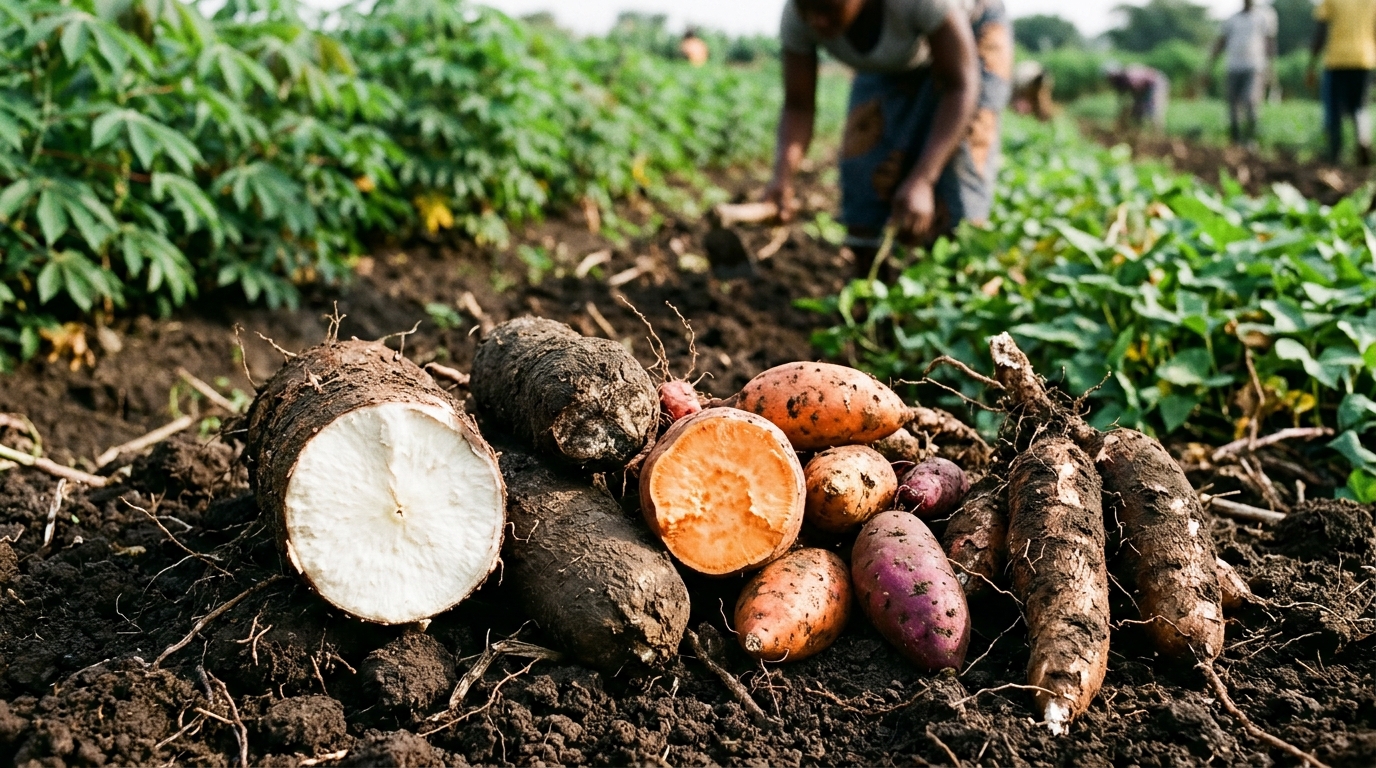
A comprehensive review of scientific literature from 2000 to the present highlights a persistent disconnect in the agricultural improvement of root, tuber, and bulb (RTB) crops. While these plants are critical for global food and nutritional security, providing high caloric efficiency and resilience in marginal environments, the translation of genomic discoveries into practical breeding tools remains limited. The study synthesizes data on germplasm resources, genetic variation, and advanced breeding techniques, revealing that despite the identification of numerous quantitative trait loci and candidate genes, a significant gap exists in validating these findings across diverse genetic backgrounds and environments.
RTB crops, including cassava, potato, sweet potato, yam, and taro, serve as the second most important source of carbohydrates after cereals. They often surpass grains in energy yield per unit of land, with cassava and yams producing significantly more calories per hectare than rice or wheat. Beyond their role as energy sources, these crops provide essential dietary fibre and micronutrients frequently lacking in cereal-based diets. For instance, many tubers supply substantial amounts of vitamin C, which can enhance the absorption of non-heme iron, while others contain bioactive phytochemicals with antioxidant and anti-inflammatory effects.
The review identifies a substantial gap between the conservation of RTB diversity and its effective utilization in breeding programs. Although national and international genebanks conserve thousands of accessions, characterization levels remain low. For example, only 46% of Allium bulb accessions have been characterized, while characterization levels for potato and yam accessions are 33% and 28%, respectively. This lack of phenotypic and genomic characterization hinders the ability of breeders to identify and deploy genetically diverse accessions with agronomically beneficial traits, limiting the potential for crop improvement.
Phenotyping underground storage organs presents a fundamental bottleneck for RTB crops. Unlike above-ground crops, precise estimation of below-ground traits is notoriously difficult and resource-intensive. The review notes that phenomic assessment of RTB crops generally falls behind that of above-ground crops due to the time and cost associated with extracting roots and tubers from the soil. Emerging technologies, such as ground-penetrating radar and digital-image-based phenotyping platforms, offer non-invasive solutions. For instance, a convolutional neural net-based system achieved 91% accuracy in predicting storage root age in cassava, while ground-penetrating radar has been used to predict root yield efficiently by combining above- and below-ground time series information.
Genetic variation for nutrient and non-nutrient traits is sufficient among analysed germplasm, with traditional landraces and wild relatives often showing superior nutritional profiles compared to modern cultivars. For example, wild yam species from the Koraput region of India exhibit significantly better physico-functional parameters than cultivated ones. Colored storage organs are generally more nutritious than those with white or yellow flesh, containing higher levels of phenolics, flavonoids, and carotenoids.
Advances in genomic selection are revolutionizing the breeding of biofortified RTB crops by shifting the emphasis from time-consuming field evaluations to predictive molecular approaches. Genomic selection allows breeders to estimate the breeding value of seedlings using genome-wide marker data, potentially shortening breeding cycles from six years to 12 to 24 months in crops like cassava. This acceleration is crucial for addressing urgent nutritional security challenges, particularly in regions where micronutrient deficiencies are prevalent. However, prediction accuracy varies among species due to differences in ploidy and genetic complexity, with diploid crops like cassava showing higher accuracy for traits controlled by major-effect genes.
Gene editing technologies, particularly CRISPR/Cas9, are initiating a paradigm shift in the biofortification of RTB crops. Unlike crossbreeding, which is often slow and limited by high heterozygosity, CRISPR-mediated editing allows for the precise modification of specific metabolic pathways without the permanent integration of foreign DNA. For example, researchers have successfully targeted starch-branching enzyme genes in potato to develop high-amylose lines with elevated resistant starch content. In cassava, CRISPR has been used to knock out genes involved in cyanogenic glycoside biosynthesis, significantly reducing hydrogen cyanide content and improving food safety.
Metabolic engineering offers another avenue for enhancing the nutritional value of RTB crops by manipulating pigment biosynthesis pathways. The vibrant colours in crops such as potato and sweet potato are derived from the phenylpropanoid and isoprenoid pathways, which produce anthocyanins and carotenoids, respectively. By precisely manipulating the metabolic flux through these pathways, breeders can colour previously white-fleshed germplasm, resulting in increased levels of antioxidants and provitamin A. For instance, the overexpression of specific transcription factors in potato and sweet potato has led to the development of deep purple flesh with high antioxidant capacity.
Consumer acceptance remains a critical factor in the success of biofortified RTB crops. Sensory attributes such as taste, texture, and appearance are the main drivers of consumer acceptance in many regions of the Global South. Pro-vitamin A sweet potato is the most studied of the biofortified RTB crops for sensory attributes and is generally well accepted. However, food neophobia can be a barrier, particularly when nutritional changes are visible. Providing consumers with nutritional and health information has been shown to improve cultural acceptability and address concerns about colour, taste, and texture.
The review concludes that while research demonstrates ample genetic diversity and foundational insights into trait inheritance, genomic and nutritional discoveries have not yet translated consistently into applied breeding. Overcoming these limitations requires a decisive shift toward answering core research questions regarding the functional validation of putative genes across variable genetic backgrounds and complex environments. Additionally, the field must address how prediction accuracy and genetic gain can be maximized through advanced multi-trait genomic selection while navigating pleiotropic trade-offs between productivity, nutritional traits, and consumer acceptance.
Future efforts must prioritize the development of accurate, affordable, and scalable phenotyping solutions to bridge the genome-to-phenome gap. This includes improving genomic and phenotypic characterization of germplasm resources, resolving taxonomic uncertainty, and developing core collections. By addressing these fundamental bottlenecks, researchers can unlock the full potential of RTB crops to enhance food and nutritional security in the Global South, ensuring that these vital plants continue to support millions of people worldwide.
Beyond nutritional gains, food safety considerations require addressing intrinsic antinutrients, natural toxins, and allergenic proteins present across root and tuber species. In cassava, all plant tissues contain the cyanogenic glycosides linamarin and lotaustralin, which are synthesized in leaves from the amino acid precursors valine and isoleucine. Cellular damage triggers enzymatic hydrolysis, releasing poisonous hydrogen cyanide under low-pH acidic conditions. Chronic ingestion of high cyanogen volumes alongside low dietary protein intake can cause konzo, an irreversible paralysis of the legs. While breeding efforts explore early detection markers and gene knockouts, traditional processing remains essential for food security; grating followed by fermentation or sun drying eliminates 95 to 99 percent of cyanogenic compounds. Potato tubers present different health risks from steroidal glycoalkaloids, primarily solanine and chaconine, which accumulate in sprouts, peel, green skin, and eyes following light exposure or mechanical injury. At elevated concentrations, glycoalkaloids irritate the gastrointestinal tract and cause severe neurological disturbances. Additionally, specific proteins can provoke hypersensitivity in sensitive consumers. Potato patatin acts as an IgE-mediated storage allergen that elicits oral itching or hives, while pathogen-defense proteins such as PR-10 in raw potatoes and carrots, as well as PR-4 in turnips, induce oral allergy syndrome through structural cross-reactivity with birch pollen or latex.
The physiological uptake and accumulation of soil elements further dictate the nutritional value and safety of edible underground tissues. Root and tuber crops absorb essential minerals through vascular xylem pathways driven by water transpiration, but secondary chemical interactions frequently generate antinutritional compounds. In taro corms and table beet roots, absorbed calcium binds with oxalic acid to synthesize insoluble calcium oxalates. These crystalline compounds irritate the mouth and throat, substantially decrease the dietary bioavailability of calcium, and contribute to kidney stone formation. Conversely, Allium crops such as garlic and onions exploit sulfate transporters to absorb sulfur alongside selenium, incorporating selenate into beneficial organosulfur compounds. Environmental contamination introduces serious dietary hazards through divalent cation transporters. In metal-enriched geographic corridors across the Global South characterized by accelerated mineral weathering and industrial activity, roots readily accumulate toxic heavy metals.
Tangible nutritional interventions demonstrate that targeted biofortification delivers measurable physiological benefits in vulnerable communities suffering from hidden hunger. Randomized field trials in Mozambique and Uganda confirmed that introducing orange-fleshed sweet potatoes increased household adoption rates by 61 to 68 percent, which successfully doubled vitamin A intake among consuming children. Direct human dietary interventions further highlight the physiological efficacy of mineral biofortification. In clinical trials evaluating iron absorption using isotopic erythrocyte tracing, women consuming conventionally bred, iron-biofortified yellow-fleshed potatoes absorbed nearly 46 percent more total iron than those receiving non-biofortified controls. Similarly, stable isotope evaluations among 37 women eating 500 grams of biofortified potatoes twice daily demonstrated significantly higher absorbable zinc retention, facilitated by reduced levels of inhibitory phytate chelators. Complementing conventional breeding schemes, genetic engineering strategies targeting mineral sink strength have multiplied micronutrient storage in cassava roots, where co-expressing ferritin and vacuolar transporters increased iron concentrations 7- to 18-fold and zinc 3- to 10-fold with confirmed high human bioavailability.
Subject of Research: Genomic and breeding challenges in improving root, tuber, and bulb crops for food security
Article Title: Modern breeding of root, tuber, and bulb crops to enhance food and nutritional security
Article References: Ortiz, R., Dwivedi, S. L., Pelikan, A., & Goldman, I. L. (2026). Modern breeding of root, tuber, and bulb crops to enhance food and nutritional security. Theoretical and Applied Genetics, 139(11), Article 326. https://doi.org/10.1007/s00122-026-05426-z
Image Credits: AI Generated
DOI: 10.1007/s00122-026-05426-z
Keywords: root tuber bulb crops, genomic selection, biofortification, phenomics, CRISPR gene editing, nutritional security, germplasm conservation, metabolic engineering, cassava breeding, potato improvement, sweet potato, yam genetics, consumer acceptance, quantitative trait loci, hidden hunger
News Source: Juliet Wilcox. (November 12, 2026). Genomic Gaps Limit Breeding of Root and Tuber Crops. Scienmag.