• HOME
  • NEWS
  • EXPLORE
    • CAREER
      • Companies
      • Jobs
    • EVENTS
    • iGEM
      • News
      • Team
    • PHOTOS
    • VIDEO
    • WIKI
  • BLOG
  • COMMUNITY
    • FACEBOOK
    • INSTAGRAM
    • TWITTER
Sunday, August 16, 2026
BIOENGINEER.ORG
No Result
View All Result
  • Login
  • HOME
  • NEWS
  • EXPLORE
    • CAREER
      • Companies
      • Jobs
        • Lecturer
        • PhD Studentship
        • Postdoc
        • Research Assistant
    • EVENTS
    • iGEM
      • News
      • Team
    • PHOTOS
    • VIDEO
    • WIKI
  • BLOG
  • COMMUNITY
    • FACEBOOK
    • INSTAGRAM
    • TWITTER
  • HOME
  • NEWS
  • EXPLORE
    • CAREER
      • Companies
      • Jobs
        • Lecturer
        • PhD Studentship
        • Postdoc
        • Research Assistant
    • EVENTS
    • iGEM
      • News
      • Team
    • PHOTOS
    • VIDEO
    • WIKI
  • BLOG
  • COMMUNITY
    • FACEBOOK
    • INSTAGRAM
    • TWITTER
No Result
View All Result
Bioengineer.org
No Result
View All Result
Home NEWS Science News Biology

Genome published of the small hive beetle, a major honey bee parasite

Bioengineer by Bioengineer
December 20, 2018
in Biology
Reading Time: 3 mins read
0
IMAGE
Share on FacebookShare on TwitterShare on LinkedinShare on RedditShare on Telegram

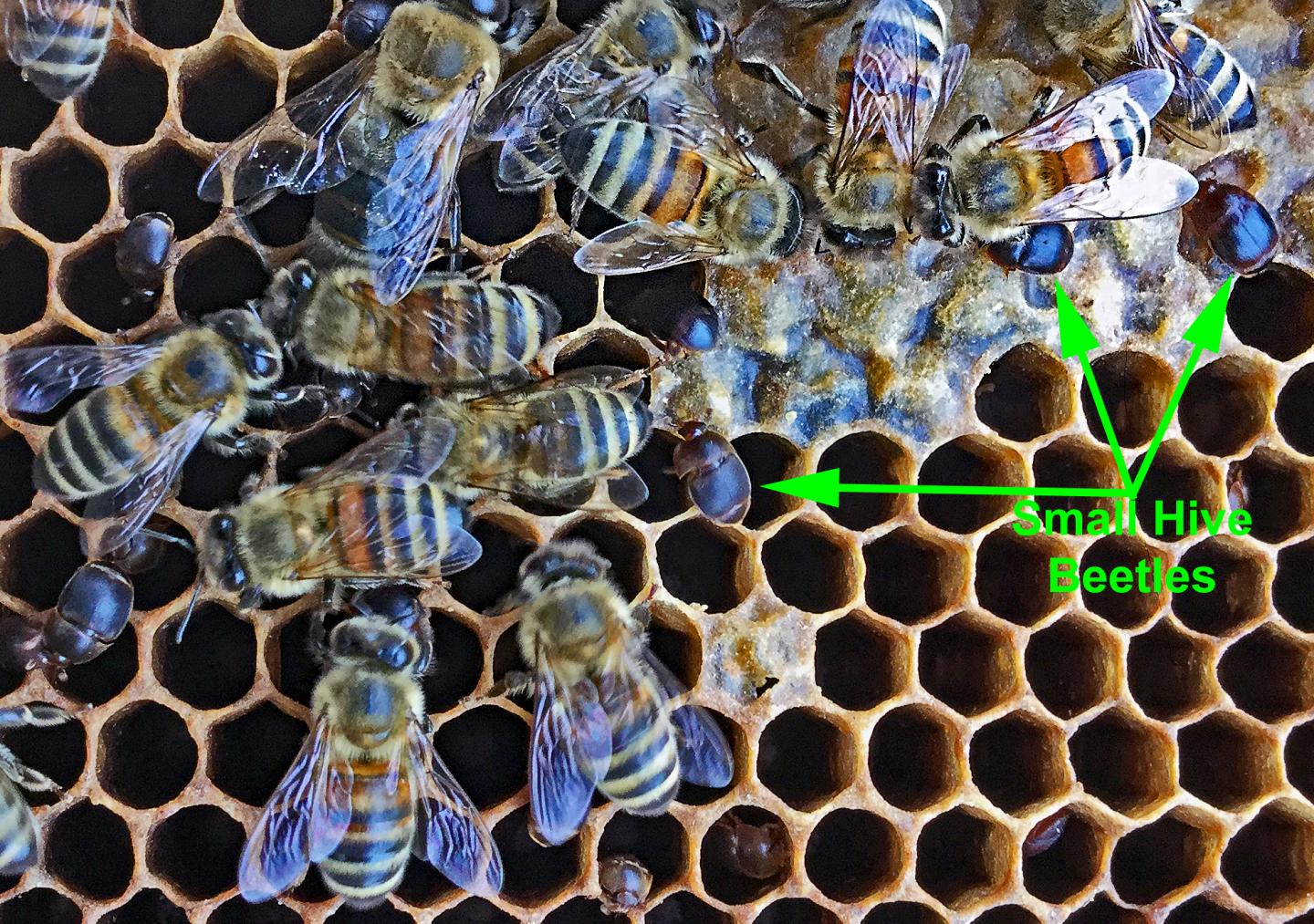
One of only seven beetle genomes published
IMAGE

Credit: Agricultural Research Service-USDA


BELTSVILLE, MARYLAND, December 20, 2018–Beekeepers and researchers will welcome the unveiling of the small hive beetle’s genome by Agricultural Research Service (ARS) scientists and their colleagues. The small hive beetle (SHB) is a major parasite problem of honey bees for which there are few effective treatments.

The SHB (Aethina tumida Murray) genome–a genome is the sum total of all an organism’s DNA; a gene codes for a single protein to be built–is available at https://www.ncbi.nlm.nih.gov/genome/annotation_euk/Aethina_tumida/100 and was recently published in GigaScience.

This information will provide crucial keys that should lead to better, more targeted SHB control methods, including insecticidal treatments and possibly even genetic/breeding solutions.

The SHB has a strong gene-guided system that lets the beetle detoxify many insecticides. Having the genome will allow researchers to gain a more precise understanding of these detoxification genes, so more effective choices for control treatments can be made.

“The big challenge is identifying control methods that will target SHBs but not harm honey bees,” said geneticist Jay Evans, who ran the project and is also leader of the ARS Bee Research Laboratory. “One strategy is to look for insecticides that hit pathways in the genome where the SHB has few or no detoxification genes. It would be even better if an insecticide could be identified for which the honey bee has detoxification genes but that the SHB doesn’t.

A native of sub-Saharan Africa, the SHB has spread to many other locations, including North America, Europe, Australia, and the Philippines. It was first found in the United States in 1996 and during the summer of 1998, the SHB was blamed for losses of more than 20,000 honey bee colonies in Florida alone.

Today, the SHB has spread throughout the United States. It is a major problem especially for queen breeders and honey production. SHBs eat everything and anything in a bee colony: pollen, brood, honey, dead adult bees and combs) and cause honey to ferment in the process. If the number of SHBs is high enough, adult bees will abscond from the hive.

One avenue to which the SHB genome has already pointed is where to look for clues for how the SHB finds beehives; what pheromones or other smells do SHBs follow to target honey bee colonies.

Although there are about 350,000 beetle species and subspecies, only seven beetle genomes, including the SHB, have been completed and published.

Completing the SHB genome takes on even more importance when you realize that among the SHB’s close relatives are the destructive and invasive Asian longhorned beetle along with other sap beetles that are pests of sweet corn, tomatoes, strawberries and other fruit and vegetable crops.

The Agricultural Research Service is the U.S. Department of Agriculture’s chief scientific in-house research agency. Daily, ARS focuses on solutions to agricultural problems affecting America. Each dollar invested in agricultural research results in $20 of economic impact.

###

Media Contact
Kim Kaplan
[email protected]
301-504-1637

Original Source

https://www.ars.usda.gov/news-events/news/research-news/2018/genome-published-of-the-small-hive-beetle-a-major-honey-bee-parasite/

Tags: AgricultureBiodiversityBioinformaticsBiotechnologyEntomologyForestryGenesGeneticsMolecular Biology
Share12Tweet8Share2ShareShareShare2

Related Posts

Strubbelig–NHL3 Receptor Complex Helps Arabidopsis Respond to Cellulose Deficiency

Strubbelig–NHL3 Receptor Complex Helps Arabidopsis Respond to Cellulose Deficiency

August 15, 2026
Bombyx mori Satellitome Analysis Reveals Evolutionary Stability, Dispersed Chromosomal Organization, Transposon Origins

Bombyx mori Satellitome Analysis Reveals Evolutionary Stability, Dispersed Chromosomal Organization, Transposon Origins

August 15, 2026

Synthetic pyrenoid reconstruction reveals EPYC1-driven carbon concentration mechanisms and evolution

August 15, 2026

Endophytic Flavobacterium boosts root hairs and drought tolerance through ERF–CEP5 signaling

August 15, 2026
Please login to join discussion

POPULAR NEWS

  • Imagining natural and extra robotic thumbs together strengthens kinesthetic sensorimotor networks

    29 shares
    Share 12 Tweet 7
  • PARP1 Drives Neuropathic Pain Through GPX4-Dependent Ferroptosis in Injured Mice’s Sensory Neurons

    29 shares
    Share 12 Tweet 7
  • Strubbelig–NHL3 Receptor Complex Helps Arabidopsis Respond to Cellulose Deficiency

    29 shares
    Share 12 Tweet 7
  • Bombyx mori Satellitome Analysis Reveals Evolutionary Stability, Dispersed Chromosomal Organization, Transposon Origins

    29 shares
    Share 12 Tweet 7

About

BIOENGINEER.ORG

We bring you the latest biotechnology news from best research centers and universities around the world. Check our website.

Follow us

Recent News

Imagining natural and extra robotic thumbs together strengthens kinesthetic sensorimotor networks

PARP1 Drives Neuropathic Pain Through GPX4-Dependent Ferroptosis in Injured Mice’s Sensory Neurons

Strubbelig–NHL3 Receptor Complex Helps Arabidopsis Respond to Cellulose Deficiency

Subscribe to Blog via Email

Enter your email address to subscribe to this blog and receive notifications of new posts by email.

Join 85 other subscribers
  • Contact Us

Bioengineer.org © Copyright 2023 All Rights Reserved.

Welcome Back!

Login to your account below

Forgotten Password?

Retrieve your password

Please enter your username or email address to reset your password.

Log In
No Result
View All Result
  • Homepages
    • Home Page 1
    • Home Page 2
  • News
  • National
  • Business
  • Health
  • Lifestyle
  • Science

Bioengineer.org © Copyright 2023 All Rights Reserved.