To provide important genomic data to inform research about Europe’s biodiversity, scientists from 48 different countries initiated the “European Reference Genome Atlas” (ERGA) in 2021. Along with over 600 researchers, scientists from the University of Göttingen contribute to ERGA to make up an essential transdisciplinary and transborder community of experts. Together, they want to produce extremely high-quality genome analyses, known as “reference genomes”. The aim is to establish genomic resources for around 200,000 species in Europe. ERGA highlights the importance of reference-quality genomes for conservation biology. However, such data is only available for a tiny proportion of species. The need to bridge this gap is emphasised in a perspective paper in Trends in Ecology and Evolution.
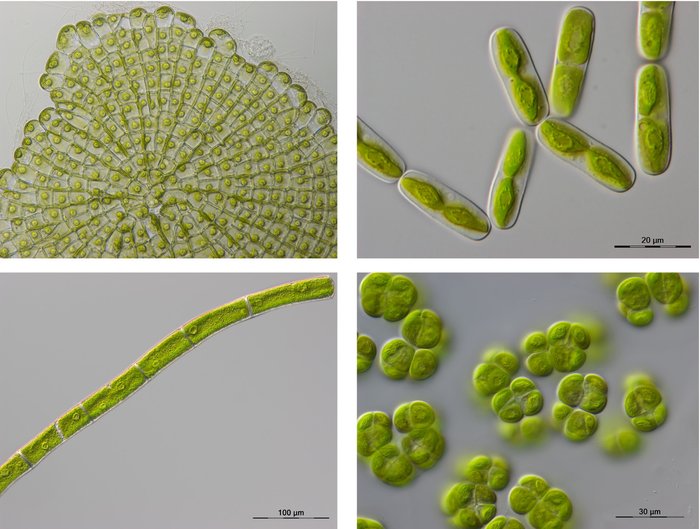
Credit: Dr Tatyana Darienko
To provide important genomic data to inform research about Europe’s biodiversity, scientists from 48 different countries initiated the “European Reference Genome Atlas” (ERGA) in 2021. Along with over 600 researchers, scientists from the University of Göttingen contribute to ERGA to make up an essential transdisciplinary and transborder community of experts. Together, they want to produce extremely high-quality genome analyses, known as “reference genomes”. The aim is to establish genomic resources for around 200,000 species in Europe. ERGA highlights the importance of reference-quality genomes for conservation biology. However, such data is only available for a tiny proportion of species. The need to bridge this gap is emphasised in a perspective paper in Trends in Ecology and Evolution.
ERGA is a “moonshot” proposal, meaning that it is ambitious and exploratory whilst being groundbreaking and addressing a huge problem. The project seeks to generate reference-quality genomes for the entire biodiversity across Europe (around 200 thousand species). Threatened species, as well as those important for agriculture, fisheries, pest control, and for the function and stability of ecosystems, are all considered critical biodiversity by ERGA—and will be prioritized in these efforts. These can be species from the most diverse groups of organisms.
Genomic research that uses genetic material to study individual organisms, populations and ecosystems greatly benefits from reference-quality genomes because these provide answers about the evolutionary make-up and adaptive potential of a species. The accuracy of these genomic resources significantly advances all fields of biological research and innovation. The availability of high-quality reference genomes for a representative fraction of species is essential for biodiversity conservation. Yet, they are available for only a small fraction of European species.
Analyzing a species’ genomic diversity can serve as an early warning system to estimate resilience, predict declines and inform strategic planning of conservation measures. Professor Christoph Bleidorn, head of Animal Evolution and Biodiversity at the University of Göttingen explains, “The European Reference Genome Atlas (ERGA) will enable us to develop new methods to monitor, manage and, most importantly, conserve biodiversity.” Professor Jan de Vries, University of Göttingen’s Institute of Microbiology and Genetics, adds: “The data generated by ERGA will be an absolute treasure trove for comparative genomics.”
The European Reference Genome Atlas (ERGA): https://www.erga-biodiversity.eu
Original publication: Giulio Formenti et al. “The era of reference genomes in conservation genomics”, Trends in Ecology and Evolution 2022. DOI: https://doi.org/10.1016/j.tree.2021.11.008
Contact:
Professor Christoph Bleidorn
University of Göttingen
Animal Evolution and Biodiversity
Johann-Friedrich-Blumenbach Institute for Zoology & Anthropology
Untere Karspuele 2, 37073 Göttingen, Germany
Tel.: +49 (0)551 3925511
Email: [email protected]
www.uni-goettingen.de/de/577460.html
Professor Jan de Vries
University of Göttingen
Faculty of Biology and Psychology
Institute of Microbiology and Genetics
Department of Applied Bioinformatics
Goldschmidtstraße 1, 37077 Göttingen
Tel: 0551 39-13995
Email: [email protected]
www.uni-goettingen.de/en/613776.html
DOI
10.1016/j.tree.2021.11.008
Method of Research
News article
Subject of Research
Not applicable
Article Title
The era of reference genomes in conservation genomics
Article Publication Date
24-Jan-2022