• HOME
  • NEWS
  • EXPLORE
    • CAREER
      • Companies
      • Jobs
    • EVENTS
    • iGEM
      • News
      • Team
    • PHOTOS
    • VIDEO
    • WIKI
  • BLOG
  • COMMUNITY
    • FACEBOOK
    • INSTAGRAM
    • TWITTER
Thursday, May 28, 2026
BIOENGINEER.ORG
No Result
View All Result
  • Login
  • HOME
  • NEWS
  • EXPLORE
    • CAREER
      • Companies
      • Jobs
        • Lecturer
        • PhD Studentship
        • Postdoc
        • Research Assistant
    • EVENTS
    • iGEM
      • News
      • Team
    • PHOTOS
    • VIDEO
    • WIKI
  • BLOG
  • COMMUNITY
    • FACEBOOK
    • INSTAGRAM
    • TWITTER
  • HOME
  • NEWS
  • EXPLORE
    • CAREER
      • Companies
      • Jobs
        • Lecturer
        • PhD Studentship
        • Postdoc
        • Research Assistant
    • EVENTS
    • iGEM
      • News
      • Team
    • PHOTOS
    • VIDEO
    • WIKI
  • BLOG
  • COMMUNITY
    • FACEBOOK
    • INSTAGRAM
    • TWITTER
No Result
View All Result
Bioengineer.org
No Result
View All Result
Home NEWS Science News Biology

Genetically encoded sensor tracks changes in oxygen levels with very high sensitivity

Bioengineer by Bioengineer
August 30, 2018
in Biology
Reading Time: 2 mins read
0
Share on FacebookShare on TwitterShare on LinkedinShare on RedditShare on Telegram
IMAGE

Credit: Toru Hisabori

Based on a protein from E. coli, scientists at Tokyo Institute of Technology have developed a fluorescent protein sensor able to provide real-time information on dynamic changes in oxygen levels with very high sensitivity. As the oxygen level is a major determinant of cellular function, the idea behind this sensor may revolutionize our ability to detect cellular changes of critical importance, such as in tumors and following stroke and heart attack.

Oxygen is a major player in the biochemical processes that make life on earth possible. Being able to rapidly and accurately measure oxygen levels inside living cells could be useful in several areas of biology, including physiology, medicine, and bioengineering. For example, oxygen levels in cancer cells can affect their response to anti-cancer therapies, while oxygen levels in tissues following a stroke or heart attack can influence treatment and recovery. In a recently published article in the journal Scientific Reports, Jiro Nomata and Toru Hisabori, researchers at Tokyo Institute of Technology, report the development of a new type of oxygen sensor that may dramatically alter our ability to detect changes in cellular oxygen levels. "Limitations in previously developed methods to measure oxygen levels make it difficult to analyze oxygen levels in living cells" notes Prof Hisabori, "so we aimed to overcome these limitations by developing a genetically encoded sensor that can provide real-time information on the dynamic changes of oxygen levels in living cells."

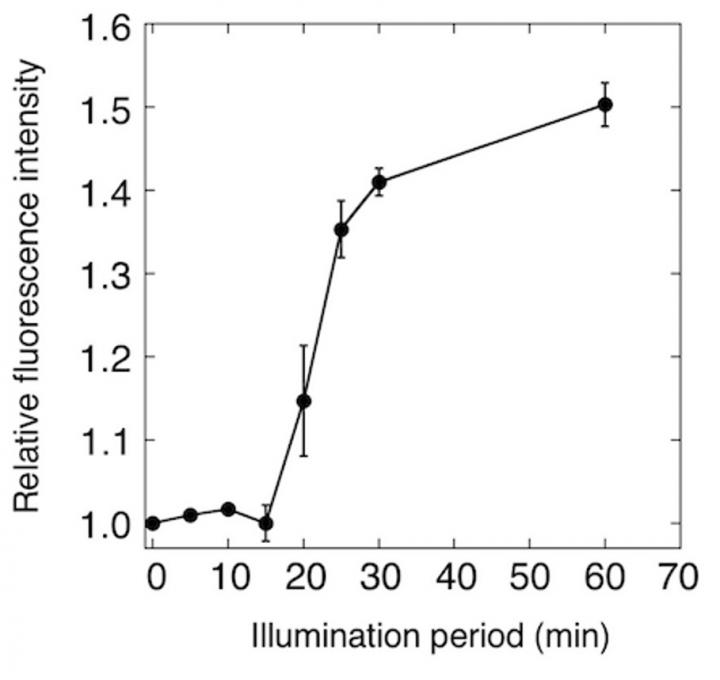
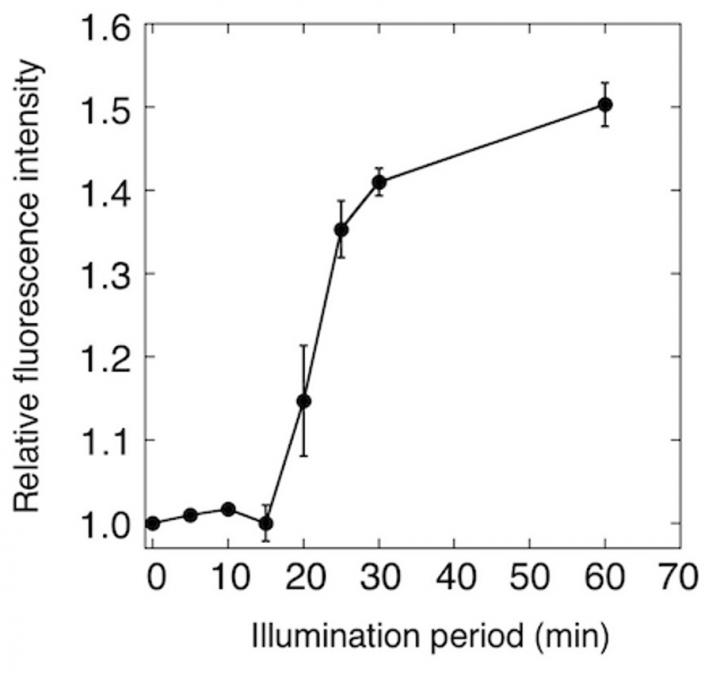
The researchers used a protein called the direct oxygen sensor protein, or DosP, from the bacterium E. coli, which has the ability to either bind or release oxygen depending on the oxygen levels inside the cell. The part of the protein that can bind oxygen was isolated and linked to a fluorescent protein, before evaluating the fluorescence intensity of the resulting product under different oxygen levels. The researchers found that the fluorescence of their novel protein, named ANA sensor (anaerobic/aerobic sensing fluorescence protein), increased in the presence of oxygen and decreased in the absence of oxygen, thereby successfully tracking the dynamic changes in oxygen content. Further development allowed them to fine-tune the protein to enable more accurate quantification of oxygen levels. By using the ANA sensor, photosynthetic oxygen production by a photosynthetic microorganism (cyanobacteria) could be monitored. Notably, in a dramatic improvement over previous oxygen detection methods, changes in oxygen levels are reflected by changes in ANA sensor fluorescence with very high sensitivity.

Perhaps the most significant aspect of this study, however, is the potential to apply this method to the development of other protein sensor probes to detect a number of cellular changes at the molecular level. "Almost all current sensor protein probes are based on conformational changes," notes Dr. Nomata. "In contrast, the fluorescence quenching mechanism used in this study expands the possibilities for the development of novel protein sensor probes."

###

Media Contact

Emiko Kawaguchi
[email protected]
81-357-342-975

http://www.titech.ac.jp/english/index.html

Related Journal Article

http://dx.doi.org/10.1038/s41598-018-30329-5

Share12Tweet8Share2ShareShareShare2

Related Posts

Live Rattlesnake Cam in Pennsylvania Offers 24/7 Access to Timber Rattlesnake Observation—Third Installment Now Streaming — Biology

Live Rattlesnake Cam in Pennsylvania Offers 24/7 Access to Timber Rattlesnake Observation—Third Installment Now Streaming

May 27, 2026
“DNA ‘Nicks’ Enable Safer, More Precise Genetic Analysis” — Biology

“DNA ‘Nicks’ Enable Safer, More Precise Genetic Analysis”

May 27, 2026

Study Finds Archaic DNA Could Reduce Immunity to Common DNA Viruses in Modern Humans

May 27, 2026

Scientists Achieve Unprecedented Precision in Mapping How Genes Influence Metabolism

May 27, 2026
Please login to join discussion

POPULAR NEWS

  • ESMO 2025: mRNA COVID Vaccines Enhance Efficacy of Cancer Immunotherapy

    318 shares
    Share 127 Tweet 80
  • New Study Reveals Plants Can Detect the Sound of Rain

    735 shares
    Share 293 Tweet 183
  • Common Food Preservatives Associated with Elevated Blood Pressure and Increased Heart Disease Risk

    56 shares
    Share 22 Tweet 14
  • AI-Powered Atlas Uncovers Extensive Whole-Body Damage Linked to Obesity

    53 shares
    Share 21 Tweet 13

About

We bring you the latest biotechnology news from best research centers and universities around the world. Check our website.

Follow us

Recent News

β-Arrestin Condensates Control GPCR Function

Lifespan Brain Microstructure Mapped Through Normative Modeling

Blockchain Transforms Supply Chain Finance Risk Assessment

Subscribe to Blog via Email

Enter your email address to subscribe to this blog and receive notifications of new posts by email.

Join 82 other subscribers
  • Contact Us

Bioengineer.org © Copyright 2023 All Rights Reserved.

Welcome Back!

Login to your account below

Forgotten Password?

Retrieve your password

Please enter your username or email address to reset your password.

Log In
No Result
View All Result
  • Homepages
    • Home Page 1
    • Home Page 2
  • News
  • National
  • Business
  • Health
  • Lifestyle
  • Science

Bioengineer.org © Copyright 2023 All Rights Reserved.