Credit: NCI
DALLAS – Oct. 3, 2017 – Research led by Dr. Carlos Arteaga, Director of the Harold C. Simmons Comprehensive Cancer Center, has identified potential targets for treatment of triple negative breast cancer, the most aggressive form of breast cancer.
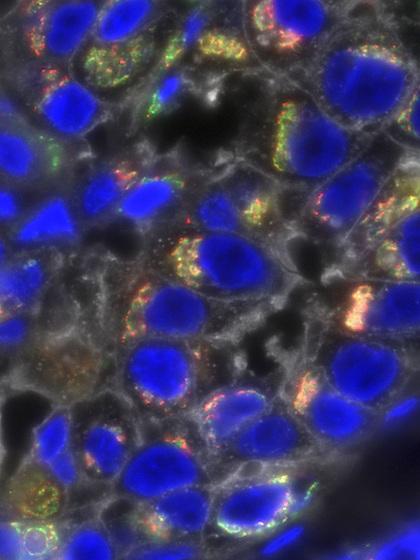
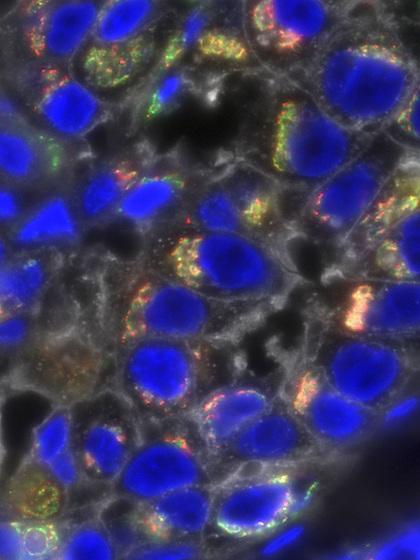
Increased activity of two genes, MCL1 and MYC, is associated with the development of chemotherapy resistance. The increased action of these two genes boosts mitochondrial oxidative phosphorylation, which promotes the growth of chemotherapy-resistant cancer stem cells, the research showed.
"Alterations in these two genes are easily detectable with tumor gene tests in current use. Combinations of drugs that inhibit MCL1 or MYC, or both, have the potential to reduce the development of chemotherapy resistance and should be studied in clinical trials," said Dr. Arteaga, Professor of Internal Medicine at UT Southwestern Medical Center. Dr. Arteaga holds The Lisa K. Simmons Distinguished Chair in Comprehensive Oncology.
Most breast cancers can be treated with hormone therapy, but about 15 percent of cases are triple negative breast cancer, meaning the cancer cells are not influenced by hormones like estrogen or progesterone. These triple negative breast cancers must, therefore, be treated with chemotherapy, which is toxic to healthy cells as well as cancer cells. Furthermore, most triple negative breast cancers eventually become resistant to chemotherapy and the cancer then spreads unchecked.
Drugs that inhibit activity of the MCL1 or MYC genes are in development, Dr. Arteaga said. These drugs, given in conjunction with standard chemotherapies, could potentially slow or even prevent the development of chemotherapy resistance, improving the outlook for this aggressive form of breast cancer.
###
The research was conducted at Vanderbilt-Ingram Cancer Center and appears in the journal Cell Metabolism. The research was supported by the Susan G. Komen for the Cure Foundation, the Breast Cancer Research Foundation, a National Institutes of Health Breast Cancer SPORE grant, and a Vanderbilt-Ingram Cancer Center Support Grant.
The Simmons Cancer Center at UT Southwestern is one of 49 NCI-designated Comprehensive Cancer Centers in the U.S. and the only one in North Texas. It is also one of 30 U.S. cancer research centers to be designated by the National Cancer Institute as a National Clinical Trials Network Lead Academic Site.
Read more
- Q&A on Triple Negative Breast Cancer
- More About Dr. Arteaga
About UT Southwestern Medical Center
UT Southwestern, one of the premier academic medical centers in the nation, integrates pioneering biomedical research with exceptional clinical care and education. The institution's faculty has received six Nobel Prizes, and includes 22 members of the National Academy of Sciences, 18 members of the National Academy of Medicine, and 14 Howard Hughes Medical Institute Investigators. The faculty of more than 2,700 is responsible for groundbreaking medical advances and is committed to translating science-driven research quickly to new clinical treatments. UT Southwestern physicians provide care in about 80 specialties to more than 100,000 hospitalized patients, 600,000 emergency room cases, and oversee approximately 2.2 million outpatient visits a year.
This news release is available on our homepage at utsouthwestern.edu/news.
To automatically receive news releases from UT Southwestern via email, subscribe at utsouthwestern.edu/receivenews.
Media Contact
Cathy Frisinger
[email protected]
214-648-3404
@UTSWNews
http://www.swmed.edu
Original Source
http://www.cell.com/cell-metabolism/fulltext/S1550-4131(17)30560-0