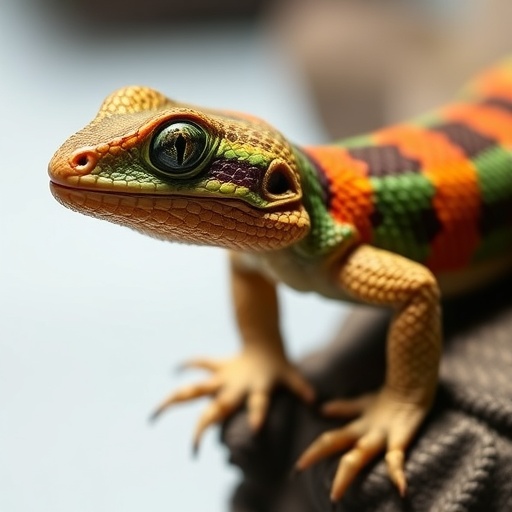
A new genetics study from the University of Nottingham reports that a popular pet gecko—an exceptional “lemon frost” morph of the leopard gecko—has an unusually high natural tendency to develop aggressive tumors. The researchers argue that the species could become a powerful comparative model for understanding how cancer arises and spreads.
The work, published in BMC Biology, focuses on why some animals are highly susceptible to cancer while others show strong resistance. In this case, the lemon frost morph is notable for developing tumors in roughly 80% of individuals, with many cases becoming aggressive and metastatic.
To uncover the biological basis of this vulnerability, the team used whole-genome sequencing and compared tumor tissue to healthy tissue obtained from the same geckos. This within-individual design helps distinguish changes associated with cancer from background genetic variation.
Across the tumors, the researchers identified recurrent genomic alterations rather than one-off mutations. Many affected genes and disrupted biological processes are known to participate in cancer pathways in other organisms, including humans, suggesting shared mechanisms beneath different evolutionary histories.
Because lemon frost geckos develop tumors naturally at a relatively early age, the study design avoids the need for tumor induction typical of many traditional laboratory models. The natural timing offers an unusually clear window into how cancer originates, evolves, and disseminates across the body.
The researchers also highlight that comparative cancer biology can benefit from expanding beyond a narrow set of laboratory species. Species that spontaneously develop cancers at high rates may complement standard models and help generate hypotheses more broadly relevant to human disease.
The findings may also inform translational directions: if conserved pathways are confirmed, they could guide improved strategies for prevention, detection, and treatment. The authors emphasize that studying both cancer-prone and cancer-resistant animals can reveal evolutionary solutions to a disease that affects many taxa.
Beyond its scientific impact, the study underscores the value of biodiversity. Protecting varied species systems preserves natural experiments that may offer insights into complex diseases like cancer.
Subject of Research: Animals (leopard geckos; “lemon frost” morph)
Article Title: Scientists uncover genetic clues from a tumour-prone reptile that could advance cancer research
News Publication Date: 15-Jul-2026
Web References: http://dx.doi.org/10.1186/s12915-026-02661-0
References: 10.1186/s12915-026-02661-0
Image Credits: Dr Tony Gamble, Marquette University
Keywords: cancer research, genomics, whole-genome sequencing, tumor evolution, metastasis, comparative oncology, reptiles, leopard gecko, BMC Biology
Tags: comparative genomics in reptilesearly-onset tumors in reptilesevolutionary insights into cancer mechanismsgecko cancer modelgenetic basis of cancer in reptilesgenetic factors in tumor resistancemetastatic tumor progression in reptilesnatural cancer development in animalspet reptile health and geneticsshared cancer pathways across speciestumor susceptibility in pet reptileswhole-genome sequencing in geckos