


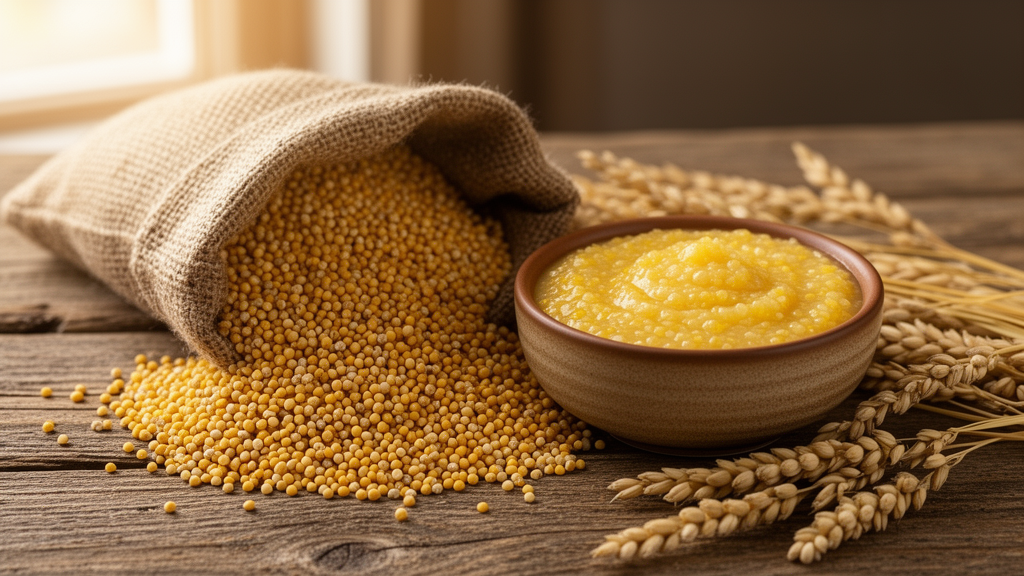
Researchers have combined transcriptomics and metabolomics to explain why some foxtail millet varieties taste better than others, identifying a network of genes and metabolites linked to flavor, grain color and palatability. The study, published in BMC Plant Biology, examined 12 foxtail millet varieties and compared high- and low-quality types to pinpoint the molecular differences behind edible quality.
Foxtail millet (Setaria italica L.) is an important minor cereal crop grown mainly in arid and semi-arid regions, yet the molecular mechanisms that determine variation in its edible quality have remained unclear. The team first carried out a systematic edible quality evaluation of the 12 varieties, finding that flavor, grain color and palatability were the key indicators distinguishing variety quality.
Comparative transcriptomic analysis of the high- and low-quality varieties identified 667 differentially expressed genes. Genes that were up-regulated in the higher-quality varieties were significantly enriched in phenylpropanoid biosynthesis, flavonoid and anthocyanin biosynthesis, and terpenoid metabolism pathways. In contrast, down-regulated genes were enriched in defense response and plant-pathogen interaction pathways.
From these results, the researchers identified 19 key genes, including those encoding flavanone 3-dioxygenase (F3H), dihydroflavonol 4-reductase (DFR) and anthocyanin 3-O-glucosyltransferase (3GT), enzymes that sit within the flavonoid and anthocyanin synthesis routes.
Untargeted metabolomic analysis detected 455 differential metabolites, of which 50 were significantly differential. Combined pathway analysis then revealed a molecular network in which high-quality varieties activated flavonoid and anthocyanin synthesis and terpenoid metabolism pathways, with significant accumulation of the metabolites homoplantaginin, delphinidin, kaempferide, myristicin and (-)-trans-carveol.
At the same time, the high-quality varieties suppressed defense responses and pectin synthesis. According to the study, this suppression reduced the content of bitter metabolites such as ingenol and cichorioside B and optimized the cell wall structure, changes that may collectively contribute to improved edible quality.
The authors conclude that the study systematically elucidates the molecular basis of edible quality differences in foxtail millet from a multi-omics perspective, and that the candidate genes they identified could support genetic improvement of the crop. The work is reported as an open-access research article published on 23 October 2026.
As with any multi-omics study of a limited panel of varieties, the findings describe molecular associations observed across the 12 varieties analyzed rather than field-tested breeding outcomes, and the identified genes serve as candidates for further investigation rather than validated targets.
Subject of Research: Molecular basis of edible quality variation in foxtail millet grains
Article Title: Multi-omics analysis reveals the molecular basis of edible quality in foxtail millet grains
Article References: Ma, L., Zhou, J., Li, Z., Wang, X., Zhang, M., Li, N., Xue, X., Liu, D., Mu, A., Wang, X., & Xiang, J. (2026). Multi-omics analysis reveals the molecular basis of edible quality in foxtail millet grains. BMC Plant Biology. https://doi.org/10.1186/s12870-026-10188-3
Image Credits: AI Generated
DOI: 10.1186/s12870-026-10188-3
Keywords: foxtail millet, multi-omics, transcriptomics, metabolomics, flavonoid biosynthesis, anthocyanin, terpenoid metabolism, edible quality, grain color, palatability, candidate genes, BMC Plant Biology
News Source: Juliet Wilcox. (October 29, 2026). Genes and metabolites behind why some foxtail millet grains taste better. Scienmag.



