• HOME
  • NEWS
  • EXPLORE
    • CAREER
      • Companies
      • Jobs
    • EVENTS
    • iGEM
      • News
      • Team
    • PHOTOS
    • VIDEO
    • WIKI
  • BLOG
  • COMMUNITY
    • FACEBOOK
    • INSTAGRAM
    • TWITTER
Thursday, August 13, 2026
BIOENGINEER.ORG
No Result
View All Result
  • Login
  • HOME
  • NEWS
  • EXPLORE
    • CAREER
      • Companies
      • Jobs
        • Lecturer
        • PhD Studentship
        • Postdoc
        • Research Assistant
    • EVENTS
    • iGEM
      • News
      • Team
    • PHOTOS
    • VIDEO
    • WIKI
  • BLOG
  • COMMUNITY
    • FACEBOOK
    • INSTAGRAM
    • TWITTER
  • HOME
  • NEWS
  • EXPLORE
    • CAREER
      • Companies
      • Jobs
        • Lecturer
        • PhD Studentship
        • Postdoc
        • Research Assistant
    • EVENTS
    • iGEM
      • News
      • Team
    • PHOTOS
    • VIDEO
    • WIKI
  • BLOG
  • COMMUNITY
    • FACEBOOK
    • INSTAGRAM
    • TWITTER
No Result
View All Result
Bioengineer.org
No Result
View All Result
Home NEWS Science News Biology

Galapagos guides to ‘barcode’ wildlife

Bioengineer by Bioengineer
September 11, 2020
in Biology
Reading Time: 2 mins read
0
IMAGE
Share on FacebookShare on TwitterShare on LinkedinShare on RedditShare on Telegram

IMAGE

Credit: Carolina Proano

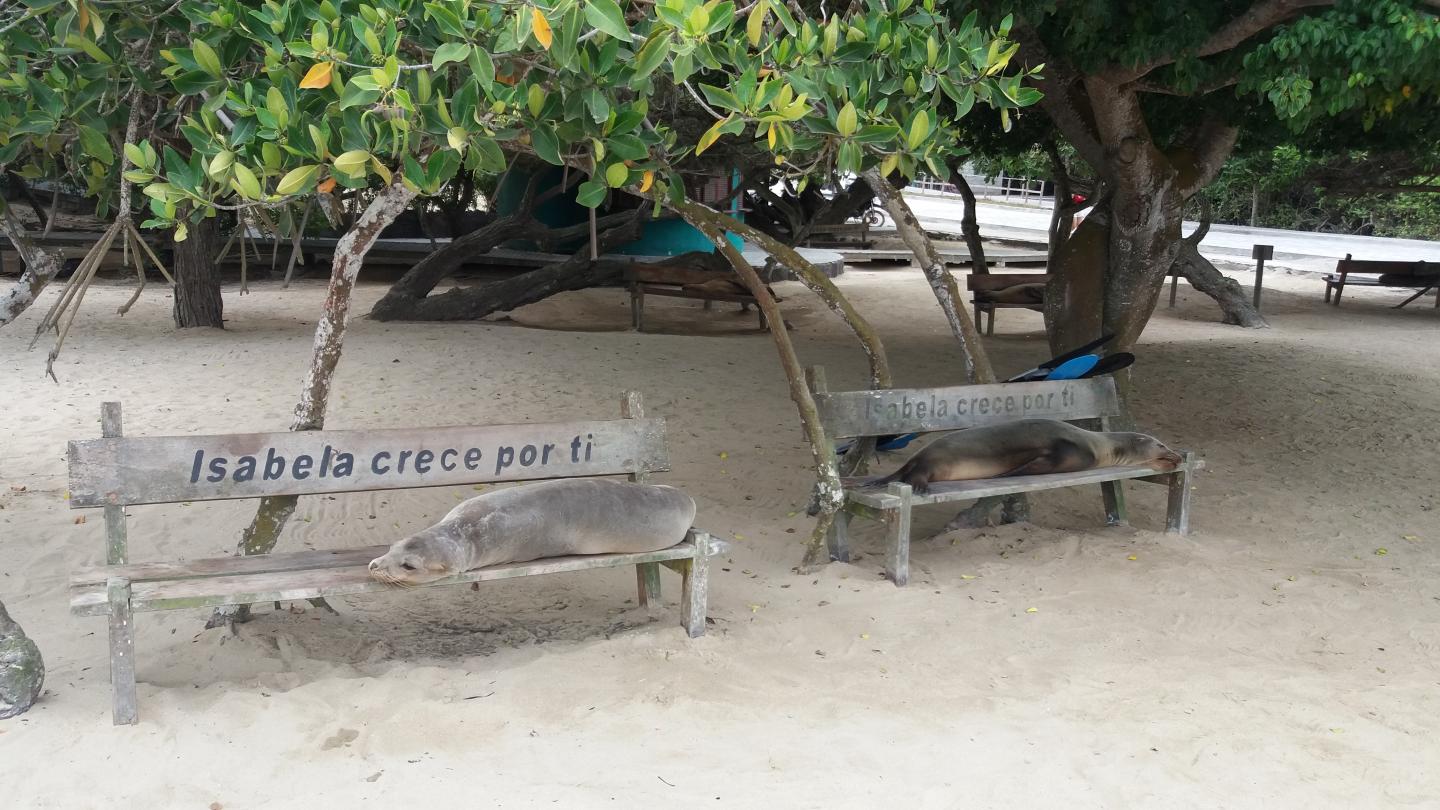
Galapagos tourist guides are being retrained to catalogue the islands’ famous biodiversity.

The COVID-19 pandemic has left many eco-tourism workers unemployed, and the “Barcoding Galapagos” scheme will see them survey wildlife and plants using “genetic fingerprinting”.

The project – run by the University of Exeter (UK), the Galapagos Science Centre and the University of San Francisco de Quito (Ecuador) – has received funding from UK Research and Innovation (UKRI) through the Global Challenges Research Fund and the Newton Fund.

It is one of 20 projects funded by UKRI in a “quest to develop solutions that will mitigate the short and long-term social, economic and health consequences of the pandemic”.

Barcoding Galapagos will employ a manager and about 80 guides in a range of part-time and full-time positions for nine months each.

“Our vision is to train and employ naturalist guides to catalogue the biodiversity of Galapagos – from microbe to mammal – using 21st Century molecular approaches,” said Dr Camille Bonneaud, of the Centre of Ecology and Conservation on Exeter’s Penryn Campus in Cornwall.

“These guides are central to economic recovery for a population almost entirely reliant on eco-tourism, and they will receive immediate capacity-building training and employment in sampling, curation and the latest genetic techniques.

“Our proposal therefore is a win-win because it will also fill important gaps in our biological knowledge of the islands.”

Professor Jaime Chaves, of the University of San Francisco de Quito, said: “This is the first barcode project in the Galapagos of this magnitude.

“All the data will be generated entirely by local people, and processed within the islands.

“I do not think there is anything like this project anywhere in the world.”

Prof Diana Pazmiño, of the Galápagos Science Centre and the University of San Francisco de Quito, said: “This is an incredible opportunity for me as a local scientist to share knowledge about genetic tools and its potential to contribute to the conservation of the Galapagos biodiversity.

“Both the social and scientific implications of this project are extremely valuable for the islands and its community.”

Dr Tomas Chaigneau, of the University of Exeter, added: “Without revenue from tourism, conservation efforts in the Galapagos could be under threat.

“By providing an alternative source of income to naturalist guides, this project can lessen the negative impacts of illegal harvesting and strengthen park protection in the short to medium term.

“This in turn can ensure the fine balance between biodiversity and wellbeing of local inhabitants is maintained in the long term.”

###

Media Contact
Alex Morrison
[email protected]

Tags: BiodiversityBiologyEcology/EnvironmentMarine/Freshwater BiologyPopulation BiologyZoology/Veterinary Science
Share12Tweet8Share2ShareShareShare2

Related Posts

Natural or Synthetic Grafts: Which Is Better for Cranial Duraplasty?

Natural or Synthetic Grafts: Which Is Better for Cranial Duraplasty?

August 13, 2026

Study reveals how pioneering osprey pairs drive population recovery

August 13, 2026

Antibodies, antiretrovirals and CCR5 blockade limit HIV reservoir seeding in infant macaques

August 13, 2026

Determining a Fungus’s Age Is Surprisingly Difficult, Scientists Say

August 13, 2026
Please login to join discussion

POPULAR NEWS

  • Natural or Synthetic Grafts: Which Is Better for Cranial Duraplasty?

    29 shares
    Share 12 Tweet 7
  • AI-Driven Weather and Climate Information Could Widen Global Inequality

    29 shares
    Share 12 Tweet 7
  • Scientists synthesize diiron subcluster to artificially mature [FeFe]-hydrogenases

    29 shares
    Share 12 Tweet 7
  • Next-Generation Chips Advance Autonomous Driving Technology

    29 shares
    Share 12 Tweet 7

About

We bring you the latest biotechnology news from best research centers and universities around the world. Check our website.

Follow us

Recent News

Natural or Synthetic Grafts: Which Is Better for Cranial Duraplasty?

AI-Driven Weather and Climate Information Could Widen Global Inequality

Scientists synthesize diiron subcluster to artificially mature [FeFe]-hydrogenases

Subscribe to Blog via Email

Enter your email address to subscribe to this blog and receive notifications of new posts by email.

Join 85 other subscribers
  • Contact Us

Bioengineer.org © Copyright 2023 All Rights Reserved.

Welcome Back!

Login to your account below

Forgotten Password?

Retrieve your password

Please enter your username or email address to reset your password.

Log In
No Result
View All Result
  • Homepages
    • Home Page 1
    • Home Page 2
  • News
  • National
  • Business
  • Health
  • Lifestyle
  • Science

Bioengineer.org © Copyright 2023 All Rights Reserved.