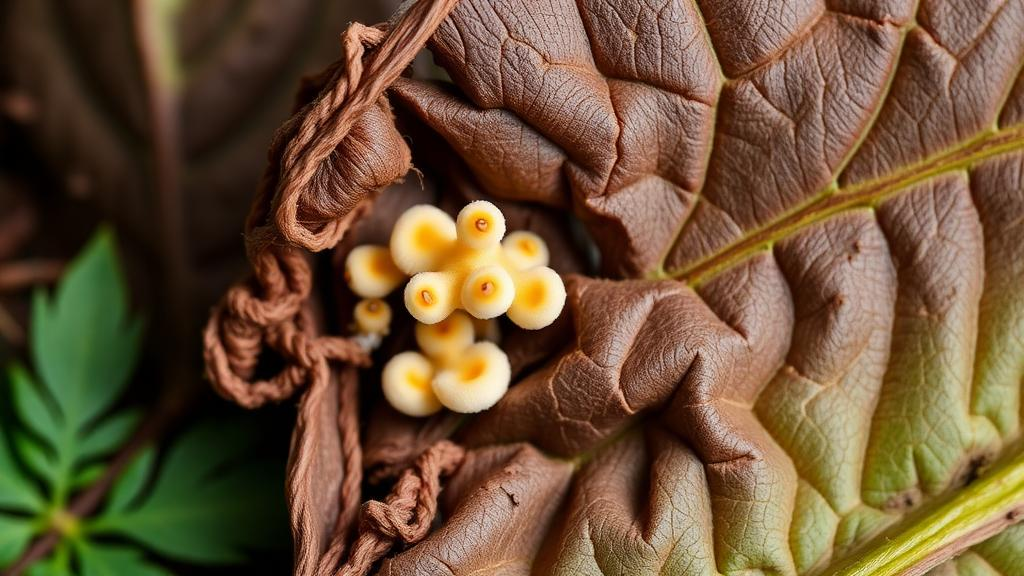
An endophytic fungus recovered from the leaves of Origanum syriacum L., the aromatic herb known as Syrian oregano or za'atar, has been shown to produce a chemically rich profile and a range of measurable biological activities in laboratory assays. The isolate, designated Cladosporium sp. AUMC 15471, was identified through combined morphological and molecular approaches, and its ethyl acetate crude extract was analyzed with gas chromatography–mass spectrometry (GC–MS), high-performance liquid chromatography (HPLC), and liquid chromatography–tandem mass spectrometry (LC–MS/MS). The GC–MS analysis tentatively annotated 32 volatile and semi-volatile compounds, assigned on the basis of mass spectral database matching and retention index comparison.
These were predominantly monoterpenes, sesquiterpenes, and fatty alcohols. In parallel, targeted LC-MS/MS analysis detected 11 metabolites that were assigned by comparing their retention times and mass-spectrometric characteristics with authentic reference standards, a more stringent level of identification than database matching alone. Several of the metabolites detected in the extract had not previously been reported from an endophytic Cladosporium species associated with O. syriacum.
The findings are based on in vitro testing of a crude extract, and the individual compounds responsible for each activity remain to be isolated and confirmed. Biologically, the extract showed moderate antioxidant activity in the DPPH radical-scavenging assay, with an IC50 value of 230.21 ± 5.96 μg/mL. Against HepG2 hepatocellular carcinoma cells, the extract displayed low cytotoxic activity, with an IC50 of 93.43 μg/mL.
Cell death in the treated cultures involved both apoptotic and necrotic pathways, indicating more than one mechanism of toxicity toward the cancer cell line. Because this was a single cell line studied outside the body, the observation does not establish any therapeutic potential in humans, and the relatively high IC50 indicates limited potency in this assay. The extract also inhibited the growth of six bacterial species: five foodborne bacterial pathogens and one opportunistic equine pathogen.
The strongest effects were recorded against Staphylococcus aureus, with an inhibition rate of 67.37 ± 2.45%, and Campylobacter jejuni, with 59.39 ± 1.24%. Inhibition percentages in this range suggest the extract contains antibacterial constituents, though the crude mixture nature of the preparation means the active molecules and their modes of action are not yet defined. Taken together, the chemical and activity data indicate that Cladosporium sp. AUMC 15471 is a promising source of chemically diverse metabolites with potential biological activities.
The combination of terpenoid-rich volatile chemistry, reference-standard-confirmed LC-MS/MS metabolites, and measurable antioxidant, cytotoxic, and antibacterial effects makes the isolate a candidate for further natural-product investigation. The study, conducted by researchers affiliated with institutions in Saudi Arabia, Egypt, and the United States and published in Frontiers in Pharmacology in the ethnopharmacology section, was accepted on 30 September 2026. The authors state that all claims expressed in the article are solely their own and do not necessarily represent those of their affiliated organizations or the publisher.
Subject of Research: Metabolite profiling and in vitro biological activities of an endophytic Cladosporium fungus isolated from Origanum syriacum
Article Title: Metabolite profiling and in vitro biological activities of an endophytic Cladosporium sp. AUMC 15471 isolated from Origanum syriacum L
Article References: Alaidarous, M., Abdel-Hadi, A., Alatiq, A., Madkhali, Y., Banawas, S., Alshehri, B., Abouelela, M. E., Helmy, Y. A., Awad, M., & Hassane, A. (2026). Metabolite profiling and in vitro biological activities of an endophytic Cladosporium sp. AUMC 15471 isolated from Origanum syriacum L. Frontiers in Pharmacology, 17, Article 1950031. https://doi.org/10.3389/fphar.2026.1950031
Image Credits: AI Generated
DOI: 10.3389/fphar.2026.1950031
Keywords: endophytic fungi, Cladosporium, Origanum syriacum, metabolite profiling, GC-MS, LC-MS/MS, antioxidant activity, antibacterial activity, cytotoxicity, natural products, foodborne pathogens, Metabolite
News Source: Roger Howard. (October 24, 2026). Fungus Living Inside Za’atar Leaves Yields Antioxidant and Antimicrobial Compounds. Scienmag.