


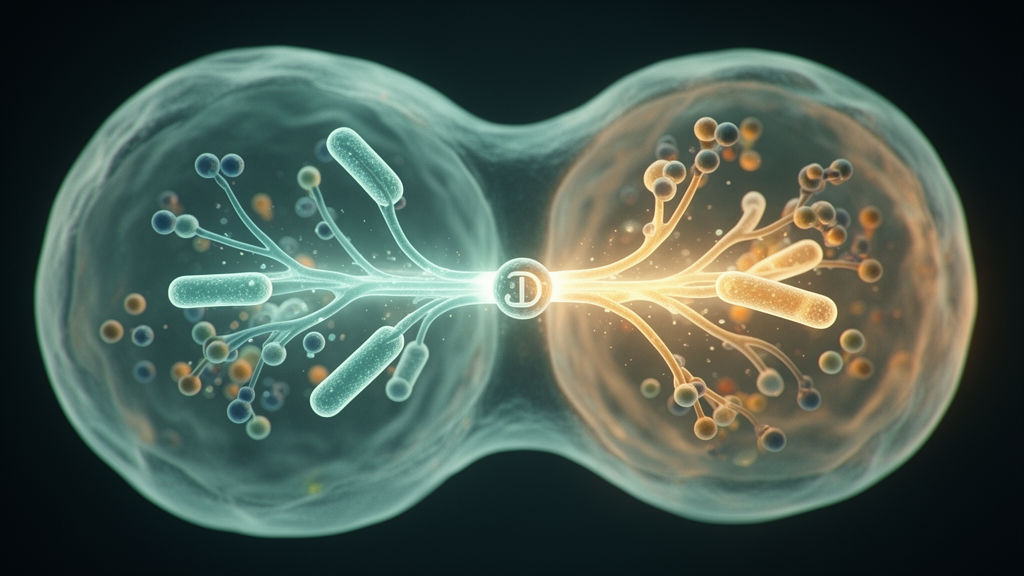
Glutamate dehydrogenases, the enzymes sitting at the crossroads of carbon and nitrogen metabolism in fungi, do far more than shuttle ammonia into amino acids. A comprehensive review published in Fungal Biology and Biotechnology by Ejaj K. Pathan, Himal Sapkota, Subrata Dasgupta and Narayan S. Punekar surveys decades of biochemical, molecular and structural work on these enzymes and argues that they function as integrative regulators of fungal growth, differentiation and morphogenesis, with direct implications for antifungal drug discovery, agriculture and industrial biotechnology.
Glutamate dehydrogenases, or GDHs, catalyze the reversible conversion of 2-ketoglutarate to L-glutamate. Two major classes exist in fungi: NADP-dependent GDHs, which primarily assimilate ammonia into glutamate in the anabolic direction, and NAD-dependent GDHs, which perform oxidative deamination, releasing ammonia and regenerating 2-ketoglutarate during nutrient limitation. In nitrogen-rich conditions NADP-GDH activity predominates, while in nitrogen-limited or carbon-deficient states NAD-GDH becomes dominant, allowing fungi to switch between growth and maintenance phases. In Saccharomyces cerevisiae and Candida utilis, the GDH isoenzymes complement the glutamine synthetase-glutamate synthase pathway depending on nitrogen source availability.
The review highlights evidence that GDHs influence processes well beyond nitrogen assimilation. In Saccharomyces cerevisiae, the NADP-GDH isoforms GDH1 and GDH3 modulate gene regulation, stress responses, metabolic adaptation and cytoskeletal organization. In Candida albicans, mutants of the NAD-dependent GDH2 and NADP-dependent GDH3 show impaired amino-acid use and disrupted redox homeostasis. Disruption of gdh1 in Penicillium chrysogenum affected morphology and reduced penicillin biosynthesis, linking NADP-GDH activity to secondary metabolism. In the rice blast fungus Magnaporthe oryzae, MoGDH2 participates in nitrogen metabolism, conidiation and virulence.
Perhaps the most striking findings concern fungal dimorphism. In Benjaminiella poitrasii, the genes gdh1 and gdh3, encoding NADP-GDH isoforms, and gdh2, encoding NAD-GDH, are differentially expressed during the yeast-to-hypha transition. Elevated gdh1 drives yeast development, while gdh2 and gdh3 support the hyphal phase. BpNADPGDH I was yeast-form specific and BpNADPGDH II hyphal-form specific; disruption of BpNADPGDH II abolished hyphal development, while its heterologous expression in a yeast-form mutant or in Candida glabrata induced germ tube formation. In the insect pathogen Metarhizium robertsii, loss of NAD-GDH (MrGDH2) led to impaired mycelial growth, reduced conidiation, defective hemolymph alkalization and markedly attenuated virulence.
Because the yeast-to-hypha switch is associated with fungal pathogenesis in animals and plants, GDHs have been explored as antifungal drug targets. Triazole-linked beta-lactam-bile acid conjugates identified as potent inhibitors of purified NAD-GDH also disrupted the yeast-to-hypha transition in B. poitrasii and C. albicans. Dimethyl isophthalate derivatives, screened as NADP-GDH inhibitors, blocked the morphogenetic transition in several dimorphic fungi, and the lead compounds showed antifungal activity against human pathogenic yeasts and filamentous fungi at concentrations lower than those of fluconazole, with minimal effects reported on human cells.
Structural biology underpins much of this promise. The first high-resolution crystal structure of a fungal NADP-GDH, from Aspergillus niger, revealed a hexameric dimer-of-trimers assembly with distinct substrate and coenzyme binding domains, and identified catalytic residues including Lys78, Lys102 and Lys114 that interact with 2-ketoglutarate. Structures of Aspergillus terreus NADP-GDH complexed with the dicarboxylic acid inhibitors succinate, malonate and tartrate showed how these molecules partially occupy the substrate-binding site in a competitive mode. Cryo-EM analyses further revealed that the cooperative A. niger enzyme opens wider at the active site, about 21 angstroms, than the non-cooperative A. terreus enzyme, about 17 angstroms, and that a single R246S substitution can convert the A. terreus enzyme into a cooperative one.
The review also traces the evolutionary history of these enzymes. More than forty species of early-diverging fungi, including Mucoromycetes, Chytridiomycetes and Blastocladiomycetes, possess only NAD-linked GDH, while higher fungi of the Deuteromycetes, Ascomycetes and Basidiomycetes carry both NAD- and NADP-linked forms. Phylogenetic analyses of gdh1 and gdh2 sequences performed for the review showed clustering broadly consistent with fungal taxonomy, with a primary separation based on cofactor specificity followed by lineage-specific diversification. Localization studies add another layer: fungal GDHs have been reported in the cytosol, mitochondria and nucleus, and in S. cerevisiae GDH1 resides in the nucleus and cytosol while GDH3 occurs in mitochondria and the nucleus.
Regulation of GDH activity operates at multiple levels. Transcriptionally, carbon and nitrogen catabolite repression coordinate gdh gene expression; in S. cerevisiae, gdh2 shows strong glucose repression mediated by the Cyc8-Ssn6/Tup1 co-repressor complex, up to roughly 450-fold compared with non-fermentable carbon sources. Post-translationally, NAD-GDHs of S. cerevisiae and C. utilis are controlled by phosphorylation-dephosphorylation, and purified B. poitrasii GDH isoenzymes are regulated through distinct kinases, including cAMP-dependent and calcium-calmodulin-dependent pathways. Thiol-mediated regulation in A. niger, involving the residue Cys141, selectively slows the forward reductive amination activity without affecting the reverse reaction, and allosteric differences between the 88 percent identical NADP-GDHs of A. niger and A. terreus produce markedly different sensitivities to the inhibitor isophthalate.
Beyond medicine, the review catalogs practical applications. Fungal gdhA genes introduced into rice improved grain yield, photosynthetic rate and salt tolerance, and GDH overexpression in maize, soybean and tobacco promoted biomass accumulation. GDH-based biosensors have been developed for detecting L-glutamate, ammonium and related metabolites in food and environmental samples, with immobilization on carbon paste electrodes or carbon nanotube matrices enhancing sensitivity. In fermentation, modulating NAD-GDH activity alters flocculation and cell surface properties in B. poitrasii, and fungal GDHs are considered candidates for industrial production of ammonia and L-glutamate owing to their high catalytic activity in the reductive amination direction.
The authors are candid about the gaps that remain. No experimental crystal structure of a fungal NAD-GDH exists; the tetrameric Candida albicans NAD-GDH model presented in the review was generated with AlphaFold 3 and awaits corroboration. Direct evidence for dynamic relocalization of GDHs within fungal cells is limited, the molecular basis of cooperativity modulation remains unclear, and in vivo validation of proposed allosteric mechanisms is still lacking. Closing these gaps, the review concludes, will determine how fully the translational potential of these metabolic switches, from safer antifungals to better crops and biosensors, can be realized.
Subject of Research: A review of the biology, regulation, structure and biotechnological applications of glutamate dehydrogenases in fungi.
Article Title: Glutamate dehydrogenases in fungi: From biology to biotechnology
Article References: Pathan, E. K., Sapkota, H., Dasgupta, S., & Punekar, N. S. (2026). Glutamate dehydrogenases in fungi: From biology to biotechnology. Fungal Biology and Biotechnology, 13(1), Article 6. https://doi.org/10.1186/s40694-026-00212-4
Image Credits: AI Generated
DOI: 10.1186/s40694-026-00212-4
Keywords: glutamate dehydrogenase, fungi, nitrogen metabolism, yeast-to-hypha transition, antifungal drug targets, Aspergillus niger, Candida albicans, crystal structure, allosteric regulation, biosensors, agriculture, dimorphism
News Source: Gregory Coleman. (October 29, 2026). Fungal Glutamate Dehydrogenases Emerge as Metabolic Switches and Antifungal Targets. Scienmag.



