CAMBRIDGE, MA — Sanofi will provide $25 million over five years to the lab of MIT Professor Daniel Anderson, to support the lab’s efforts to develop next-generation delivery technology for messenger RNA.
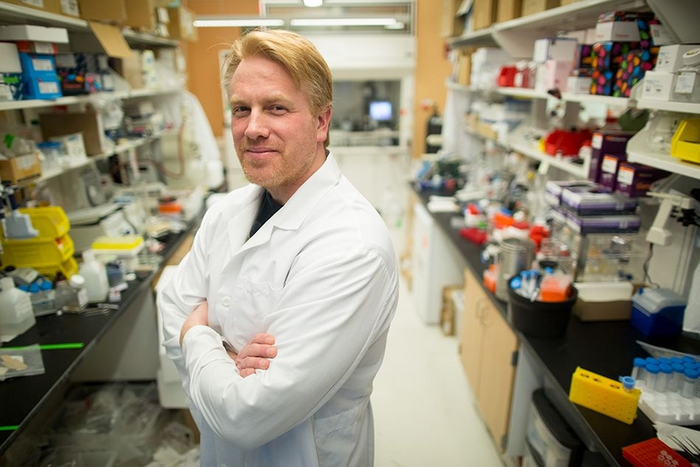
Credit: Bryce Vickmark
CAMBRIDGE, MA — Sanofi will provide $25 million over five years to the lab of MIT Professor Daniel Anderson, to support the lab’s efforts to develop next-generation delivery technology for messenger RNA.
Anderson, who is a professor of chemical engineering and a member of the Koch Institute for Integrative Cancer Research and the Institute for Medical Engineering and Science, and others in his lab will use the funding to develop delivery technology for RNA vaccines as well as RNA that can be used for CRISPR-based genome editing.
“Messenger RNA therapeutics have enormous medical potential, but new delivery technology is needed to enable their broadest application,” Anderson says. “I’m very excited to continue my longstanding and productive collaboration with colleagues at Sanofi toward the creation of a next generation of mRNA therapeutics, as well as expanding this work to include genome editing.”
Anderson’s lab has been working on novel delivery materials, including lipid nanoparticles and polymeric particles, for many years. Much of his early work in that area was funded by Shire Pharmaceuticals, which later sold its mRNA therapy platform to help found Translate Bio. In 2021, Translate Bio was acquired by Sanofi, and Sanofi established the mRNA Center of Excellence, with the goal of accelerating the development of mRNA vaccines and therapeutics for a variety of diseases.
Anderson’s research has led to the development of several RNA delivery formulations that are in multiple clinical trials at Sanofi for a variety of vaccine applications, including an RNA flu vaccine.
“We have had a very productive collaboration with Dan and his team for well over a decade aimed at bringing the best mRNA medicines forward, and we are thrilled to expand this effort on the development of novel delivery technologies for multiple applications. The delivery innovation coming out of this laboratory is unparalleled,” says Frank DeRosa, chief technology officer and global head of research and biomarkers at the Sanofi mRNA Center of Excellence.
Most traditional vaccines consist of either inactivated microbes or microbial proteins that can induce an immune response in the recipient. RNA vaccines, on the other hand, consist of genetic material that encode one or more viral proteins. Once injected into the recipient, host cells begin to produce the desired protein, priming the immune system to recognize it and mount a strong immune response if it encounters the virus later on.
RNA is degraded in the body if injected on its own, so a great deal of research has gone into designing carriers that can protect it and help deliver it inside of cells so that it can generate fragments of viral proteins. Anderson’s lab has spent many years developing lipid nanoparticles that can effectively deliver RNA vaccines. They have also worked extensively to develop nanoparticles that can deliver RNA to different organ systems in the body.
As part of the newly funded project, Anderson plans to develop new lipid nanoparticle systems that can be delivered in a variety of ways, including through injection and inhalation. Other aspects of the project will explore the development of targeting molecules that could be used to enhance the uptake of vaccine particles by immune system cells, and identifying strategies for enhancing vaccine effectiveness through alteration in the immunological properties of nanoparticles.
Anderson also plans to develop new delivery vehicles for CRISPR-based genome editing, which holds potential for treating a variety of diseases by repairing or replacing disease-causing genes. His lab has previously developed particles that can perform CRISPR gene-editing in the liver and in the lungs.
“There is growing evidence that mRNA delivery systems can be adapted to enable in vivo genome editing. Dan is a pioneer in this space and developed some of the first non-viral systems for CRISPR-based editing to treat a disease in vivo. We are excited to expand our collaboration with him to develop next-generation, in vivo genome-editing delivery systems,” says Christian Mueller, global head of genomics medicine at Sanofi.