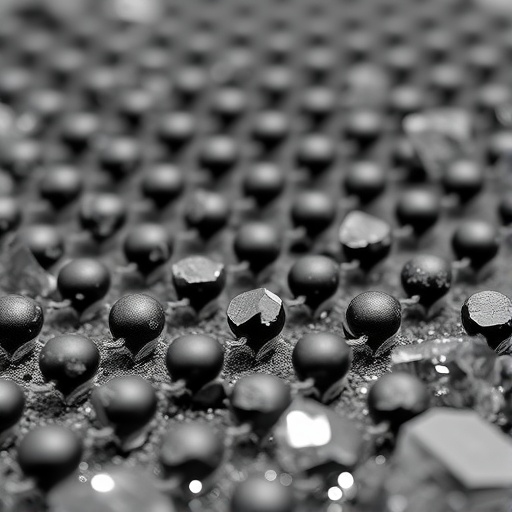
Asphalt is one of the most widely used construction materials on Earth, yet it quietly wages a losing battle against the elements from the moment it is laid. During mixing, storage, and paving, heat and oxygen trigger short-term thermal oxidation that rapidly alters the binder’s chemistry. Once a pavement is in service, sunlight and temperature swings continue their assault, with ultraviolet radiation at the pavement surface accelerating photo-oxidation and creating aging gradients across the asphalt film. The consequences are familiar to any driver: the binder accumulates oxygen-containing functional groups, heavy molecular weight fractions grow, and the once-flexible material becomes hard, brittle, and prone to cracking under traffic and environmental loading. Now, a team of Chinese researchers has shown that a carefully engineered form of graphene can dramatically slow this deterioration — but only when the dose is matched precisely to the specific asphalt formulation it is meant to protect.
The study, led by Jingwen Liu and colleagues including Jingru Zhang, Lizhen Huang, Bowei Sun, and Xiaogang Guo, is published as open access in Case Studies in Construction Materials. The researchers investigated polyvinylpyrrolidone-functionalized graphene, abbreviated PGR, incorporated into two very different binder systems: a neat 70-penetration-grade asphalt known as AH-70, and the same asphalt modified with 4 percent by weight of styrene-butadiene-styrene, or SBS, the most widely used polymer modifier in the paving industry. By subjecting both systems to an identical sequential aging schedule — a standard rolling thin-film oven test followed by up to 288 hours of ultraviolet exposure — the team could directly compare how the same nanomaterial behaved in two fundamentally different matrices. Their central finding is striking: there is no single, transferable optimal dose of graphene, and the stabilization mechanisms differ depending on what surrounds the nanosheets.
The functionalized graphene itself was prepared through a multi-step process. Graphene oxide was first hydrothermally reduced at 90 °C for 150 minutes to obtain reduced graphene sheets. Polyvinylpyrrolidone, or PVP, was then adsorbed onto the graphene surface through non-covalent interactions. These adsorbed polymer chains act as steric stabilizers, preventing the sheets from restacking and improving their compatibility with the viscous asphalt medium. The resulting PGR powder had a carbon content exceeding 98 percent, a grafted oxygen content of just 0.3 percent, a specific surface area between 50 and 100 square meters per gram, and lateral sizes ranging from 1 to 12 micrometers. This low residual oxygen content matters, because excessive oxidation groups can compromise the material’s own stability and its interaction with the hydrophobic binder.
In the neat asphalt system, PGR was blended at dosages of 0.1, 0.5, 1.0, and 2.0 percent by weight using high-speed shear mixing at 5000 rpm and 150 °C. In the SBS-containing system, PGR was pre-dispersed into the asphalt first, before the temperature was raised to 175 °C for the addition and swelling of the linear SBS polymer, a two-stage strategy designed to give the nanosheets the best possible chance of uniform distribution in a lower-viscosity medium. All binders were then aged in a rolling thin-film oven to simulate production and paving, poured into pans to form films roughly one millimeter thick, and exposed in a custom ultraviolet chamber with ten UVA lamps peaking at 365 nanometers, an irradiance of 125 watts per square meter, and a chamber temperature of 50 °C. The most severe exposure, 288 hours, corresponds to roughly 120 days of solar UV radiation on the Qinghai–Tibet Plateau, one of the harshest UV environments on the planet.
The conventional engineering tests told a clear story. In the neat asphalt, the unmodified control binder’s penetration — a measure of hardness — plummeted from 67.7 to 34.8 units after 288 hours of UV aging, while ductility collapsed from 107.5 centimeters to just 6.2 centimeters, indicating severe embrittlement. Adding 1.0 percent PGR transformed this picture: the viscosity aging index dropped from 149.0 percent in the control to 60.5 percent, and ductility retention after the most severe aging more than tripled. In the SBS-modified system, the contrast was even more dramatic. The control SBS binder lost penetration from 56.3 to 15.7 units, and its ductility fell to 4.7 centimeters after prolonged UV exposure, revealing pronounced sensitivity to photoaging despite its polymer reinforcement. With 0.3 percent PGR, penetration after 288 hours more than doubled to 31.4 units, and the binder retained the highest absolute ductility under every aging condition tested.
To understand why these improvements occurred, the team deployed a formidable battery of multiscale characterization techniques. Atomic force microscopy revealed the evolution of the bee-like microstructures that dot asphalt surfaces and are associated with the distribution of heavy molecular components. In the control binders, thermal aging flattened these structures before UV exposure drove them taller and more concentrated, while the SBS control progressively lost the protective polymer network that distinguishes its surface morphology. The PGR-modified binders, by contrast, maintained far more stable topography throughout aging. Force-distance measurements showed that local adhesion, a property linked to cracking resistance, fell from 18.33 nanonewtons to just 6.28 nanonewtons in aged neat asphalt, but with 1.0 percent PGR it retained a value of 14.72 nanonewtons — more than double the aged control. In the SBS system, 0.3 percent PGR preserved adhesion at 23.64 nanonewtons compared with 16.05 nanonewtons for the aged polymer control.
Chemical analysis using thin-layer chromatography with flame ionization detection tracked the four SARA fractions — saturates, aromatics, resins, and asphaltenes — that define asphalt’s colloidal structure. In the control AH-70 binder, 288 hours of UV exposure drove aromatics down from 52.47 percent to 41.85 percent while asphaltenes climbed from 12.78 percent to 21.34 percent, a wholesale shift from light to heavy, polar species that underlies hardening. The PGR-modified binder followed the same direction but with markedly smaller magnitude: aromatic loss of 7.91 percent versus 10.62 percent, and asphaltene gain of 6.63 percent versus 8.56 percent. Gel permeation chromatography added the molecular-scale view. The control neat asphalt’s weight-average molecular weight rose 24.5 percent relative to its virgin state, and its large molecular size fraction grew by 7.3 percentage points, while the PGR-modified binder saw only an 8.0 percent molecular weight increase and a 2.4 percentage point rise in large molecular size species, with much better retention of small molecules.
Fourier-transform infrared spectroscopy completed the chemical picture by quantifying oxidation products. The carbonyl index, a marker of oxygen-containing groups near 1700 wavenumbers, rose by roughly 115 percent in aged neat asphalt but only about 88 percent with PGR protection. The sulfoxide index, tracking sulfur oxidation near 1030 wavenumbers, showed similar suppression. Critically, adding PGR introduced no new absorption peaks and removed none, indicating that the nanosheets interact with the binder primarily through physical blending rather than covalent chemistry. In the SBS system, the team also tracked the butadiene index at 966 wavenumbers, a fingerprint of the polymer’s vulnerable unsaturated segments. Here the results were particularly compelling: after 288 hours of UV aging, the SBS-related index fell by 60.6 percent in the unmodified polymer binder, but the loss was limited to just 26.5 percent with 0.3 percent PGR. The graphene was not merely shielding the asphalt — it was substantially protecting the polymer itself from radical photo-oxidation and chain scission.
Taken together, the evidence points to a layered barrier mechanism. The two-dimensional graphene sheets, well dispersed thanks to their PVP steric stabilization, physically intercalate into the binder matrix and increase the tortuosity of molecular diffusion paths, slowing oxygen permeation and restricting the migration and association of light polar components into asphaltene-rich structures. In the SBS system, the nanosheets appear to additionally shield the polybutadiene midblocks and stabilize the polymer-rich phase, delaying the network degradation that otherwise makes the binder revert toward an unprotected, neat-asphalt-like state. Segregation tests confirmed that PGR did not impair storage stability; the softening point difference between top and bottom sections of stored composite binders remained well within the accepted 2.5 °C criterion at every aging state, and actually decreased relative to the SBS control.
The most consequential message of the work, however, is the dosage warning. The optimal PGR content for neat asphalt was 1.0 percent by weight, while the SBS formulation required only 0.3 to 0.5 percent — with 0.3 percent offering the best overall balance of softening point response, ductility, penetration retention, and modifier economy. Pushing beyond these levels yielded diminishing or even negative returns, because the nanosheets increase the initial stiffness and viscosity of the binder, eroding workability and low-temperature flexibility. The authors emphasize that their conclusions are bounded by the specific AH-70 binder, linear SBS modifier, PGR product, sulfur-stabilized formulation, and laboratory aging protocol used, and that the study did not directly measure oxygen diffusion, UV attenuation, or interfacial binding energies. Future work combining molecular dynamics simulations, natural exposure trials, and mixture-level performance testing will be needed to translate these binder-scale findings into pavement design practice. Still, for a field searching for durable, UV-resistant roads in an era of extreme climates, the demonstration that functionalized graphene can cut carbonyl formation nearly in half and halve the loss of SBS unsaturation represents a significant and commercially relevant step forward.
Subject of Research: Anti-aging performance of polyvinylpyrrolidone-functionalized graphene in neat and SBS-modified asphalt binders under thermal-oxidative and ultraviolet aging
Subject of Research: Technology and Engineering
Article Title: Matrix-specific anti-aging response of functionalized graphene-modified asphalt binders under thermal-oxidative and ultraviolet aging: Multiscale structural and chemical evidence
Article References: Liu, J., Zhang, J., Huang, L., Sun, B., & Guo, X. (2026). Matrix-specific anti-aging response of functionalized graphene-modified asphalt binders under thermal-oxidative and ultraviolet aging: Multiscale structural and chemical evidence. Case Studies in Construction Materials, 25, Article e06475. https://doi.org/10.1016/j.cscm.2026.e06475
Image Credits: AI Generated
DOI: 10.1016/j.cscm.2026.e06475
Keywords: functionalized graphene, asphalt binder aging, SBS modified asphalt, ultraviolet aging, thermal oxidation, carbonyl index, atomic force microscopy, gel permeation chromatography, SARA fractionation, polyvinylpyrrolidone, anti-aging mechanism, pavement durability
Cite Scienmag News
APA MLA Chicago
Beatrice Stafford. (September 3, 2026). Functionalized graphene slows asphalt aging via matrix-specific anti-aging mechanisms. Scienmag. https://scienmag.com/functionalized-graphene-slows-asphalt-aging-via-matrix-specific-anti-aging-mechanisms/
Beatrice Stafford. “Functionalized graphene slows asphalt aging via matrix-specific anti-aging mechanisms.” Scienmag, 3 September 2026, https://scienmag.com/functionalized-graphene-slows-asphalt-aging-via-matrix-specific-anti-aging-mechanisms/. Accessed 3 September 2026.
Beatrice Stafford. “Functionalized graphene slows asphalt aging via matrix-specific anti-aging mechanisms.” Scienmag. September 3, 2026. https://scienmag.com/functionalized-graphene-slows-asphalt-aging-via-matrix-specific-anti-aging-mechanisms/
Copy citation Download RIS
Tags: anti-aging properties of graphene in asphaltanti-aging strategies for asphalt pavementsasphalt binder oxidation mechanismsasphalt cracking resistance improvementasphalt oxidative aging mechanismschemical functionalization of graphene for infrastructurechemical modification of asphalt bindersenvironmental effects on asphalt deteriorationfunctionalized graphene for pavement durabilityfunctionalized graphene in construction materialsGraphene-enhanced asphalt aging preventionGraphene-enhanced asphalt aging resistancegraphene-polymer interactions in construction materialsimpact of UV radiation on asphalt longevityinfluence of graphene dose on asphalt longevityinnovative materials for asphalt lifespan extensioninnovative materials for sustainable road constructionlong-term asphalt durabilitymatrix-specific asphalt protectionmatrix-specific asphalt protection strategiesphoto-oxidation in asphalt pavementsphoto-oxidation in pavementsrole of graphene in asphalt reinforcementsustainable asphalt paving technologies