• HOME
  • NEWS
  • EXPLORE
    • CAREER
      • Companies
      • Jobs
    • EVENTS
    • iGEM
      • News
      • Team
    • PHOTOS
    • VIDEO
    • WIKI
  • BLOG
  • COMMUNITY
    • FACEBOOK
    • INSTAGRAM
    • TWITTER
Friday, May 15, 2026
BIOENGINEER.ORG
No Result
View All Result
  • Login
  • HOME
  • NEWS
  • EXPLORE
    • CAREER
      • Companies
      • Jobs
        • Lecturer
        • PhD Studentship
        • Postdoc
        • Research Assistant
    • EVENTS
    • iGEM
      • News
      • Team
    • PHOTOS
    • VIDEO
    • WIKI
  • BLOG
  • COMMUNITY
    • FACEBOOK
    • INSTAGRAM
    • TWITTER
  • HOME
  • NEWS
  • EXPLORE
    • CAREER
      • Companies
      • Jobs
        • Lecturer
        • PhD Studentship
        • Postdoc
        • Research Assistant
    • EVENTS
    • iGEM
      • News
      • Team
    • PHOTOS
    • VIDEO
    • WIKI
  • BLOG
  • COMMUNITY
    • FACEBOOK
    • INSTAGRAM
    • TWITTER
No Result
View All Result
Bioengineer.org
No Result
View All Result
Home NEWS Science News Biology

Fuel for earliest life forms: Organic molecules found in 3.5 billion-year-old rocks

Bioengineer by Bioengineer
February 18, 2021
in Biology
Reading Time: 2 mins read
0
IMAGE
Share on FacebookShare on TwitterShare on LinkedinShare on RedditShare on Telegram

IMAGE

Credit: Helge Missbach

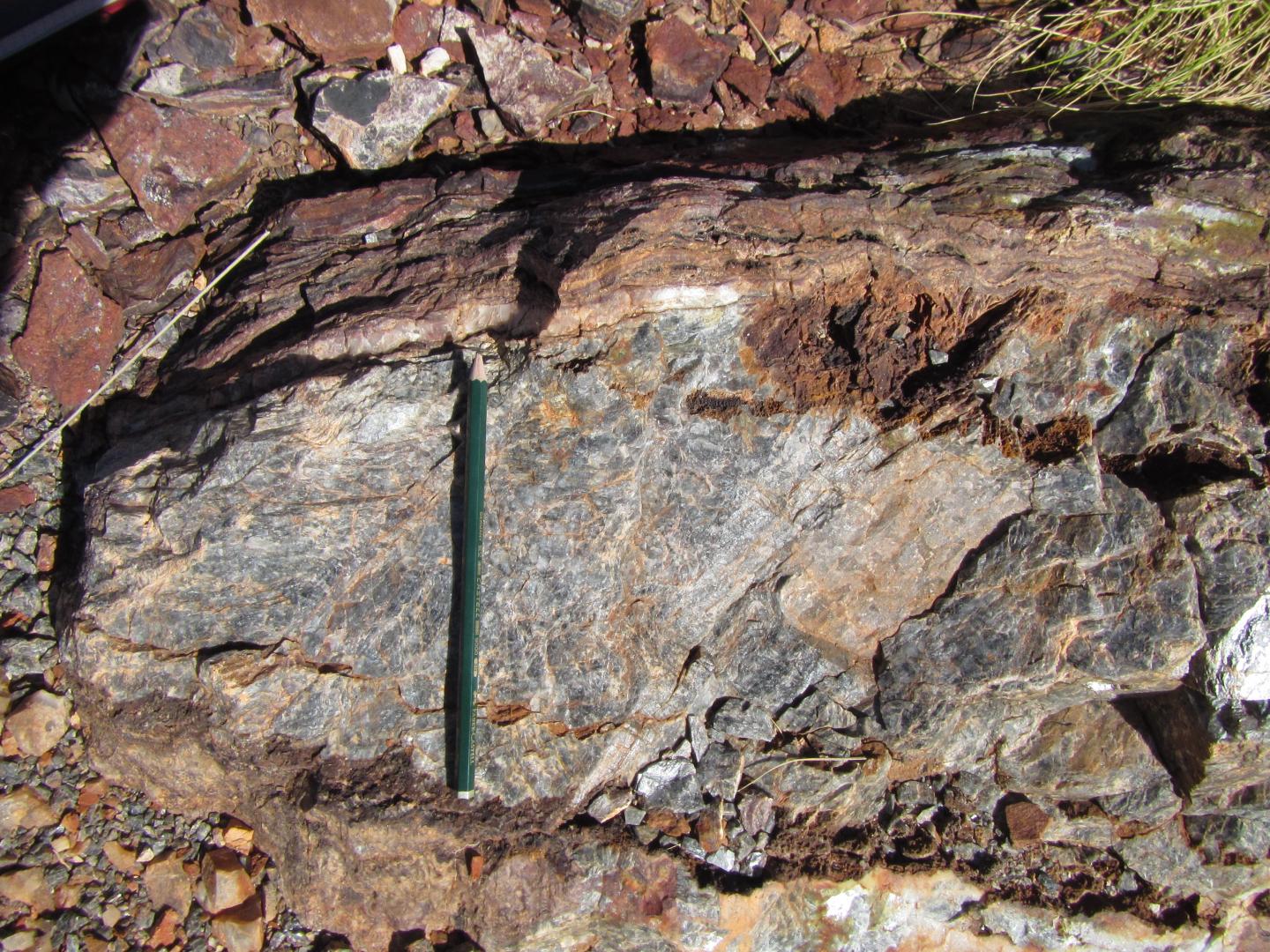
A research team including the geobiologist Dr. Helge Missbach from the University of Cologne has detected organic molecules and gases trapped in 3.5 billion-year-old rocks. A widely accepted hypothesis says that the earliest life forms used small organic molecules as building materials and energy sources. However, the existence of such components in early habitats on Earth was as yet unproven. The current study, published in the journal ‘Nature Communications‘, now shows that solutions from archaic hydrothermal vents contained essential components that formed a basis for the earliest life on our planet.

Specifically, the scientists examined about 3.5 billion-year-old barites from the Dresser Formation in Western Australia. The barite thus dates from a time when early life developed on Earth. ‘In the field, the barites are directly associated with fossilized microbial mats, and they smell like rotten eggs when freshly scratched. Thus, we suspected that they contained organic material that might have served as nutrients for early microbial life,’ said Dr. Helge Missbach of the Institute of Geology and Mineralogy and lead author of the study.

In the fluid inclusions, the team identified organic compounds such as acetic acid and methanethiol, in addition to gases such as carbon dioxide and hydrogen sulfide. These compounds may have been important substrates for metabolic processes of early microbial life. Furthermore, they are discussed as putative key agents in the origin of life on Earth. ‘The immediate connection between primordial molecules emerging from the subsurface and the microbial organisms – 3.5 billion years ago – somehow surprised us. This finding contributes decisively to our understanding of the still unclear earliest evolutionary history of life on Earth,’ Missbach concluded.

###

Media Contact
Helge Missbach
[email protected]

Related Journal Article

http://dx.doi.org/10.1038/s41467-021-21323-z

Tags: Earth ScienceEcology/EnvironmentEvolutionGeology/SoilPaleontology
Share12Tweet8Share2ShareShareShare2

Related Posts

61 Newly Discovered Beetle Species Highlight How Much We Still Have to Learn About Biodiversity — Biology

61 Newly Discovered Beetle Species Highlight How Much We Still Have to Learn About Biodiversity

May 15, 2026
Supercomputer Simulations Uncover How Bacterial Enzyme Pumps Sodium Ions, Opening Doors to Novel Antibiotics — Biology

Supercomputer Simulations Uncover How Bacterial Enzyme Pumps Sodium Ions, Opening Doors to Novel Antibiotics

May 15, 2026

New Astrobiology Special Collection Highlights Emerging Evidence Supporting Land-Based Origins of Life

May 14, 2026

Revolutionizing Textiles: Engineered Protein Fibers Pave the Way for Sustainable, Recyclable Fabrics

May 14, 2026
Please login to join discussion

POPULAR NEWS

  • Research Indicates Potential Connection Between Prenatal Medication Exposure and Elevated Autism Risk

    843 shares
    Share 337 Tweet 211
  • New Study Reveals Plants Can Detect the Sound of Rain

    729 shares
    Share 291 Tweet 182
  • Salmonella Haem Blocks Macrophages, Boosts Infection

    62 shares
    Share 25 Tweet 16
  • Breastmilk Balances E. coli and Beneficial Bacteria in Infant Gut Microbiomes

    58 shares
    Share 23 Tweet 15

About

We bring you the latest biotechnology news from best research centers and universities around the world. Check our website.

Follow us

Recent News

Hanyang University Researchers Pinpoint 2.5 Nanometers as Minimum Coating Thickness for Durable Solid-State EV Batteries

Axonic Spine Synapses Trigger Action Potentials, Direct Signals

New Study Uncovers Why Breast Cancer Becomes More Lethal with Age

Subscribe to Blog via Email

Enter your email address to subscribe to this blog and receive notifications of new posts by email.

Join 82 other subscribers
  • Contact Us

Bioengineer.org © Copyright 2023 All Rights Reserved.

Welcome Back!

Login to your account below

Forgotten Password?

Retrieve your password

Please enter your username or email address to reset your password.

Log In
No Result
View All Result
  • Homepages
    • Home Page 1
    • Home Page 2
  • News
  • National
  • Business
  • Health
  • Lifestyle
  • Science

Bioengineer.org © Copyright 2023 All Rights Reserved.