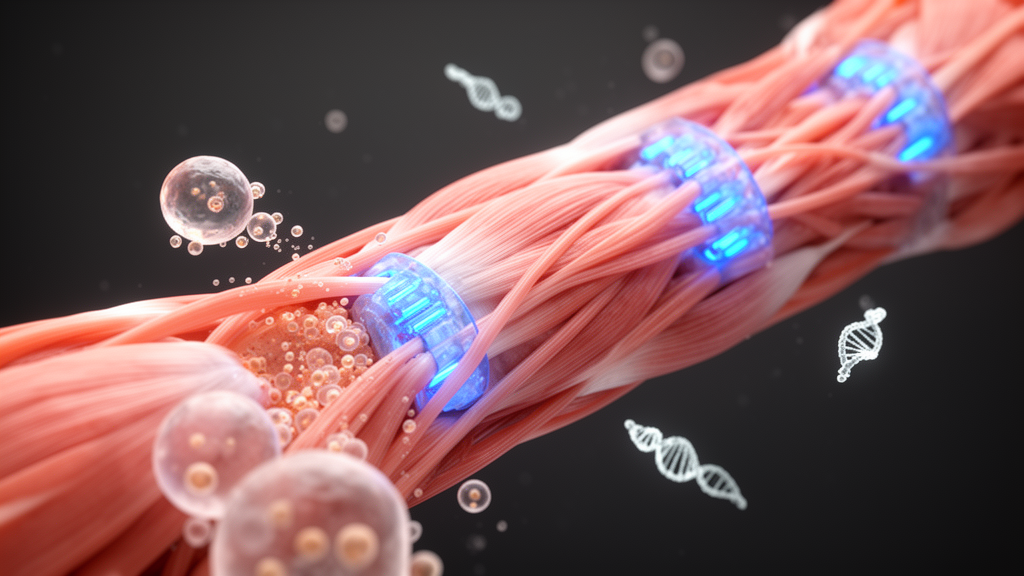
For patients with myotonia, the simple act of letting go can be the hardest part of movement. Myotonia, the delayed relaxation of muscles after a forceful contraction, arises from hyperexcitability of the skeletal muscle membrane and sits at the heart of a family of rare genetic conditions now experiencing an unprecedented wave of therapeutic innovation. A new review published in the Journal of Neurology by Emma Matthews, Mark J. Specterman and Karlien Mul surveys the rapidly evolving treatment landscape, from well-established sodium channel blockers to a pipeline of RNA-targeted and disease-modifying therapies that many in the field describe as the most exciting era in the history of these disorders. The review arrives at a moment when decades of careful molecular dissection are finally translating into clinical trials with the potential to alter disease trajectories rather than merely blunt symptoms.
The clinical spectrum of myotonic disorders is broad. Myotonic dystrophy type 1, or DM1, is the most common of them, with prevalence estimates based on clinical diagnosis ranging from one in six to ten thousand, although genetic screening data suggest as many as one in 2,100 people may be affected. DM1 results from an unstable expansion of CTG repeats in the DMPK gene on chromosome 19. The expanded transcripts exert a toxic gain of function, sequestering RNA-binding proteins and disrupting alternative splicing across the genome, which explains why the disease touches so many organ systems. Patients may develop progressive muscle wasting and weakness, cardiac conduction disease and cardiomyopathy, respiratory failure, cataracts, diabetes, thyroid dysfunction and cognitive impairment. Presentation varies enormously: some individuals live nearly normal lives and remain undiagnosed well into adulthood, while others lose ambulation and face shortened life expectancy from cardiorespiratory complications. Myotonic dystrophy type 2, caused by a CCTG expansion in the CNBP gene on chromosome 3, shares the same RNA-mediated spliceopathy mechanism but tends to produce a milder, proximal myopathy without the congenital forms or genetic anticipation seen in DM1.
Distinct from the dystrophies are the non-dystrophic myotonias, pure skeletal muscle channelopathies caused by variants in ion channel genes, with no systemic involvement and a normal life expectancy. Myotonia congenita, the most common with a prevalence of roughly two to seven per 100,000, stems from variants in CLCN1, the gene encoding the ClC-1 voltage-gated chloride channel essential for membrane repolarisation. It is the same channel whose function is secondarily disrupted in myotonic dystrophy. Paramyotonia congenita and sodium channel myotonia are allelic autosomal dominant disorders of SCN4A, the gene for the Nav1.4 sodium channel that generates the action potentials driving contraction. Paramyotonia is notorious for worsening with cold and repeated activity, and can be accompanied by episodic paralysis, while sodium channel myotonia may show both warm-up and paradoxical worsening. For many patients, pain and fatigue are as troublesome as the stiffness itself, and the visible normality of their appearance can make the condition a hidden disability.
The therapeutic mainstay for myotonia has long been sodium channel blockade. In paramyotonia and sodium channel myotonia the mechanism is direct, since the underlying SCN4A variants confer a gain of channel function that the drugs inhibit. In myotonia congenita and the dystrophies the effect is indirect: reducing persistent sodium current partially compensates for impaired chloride-mediated repolarisation. Mexiletine emerged as first-line therapy on the strength of clinical impression, and in 2012 the first randomised controlled trial confirmed its efficacy in non-dystrophic myotonia, with subsequent studies, including aggregated N-of-1 trials, consolidating the evidence. Secondary outcomes consistently showed benefits extending to quality of life, pain, fatigue, independence and emotional well-being. Lamotrigine joined the arsenal in 2017 when a phase 2 crossover trial in 22 patients demonstrated efficacy on the myotonia behaviour score, making these two drugs the only anti-myotonic agents with randomised trial evidence. A head-to-head phase 3 trial failed to show lamotrigine was non-inferior to mexiletine, but it still delivered considerable benefit, giving clinicians two credible options.
Both drugs have also shown efficacy in DM1, with favourable cardiac safety profiles in trials, though these studies were small, short and potentially subject to selection bias in a population where cardiac conduction defects are common. Evidence in DM2 remains far thinner, with no dedicated large randomised trials, forcing treatment strategies to be extrapolated from other populations. Cardiac caution has historically shadowed mexiletine because of its potential pro-arrhythmic properties, yet neither the trials nor 302.4 years of real-world follow-up in non-dystrophic myotonia demonstrated significant electrocardiographic changes, and observational data in myotonic dystrophy show no safety signal on conduction parameters. The FDA has issued a warning on lamotrigine based on in vitro class 1B sodium channel blocker activity, but this has not been replicated by other regulators, including the European Medicines Agency, and has not translated into observable effects on human cardiac conduction. A joint ILAE/AES task force now recommends baseline electrocardiography only for those over 60 or with multiple cardiovascular risk factors, with specialist review mandatory for known cardiac disease. Clinicians must also weigh the rare but serious risk of Stevens-Johnson syndrome with lamotrigine, which a 55-year review of the FDA adverse event database found accounted for nearly ten percent of reported cases.
Practical considerations are also reshaping prescribing. Mexiletine, licensed as Namuscla for adults with non-dystrophic myotonia in several countries and used off-label in children and in myotonic dystrophy, typically requires dosing up to three times daily, which can undermine adherence. Prolonged-release once-daily formulations are now in phase 3 trials: the HERCULES study in DM1 and DM2 and the ACHILLES study in non-dystrophic myotonia. Meanwhile, basic science continues to probe alternative targets. No specific chloride channel activators exist, but intriguing work has shown that niflumic acid, which acutely blocks the ClC-1 channel in transfected cells, paradoxically acts as a pharmacological chaperone that increases channel protein expression when applied over 24 hours. Potassium channel openers such as retigabine, withdrawn from the market in 2017 over blue pigmentation concerns, have inspired next-generation compounds in development.
The most dramatic shift, however, is in DM1, where an era of molecularly targeted clinical trials is underway. Several companies are developing therapies designed to reduce the mutant DMPK transcript or to prevent the sequestration of muscleblind-like protein 1, the key splicing regulator whose loss drives the downstream transcriptional chaos. Delivery strategies range from naked oligonucleotides to targeted conjugates and adeno-associated virus vectors, with studies progressing from early-phase work to phase 3. The most advanced candidate is del-desiran, an antibody-oligonucleotide conjugate that hijacks the transferrin receptor to ferry the drug into muscle. In the phase 2 MARINA trial it demonstrated target engagement and amelioration of aberrant alternative splicing in some patients, a proof of principle that has electrified the field. None of these approaches is curative, and the extent of achievable molecular and clinical correction remains uncertain, but they represent the first credible assault on the underlying pathology rather than its symptoms.
Translational challenges loom large. Many trials use video hand opening time as the primary endpoint, a measure that captures skeletal muscle excitability and likely reflects modulation of MBNL-dependent mis-splicing of ion channel transcripts, making it a useful proof-of-mechanism marker, but its relevance to broader clinical benefit in a multisystem disease is debated. Effects on the heart and brain may not be established for years and will depend on post-marketing surveillance. Delivery poses further difficulties: repeated intravenous infusions at six- to eight-week intervals demand substantial healthcare infrastructure and may limit scalability and central nervous system penetration. Alongside the genetic approaches, repurposed small molecules are advancing. Metformin showed signals of efficacy on the six-minute walk test in the MYOMET phase 2 study, though the primary endpoint was missed in the intention-to-treat population, and the larger phase 3 METFORMYO trial is now underway with the MFM-32 as its primary measure. Tideglusib, a GSK3-beta inhibitor tested in congenital and childhood-onset DM1, showed signals in cognitive and neuromuscular ratings without significant safety concerns, and a phase 2/3 study in children is recruiting. Erythromycin, which modulates MBNL-dependent splicing preclinically, was well tolerated in a phase 2 trial with promising improvements in splicing biomarkers and creatine kinase levels.
Symptomatic care continues to evolve in parallel. Excessive daytime sleepiness affects the majority of people with DM1, yet randomised evidence for psychostimulants such as modafinil remains thin. A phase 2 trial of pitolisant in 30 participants suggested improvements in subjective sleepiness but was not powered for statistical significance, and a small study of intravenous flumazenil found no benefit over placebo. The overall picture that emerges from the review is not one of replacement but of layering: mechanism-based therapies are being built on top of a symptomatic framework that already works reasonably well for myotonia, even as it leaves progressive weakness and multisystem degeneration unaddressed. The recurring theme, the authors note, is the gap between molecular target engagement and clinically meaningful benefit, a gap that applies equally to established drugs and to the new genetic agents. Whether the emerging therapies will ultimately change disease trajectory remains uncertain, but for patients who have waited decades for anything more than symptomatic relief, the pipeline now offers genuine hope, and clinicians are being urged to prepare for a practice landscape that may look radically different within a few years.
Subject of Research: Treatment advances for myotonia in myotonic dystrophy and non-dystrophic muscle channelopathies
Article Title: Treatment updates in myotonic disorders
Article References: Matthews, E., Specterman, M. J., & Mul, K. (2026). Treatment updates in myotonic disorders. Journal of Neurology, 273(10), Article 562. https://doi.org/10.1007/s00415-026-14073-9
Image Credits: AI Generated
DOI: 10.1007/s00415-026-14073-9
Keywords: myotonia, myotonic dystrophy type 1, myotonia congenita, sodium channel blockers, mexiletine, lamotrigine, RNA splicing, oligonucleotide therapy, clinical trials, muscle channelopathies, DMPK gene, disease-modifying therapy
News Source: Juliet Wilcox. (October 9, 2026). From Sodium Blockers to Gene Silencing: The Treatment Revolution in Myotonic Disorders. Scienmag.