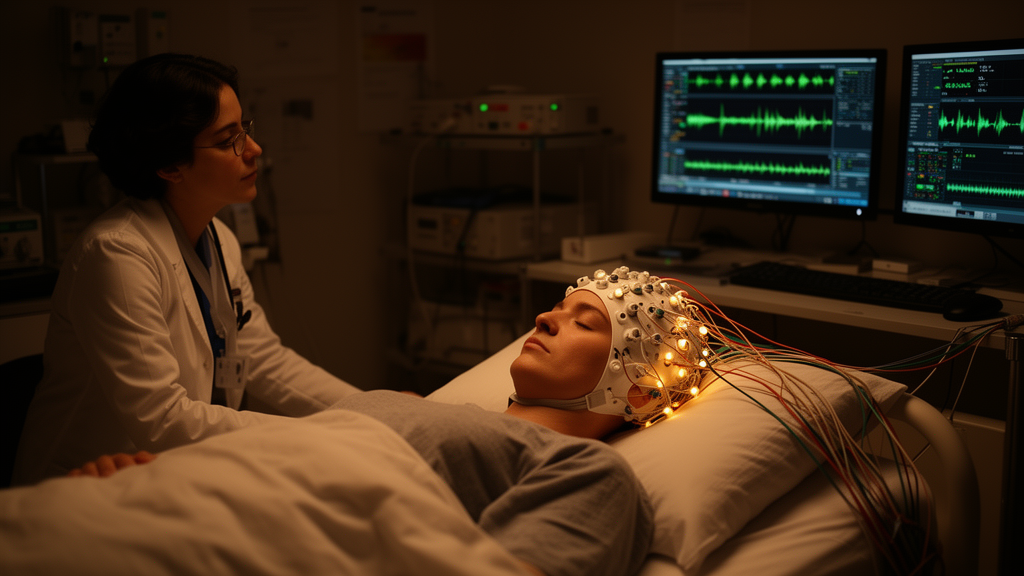
Sleep is not simply the absence of wakefulness but an active biological state during which the brain reorganizes what it learned during the day. A new editorial published in Frontiers in Behavioral Neuroscience on 20 October 2026, written by Simone Marie Ota of the University of Oxford, Robbert Havekes of the University of Groningen and Paula Ayako Tiba of the Universidade Federal do ABC, gathers the threads of a special Research Topic dedicated to sleep and cognition. The collection was designed, the editors explain, to bridge the gap between the basic neurophysiology of sleep and its real-world cognitive consequences across the human lifespan, drawing together evidence that ranges from high-density electroencephalography and event-related potentials to wearable in-home monitoring and large-scale epidemiological cohorts.
The neurophysiological foundation of the topic rests on well-established findings about sleep architecture. During slow-wave sleep, oscillatory events such as slow oscillations and sleep spindles are considered crucial for reorganizing and transferring newly acquired information from the hippocampus to the neocortex, while rapid eye movement sleep plays a vital role in emotional memory processing. Sleep deprivation, by contrast, has documented negative consequences for memory consolidation. Because sleep architecture changes across the lifespan, with progressive difficulty in maintaining sleep and a declining percentage of slow-wave sleep as people age, the editors argue that the influence of sleep on cognition must be studied in different age groups rather than in young laboratory samples alone.
At the finest scale of analysis, a mini-review by Keeble and colleagues examines how the precise temporal coordination between slow oscillations, sleep spindles and hippocampal ripples during slow-wave sleep facilitates memory transfer and synaptic plasticity. The authors discuss how disruptions of slow-wave sleep, driven by aging, neurological disorders and pharmacotherapy, lead to memory impairments. They also highlight the potential of emerging neuromodulation techniques, including closed-loop acoustic stimulation, to restore sleep microstructure and support cognitive health. Such approaches remain an active area of investigation rather than established clinical tools, but they illustrate how mechanistic knowledge of sleep timing is being translated into candidate interventions.
Memory is not a passive recording process, and a behavioral study by Kurdziel and colleagues addressed how intentional, top-down goals interact with emotional salience during overnight sleep. Participants received remember or forget instructions for neutral and negative words while either sleeping or staying awake. The researchers found that the percentage of slow-wave sleep and delta power were negatively associated with total recall, while sleep spindles correlated with negative remember-cued words. REM theta power, meanwhile, was associated with intrusions of negative foils. According to the editorial, the study shows that top-down instruction can override emotional salience when cues compete, and that specific sleep events are associated with selective memory consolidation rather than uniform strengthening of everything encoded before bed.
The cognitive stakes of poor sleep in younger populations are underlined by two student-focused studies. Xu and colleagues documented a high prevalence of insomnia, at 54.1 percent, and poor sleep quality, at 58.9 percent, among college students in Guangzhou. Their analysis indicated that short sleep duration exacerbates sleep disturbances, which in turn correlate with declines in attention, language and visual-perceptual learning, placing affected students at risk of longer-term cognitive decline. These are correlational findings in a specific student population, but the scale of the sleep problems reported is striking and consistent with broader concerns about student health.
Culture appears to shape how sleep and cognition interact. In a cross-cultural comparison of university students in Tokyo and London, Ampofo and colleagues found that the Tokyo students had significantly poorer sleep quality, shorter sleep duration and lower sleep efficiency than their London peers. Cultural factors, such as intense academic pressure and societal norms that prioritize productivity over rest in Japan, significantly moderated the relationship between sleep quality and memory, making the detrimental impact of poor sleep on verbal learning more pronounced in Tokyo. The editorial draws the practical conclusion that interventions to improve sleep quality and cognitive functioning in university students need to consider cultural and lifestyle differences rather than applying a single template worldwide.
When sleep is severely disrupted or absent altogether, the cognitive consequences are immediate. Ren and colleagues investigated the effects of 24 hours of total sleep deprivation in healthy adults, combining subjective reaction times in the auditory Oddball paradigm with objective auditory P300 event-related potentials. Acute sleep loss significantly extended P300 latency, indicating delayed auditory cognitive processing and reduced attentional alertness. The study also compared individuals with and without a chronic history of night-shift work lasting more than 24 months. While acute sleep loss dramatically impaired reaction times in the non-shift group, the chronic night-shift workers showed persistent baseline alterations in cognitive metrics, which the authors interpret as suggesting that chronic sleep disruption may induce cumulative, unrestored neurobiological changes.
Capturing sleep as it actually happens, rather than in a single laboratory night, is a persistent methodological challenge. Brooks and colleagues addressed it with a multi-night, in-home wearable electroencephalography study in healthy older adults, in which participants fitted the EEG devices themselves. Even under these naturalistic conditions, roughly 71 percent of the recorded data proved usable. Over approximately ten nights, the researchers documented substantial night-to-night variability in both macro- and micro-architectural sleep metrics, including wake after sleep onset, slow oscillation and spindle density. Interestingly, despite these clear nightly fluctuations, next-day executive functions, specifically inhibition and cognitive flexibility, remained resilient to daily sleep variations, raising questions about compensatory mechanisms that the editors flag as an open problem for the field.
The population-scale perspective comes from Qian and colleagues, who analyzed a nine-year longitudinal study of 9,970 older Chinese adults to explore links between sleep patterns and cognitive frailty. Older adults with poor sleep quality had a 67 percent higher risk of cognitive weakness, and those with short sleep duration of less than six hours had a 48 percent higher risk, while no napping and excessive napping increased the risk of cognitive debilitation by 23 percent and 69 percent, respectively. The editors note that this study, together with the wearable work by Brooks and colleagues, underscores the feasibility of portable devices for ecologically valid sleep research and provides statistical parameters, including variance components and effect sizes, that can guide the design of future longitudinal studies in different populations.
Taken together, the contributions to the Research Topic span the full spectrum of sleep and cognitive science, moving from laboratory-based microstructural investigations and acute deprivation experiments to naturalistic multi-night home monitoring and large demographic cohorts. The editors argue that this integration pushes the field beyond traditional single-night paradigms toward ecologically valid, lifespan-oriented sleep science. Key questions remain open, including which neural compensatory mechanisms allow certain cognitive functions to stay resilient despite night-to-night sleep fluctuations, and how micro-architectural sleep biomarkers might be leveraged for the early detection of cognitive frailty. The editorial closes by calling for more research in age- and culturally diverse populations, and for pharmacological or behavioral approaches to prevent or mitigate the cognitive impacts of sleep deprivation, with interventions tailored to culture, occupation and age in order to preserve cognitive integrity across the lifespan.
Subject of Research: How sleep patterns, sleep deprivation and night-to-night sleep variability affect memory, learning and cognitive health across the lifespan
Article Title: Editorial: Sleep and cognition: the role of sleep patterns and deprivation in memory and learning
Article References: Ota, S. M., Havekes, R., & Tiba, P. A. (2026). Editorial: Sleep and cognition: the role of sleep patterns and deprivation in memory and learning. Frontiers in Behavioral Neuroscience, 20, Article 1981387. https://doi.org/10.3389/fnbeh.2026.1981387
Image Credits: AI Generated
DOI: 10.3389/fnbeh.2026.1981387
Keywords: sleep, memory consolidation, slow-wave sleep, sleep deprivation, cognition, sleep spindles, REM sleep, cognitive frailty, wearable EEG, shift work, aging, college students
News Source: Beatrice Stafford. (October 27, 2026). From Sleep Spindles to Shift Work: New Research Maps How Sleep Shapes Memory Across Life. Scienmag.