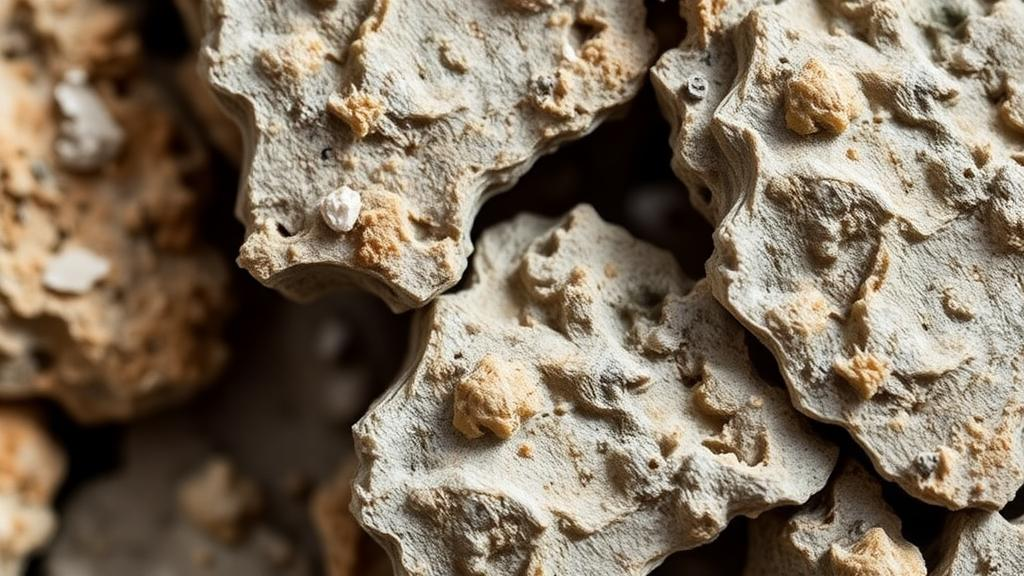
Some of the most promising advanced materials of the coming decade may not come from exotic laboratory reagents or rare-earth refineries, but from ordinary rocks. A comprehensive new review published in Advanced Composites and Hybrid Materials examines mineral-SiO2 composites, a class of functional materials that pairs the natural abundance, structural variability and cost-effectiveness of minerals with the tunable physicochemical properties of silicon dioxide. The work, led by Yu Liang and Guangwen Xu of Shenyang University of Chemical Technology together with colleagues at Nanyang Technological University, Southern University of Science and Technology, Inner Mongolia University of Science and Technology and China University of Geosciences in Beijing, synthesizes the state of the art in how these composites are made and where they deliver value, from cleaning polluted water to catalyzing industrial reactions and creating surfaces that repel water almost completely.
The central appeal of the approach lies in a simple economic and chemical logic. Minerals such as calcite, talc, kaolinite, wollastonite and other silicate or carbonate phases are cheap, geographically widespread and already produced at enormous industrial scale. Silica, meanwhile, is one of the most chemically adjustable oxides known: by controlling its particle size, porosity, surface chemistry and degree of hydration, materials scientists can dial in properties ranging from high adsorption capacity to controlled light scattering to extreme hydrophobicity. Combining the two produces composites whose interfaces, rather than the bulk phases alone, govern performance. The review emphasizes that it is precisely the control of structure and interface during fabrication that determines whether a mineral-silica composite behaves as a mediocre filler or as a high-performance functional material.
The authors systematically compare four principal fabrication routes, each with distinct mechanisms, advantages and limitations. Mechano-chemical methods use mechanical energy, typically delivered by ball milling or stirred media mills, to activate mineral surfaces and drive solid-state reactions or surface grafting without high temperatures or large volumes of solvent. The technique is attractive for scalability and low environmental burden, and it can create intimate contact between mineral and silica phases, but controlling the uniformity of the product and avoiding over-milling that destroys the mineral framework remain persistent challenges.
Chemical precipitation, by contrast, relies on solution chemistry: silica or silicate species are generated in situ, often from sodium silicate precursors, and deposit onto suspended mineral particles as pH, temperature and concentration are adjusted. The method is well established, inexpensive and readily scaled, and it offers good control over coating thickness through reaction stoichiometry and aging time. Its drawbacks include the need to manage large volumes of alkaline process water and the difficulty of achieving perfectly uniform coatings on particles with complex, anisotropic mineral surfaces. The review notes that careful control of nucleation relative to growth is the decisive factor in whether the deposited silica forms discrete nanoparticles or a continuous shell around the mineral core.
Sol-gel processing offers the finest structural control of the four routes. Molecular precursors such as tetraethyl orthosilicate undergo hydrolysis and condensation to build a silica network directly on or around mineral particles, allowing researchers to tailor porosity, shell thickness and surface functionality at the nanometer scale. This precision underpins some of the most sophisticated applications, including core-shell pigment particles and structured catalyst supports. The trade-offs are cost, since alkoxide precursors are far more expensive than sodium silicate, and sensitivity to processing conditions: small changes in water content, pH or drying rate can dramatically alter the final microstructure, complicating reproducibility when moving from laboratory beakers to industrial reactors.
Microemulsion methods occupy a complementary niche. By confining reactions inside nanoscale droplets stabilized by surfactants, they act as tiny reactors that enforce narrow particle-size distributions and well-defined morphologies. This makes the route particularly powerful for producing monodisperse composite particles where optical or colloidal properties matter, such as in pigments and advanced coatings. The costs, however, are substantial: large quantities of surfactant and organic solvent are required, and separating and purifying the product adds expense and waste. The review is candid that no single method wins on all criteria; instead, the choice of synthesis route should be dictated by the target application and the required degree of interface engineering.
That application space is remarkably broad. In environmental remediation, mineral-silica composites serve as adsorbents for heavy metals, dyes and other pollutants, with the silica component providing abundant surface hydroxyl groups and tunable porosity while the mineral core contributes mechanical robustness and low cost. In heterogeneous catalysis, the composites act as supports that disperse active phases and modulate acidity and thermal stability. As functional fillers, they improve the mechanical and barrier properties of polymers. As ceramic opacifiers, engineered silica coatings scatter light to whiten ceramics while reducing the amount of expensive titanium dioxide needed. And in coatings, silica-modified mineral particles enable superhydrophobic surfaces whose water-repellency arises from combined surface roughness and low-surface-energy chemistry, with potential uses ranging from anti-corrosion to self-cleaning architecture.
The review does not shy away from the field’s weaknesses. The authors identify the relatively high cost of some preparation methods, particularly sol-gel and microemulsion routes, as a barrier to deployment in price-sensitive commodity applications. Limited scalability and reproducibility plague several of the most elegant laboratory syntheses, where batch-to-batch variation in mineral feedstock composition, an often-overlooked variable, propagates into inconsistent product performance. The applicability of some composite designs remains narrow, optimized for one function or one industrial context without demonstrated versatility. These are not incidental problems; the authors argue they stem from insufficient attention to well-designed product preparation, meaning synthesis strategies that are chosen and tuned from the outset for a specific application rather than adapted afterward.
The strategic guidance the authors offer is therefore application-first. Rather than pursuing ever-more-exotic nanostructures, the field should match fabrication method to functional requirement: mechano-chemical and precipitation routes for high-volume, cost-sensitive uses such as fillers and opacifiers; sol-gel and microemulsion methods where interface precision justifies the expense, as in catalysis and specialty coatings. They also point toward deeper mechanistic understanding of the mineral-silica interface itself, since most failures in scalability trace back to uncontrolled interfacial chemistry. Standardized characterization of both the mineral precursor and the final composite, they suggest, would improve reproducibility across laboratories and manufacturers.
What makes this review timely is the convergence of pressures it responds to. Industries under scrutiny for their carbon and cost footprints are actively seeking replacements for synthetic and mined high-purity materials, and mineral-silica composites offer a path that uses abundant feedstocks with modest processing energy. At the same time, advances in interface engineering have made it possible to extract performance from these humble ingredients that would have been unattainable a decade ago. The authors, writing without dedicated external funding, frame their work as fundamental insight and strategic guidance for the rational development of next-generation composites. If the field heeds its own diagnosis, prioritizing application-specific design over generic synthesis, the next wave of functional materials may indeed be dug out of the ground, coated with a few nanometers of engineered silica, and sent to work cleaning water, catalyzing reactions and keeping surfaces dry.
Subject of Research: Synthesis methods and functional applications of mineral-SiO2 composite materials
Article Title: Mineral-SiO2 composites: synthesis methods and functional applications
Article References: Liang, Y., Jiang, Y., Kwon, C., Yu, L., Ding, J., He, Z., Ding, H., & Xu, G. (2026). Mineral-SiO2 composites: synthesis methods and functional applications. Advanced Composites and Hybrid Materials. https://doi.org/10.1007/s42114-026-02116-8
Image Credits: AI Generated
DOI: 10.1007/s42114-026-02116-8
Keywords: mineral-SiO2 composites, silica, mechano-chemical synthesis, chemical precipitation, sol-gel, microemulsion, environmental remediation, heterogeneous catalysis, functional fillers, ceramic opacifiers, superhydrophobic coatings, nanocomposites
News Source: Bethany Barker. (October 7, 2026). From Rocks to High-Tech: How Mineral-Silica Composites Are Quietly Transforming Modern Materials. Scienmag.