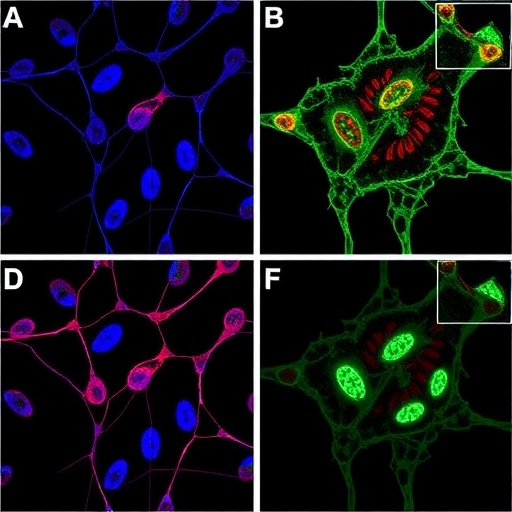
DNA’s iconic double helix is often celebrated as the master blueprint of life, encoding the genetic instructions essential for the development and functioning of all living organisms. Yet, emerging research from Umeå University in Sweden reveals a fascinating twist in this narrative: under specific physiological conditions, DNA can adopt alternative shapes beyond the classic double helical structure. Among these, the i-motif DNA stands out as a transient, four-stranded configuration that not only exists within living cells but also plays a crucial regulatory role with profound implications for cancer biology.
The i-motif structure represents a remarkable departure from the well-known Watson-Crick base pairing paradigm. Instead of the familiar adenine-thymine and cytosine-guanine pairs that stabilize the double helix, the i-motif is composed of cytosine-rich sequences that fold back on themselves, forming intercalated cytosine–cytosine base pairs. This folding produces a compact, knot-like secondary structure involving a single DNA strand, challenging the traditional view of DNA as simply a double helix. Previously dismissed as an in vitro curiosity too unstable to survive in vivo conditions, the Umeå research team has now definitively demonstrated that i-motif formations do arise within living cells, albeit fleetingly and precisely timed.
Using cutting-edge biochemical assays combined with computational modeling and sophisticated cell biology techniques, the researchers pinpointed the temporal emergence of i-DNA at a critical juncture in the cell cycle: just before the DNA replication process initiates. This narrow window suggests that i-motif structures function as regulatory checkpoints rather than static entities, forming and resolving in sync with cellular molecular machinery. The transient nature of i-DNA underscores its potential role as a selective regulator, tethering genetic expression to cellular context and timing.
Central to this regulatory mechanism is the protein PCBP1, which the study identifies as a pivotal factor in managing the formation and dissolution of the i-motif structures. PCBP1 operates by selectively unwinding the i-motif DNA at the right moment, ensuring that DNA replication proceeds unimpeded. Failure of this protein to effectively resolve i-DNA structures can result in replication fork stalling, a phenomenon linked to heightened genomic instability. Indeed, prolonged persistence of unresolved i-motifs increases the likelihood of DNA breaks, a hallmark associated with oncogenic transformation and tumor progression.
The heterogeneity of i-motif stability adds a layer of complexity to their biological function. Varying cytosine content within these structures influences their resistance to unfolding by PCBP1. Highly stable i-motifs, reinforced by additional cytosine base pairs or hybrid formations, present formidable barriers to normal DNA replication. Such stability gradients might serve as intrinsic molecular timers or switches, modulating gene expression dynamics across different chromosomal regions. Particularly notable is the enrichment of i-motif DNAs within regulatory domains of oncogenes, hinting at a direct mechanistic link between i-DNA dynamics and cancer pathophysiology.
The implications of this discovery extend far beyond molecular curiosity. Cancer cells, often subjected to excessive replication stress owing to their rapid proliferative demands, operate perilously close to the limits of DNA replication fidelity. The presence of stable i-motif structures in these cells could represent a fragility point—an “Achilles’ heel” vulnerable to therapeutic intervention. By encapsulating the molecular interplay between i-DNA and PCBP1, this study opens new avenues for drug development aimed at selectively exacerbating replication stress in malignant cells, potentially driving them towards genomic catastrophe and cell death.
At the mechanistic level, visualizing PCBP1’s stepwise unraveling of i-motif DNA elucidated previously obscure molecular choreography. The researchers employed real-time imaging and structural analyses to observe how PCBP1 recognizes, binds, and progressively destabilizes the cytosine-cytosine base pairing, facilitating the transition from a folded knot to an open, replication-competent conformation. These insights contribute to a nuanced understanding of how protein-DNA interactions govern genome stability and underscore the precision required in cellular regulation.
The transient life span of i-motif DNA within cells provides a striking example of molecular ephemerality fulfilling vital biological functions. Much like fleeting “peek-a-boo” appearances, as described by the study’s first author Pallabi Sengupta, these structures exemplify nature’s use of temporal and spatial control to regulate complex processes. The synchronization of i-DNA formation with cell cycle progression points to an evolutionary adaptation, integrating DNA structural dynamics within broader regulatory networks that oversee cellular proliferation and genome maintenance.
Furthermore, the collaborative nature of the research, involving expertise from both Umeå University and the CNRS in France, highlights the importance of interdisciplinary efforts in unraveling the complexities of DNA architecture. Combining biochemical, computational, and cellular biology approaches allowed the team to overcome longstanding technical challenges and validate the biological relevance of i-motif structures within living systems, dispelling doubts that previously relegated i-DNA to the realm of experimental artifact.
Taken together, these findings represent a paradigm shift in our understanding of DNA biology. The recognition of i-motif DNA as a functional, regulated entity within cells expands the landscape of genetic regulation and offers promising new targets for cancer therapy. By exploiting the delicate balance between formation and resolution of these knot-like DNA structures, therapeutic strategies could be devised to selectively compromise the proliferative capacity of tumor cells without damaging normal tissue.
As research continues to elucidate the diverse roles of alternative DNA structures, the i-motif provides a compelling example of how DNA’s versatility extends beyond the double helix to orchestrate critical cellular events. This study unlocks possibilities for future investigations into how such structures interact with the full complement of nuclear proteins and the epigenetic landscape, potentially influencing gene expression, chromatin organization, and cellular response to stress.
The journey from perceiving the i-motif as a scientific curiosity to recognizing its integral place within molecular biology showcases the dynamic and evolving nature of genetic research. With the advances presented by the Umeå team, the foundation is laid for a new era of molecular medicine, leveraging the unique vulnerabilities of DNA secondary structures for innovative cancer treatments that could transform patient outcomes worldwide.
Subject of Research: Cells
Article Title: Mechanistic insights into PCBP1-driven unfolding of selected i-motif DNA at G1/S checkpoint. Nature Communications
News Publication Date: 2-Feb-2026
Web References: 10.1038/s41467-026-68822-5
Image Credits: Mattias Pettersson
Keywords: i-motif DNA, PCBP1, DNA replication, cytosine base pairs, DNA secondary structure, genome stability, cancer biology, replication stress, DNA-protein interaction, gene regulation, DNA folding, oncogene regulation
Tags: alternative DNA configurationsbiochemical assays in geneticscancer research breakthroughscomputational modeling in cancer biologycytosine-rich DNA sequencesDNA folding and structurefour-stranded DNA configurationsi-motif DNA structureimplications of i-motif in cancerregulatory roles of i-motif DNAtransient DNA shapes in cellsUmeå University DNA study