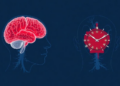
Heidelberg, 2 August 2017 – There is increasing evidence that post-traumatic stress disorder (PTSD) increases the risk of developing dementia later in life. Researchers at the University Medical Center Goettingen, Germany, now shed light on the molecular mechanism that links the two disorders. The research is published today in The EMBO Journal.
PTSD is a brain disorder that can occur after experiencing a traumatic event. Individuals with PTSD frequently relive the traumatic event, often triggered by stimuli similar to those that accompanied the trauma. A number of epidemiological studies have shown that individuals suffering from PTSD are more prone to acquiring Alzheimer's disease later in their lives.
Unravelling the molecular underpinnings of this correlation will help to identify targeted therapies. The research team in Goettingen identified such a molecular link by showing that Formin 2 is deregulated in PTSD and Alzheimer's disease patients. To investigate this link further, the researchers showed that Formin 2 mutant mice show PTSD phenotypes at an early age and develop age-related memory decline.
On the molecular level, Formin 2 is active in the brain, where it regulates the dynamics of the cytoskeleton, the structure that helps cells to maintain their shape and internal organization. It is required for neuronal cell contacts to change and to ease off again after they have been strengthened by learning.
"Our hypothesis was that various risk factors eventually cause an aberrant activation of many genes that contribute to Alzheimer's disease. One of these factors could be developing PTSD via a process that involves Formin 2," said Farahnaz Sananbenesi, lead researcher of the study.
To test this idea, the researchers undertook a comprehensive analysis of gene activity in Formin 2 mutant mice. Indeed, whereas young mice lacking Formin 2 were hardly different from normal mice, a deregulation of hundreds of genes built up as they aged. The researchers also found that the drug Vorinostat, which ameliorates PTSD phenotypes in younger mice, enhanced memory in aged Formin 2-deficient mice.
"Our results indicate that it may be possible to develop therapeutic strategies for PTSD patients that, at the same time, lower the risk to develop Alzheimer's disease," said André Fischer who coordinated the study together with Dr. Sananbenesi.
###
Information for editors:
Formin 2 links neuropsychiatric phenotypes at young age to an increased risk for dementia
Roberto Carlos Agis-Balboa, Paulo Pinhero, Nelson Rebola, Cemil Kerimoglu, Eva Benito, Michael Gertig, Sanaz Bahari-Javan, Gaurav Jain, Susanne Burkhardt, Ivana Delalle, Alexander Jatzko, Markus Dettenhofer, Patricia A. Zunszain, Andrea Schmitt, Peter Falkai, Julius C. Pape, Elisabeth B. Binder, Christophe Mulle, Andre Fischer & Farahnaz Sananbenesi
DOI 10.15252/embj.201796821
About EMBO Press
EMBO Press stands for publishing impactful, high quality and reliable research across the biosciences in its four journals, The EMBO Journal, EMBO Reports, Molecular Systems Biology and EMBO Molecular Medicine.
EMBO Press pioneered the transparent editorial process in order to provide a rapid, fair and efficient publication process. Through developing and employing Source Data tools, EMBO Press works towards improving data transparency, reuse and discoverability. Through dedicated data integrity checks, it ensures the publication of reliable data. All submitted manuscripts are subject to scooping protection, which extends to manuscripts published on preprint servers. As a co-signatory of the San Francisco Declaration for Research Assessment, EMBO Press is an advocate for moving away from impact factors as a mechanism for research assessment.
About EMBO
EMBO is an organization of more than 1700 leading researchers that promotes excellence in the life sciences. The major goals of the organization are to support talented researchers at all stages of their careers, stimulate the exchange of scientific information, and help build a European research environment where scientists can achieve their best work.
EMBO helps young scientists to advance their research, promote their international reputations and ensure their mobility. Courses, workshops, conferences and scientific journals disseminate the latest research and offer training in techniques to maintain high standards of excellence in research practice. EMBO helps to shape science and research policy by seeking input and feedback from our community and by following closely the trends in science in Europe. ?For more information: http://www.embo.org
Media Contact
Tilmann Kiessling
[email protected]
@EMBOcomm
http://www.embo.org
http://embo.org/news/press-releases/2017/from-a-memory-too-strong-to-a-memory-too-weak
Related Journal Article
http://dx.doi.org/10.15252/embj.201796821