For the growing population of people who have survived cancer, the battle is often not over when treatment ends. Many survivors face an elevated risk of developing entirely new chronic illnesses in the years that follow, from heart failure and diabetes to depression and digestive disorders. Now, a large prospective study drawing on the UK Biobank suggests that a simple, measurable characteristic of a patient’s overall physiological state—frailty—may serve as a powerful early warning signal for which survivors are most likely to develop these long-term comorbidities. The findings, published in the Journal of Cancer Survivorship, offer clinicians a potential roadmap for identifying vulnerable patients before disease strikes.
The research team, led by Wenqian Li and colleagues at Jinan University in Guangzhou, China, analyzed data from 21,577 cancer survivors aged 39 to 70 years enrolled in the UK Biobank, one of the world’s largest biomedical databases. Crucially, the investigators excluded anyone who already had the diseases of interest at baseline, ensuring that they were tracking genuinely new-onset conditions rather than pre-existing illness. Incident cases across 39 distinct chronic diseases were identified through linkage to hospital inpatient records and death registries, allowing the researchers to follow participants prospectively over time rather than relying on retrospective self-reports.
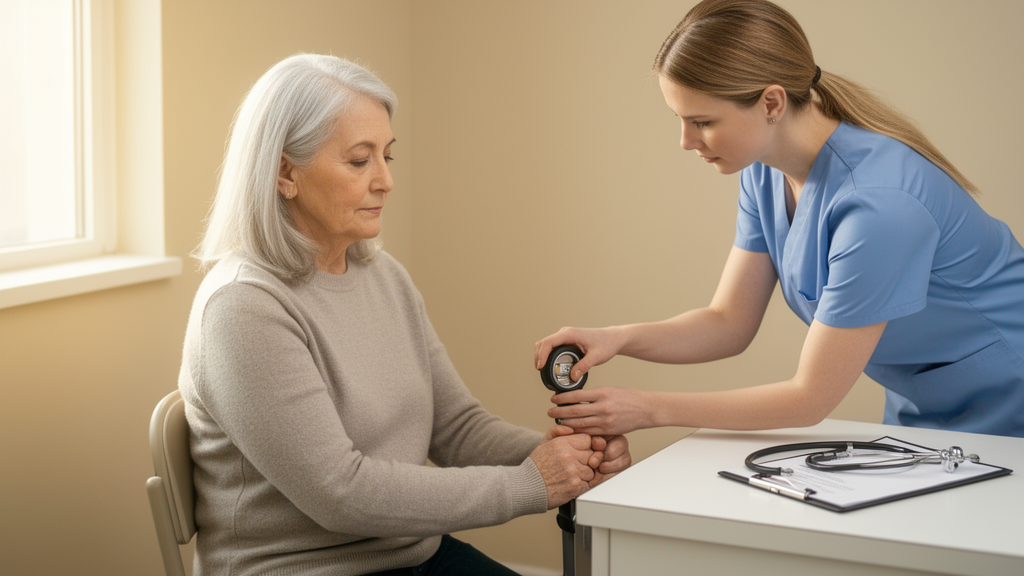
What makes the study methodologically notable is its use of two complementary instruments for measuring frailty. The first, the frailty phenotype developed by Linda Fried and colleagues, is a five-point scale based on physical markers: unintentional weight loss, exhaustion, low physical activity, slow walking speed, and weak grip strength. The second, the frailty index, takes a broader approach, aggregating deficits across multiple health domains into a continuous score ranging from 0 to 1. Because these tools capture different dimensions of biological vulnerability—one focused on physical function, the other on accumulated health deficits—the researchers could test whether their conclusions held regardless of how frailty was defined. They did.
Using Cox proportional hazards models, the team estimated hazard ratios linking baseline frailty to the subsequent incidence of each chronic disease. The results were striking in their breadth. Frailty was significantly associated with an increased risk of 28 of the 39 chronic conditions examined. Every one of the eight cardiometabolic diseases studied showed this association, as did five of ten mental and neurological disorders, five of six digestive system diseases, and ten of fifteen other conditions ranging from respiratory to musculoskeletal illness. In other words, frailty did not merely predict one or two unfortunate outcomes; it painted a systemic picture of heightened vulnerability across nearly every organ system the researchers examined.
The magnitude of risk varied considerably by condition, and some of the strongest associations were unexpected. Within the mental and neurological category, depression showed the most pronounced effect: cancer survivors with higher frailty index scores had a 2.39-fold increased risk of developing depression compared with their non-frail counterparts, with a 95 percent confidence interval of 2.19 to 2.62. Bronchiectasis, a chronic condition in which the airways become abnormally widened and prone to infection, carried a hazard ratio of 2.11. Irritable bowel syndrome followed at 1.79, and heart failure—the most strongly affected cardiometabolic outcome—showed a hazard ratio of 1.48. The overall pattern, the authors note, was most pronounced for mental and neurological disorders, a finding that challenges the traditional tendency to view frailty as primarily a physical or geriatric syndrome.
Stratified analyses added further nuance to the picture. The association between frailty and the risk of anxiety and depression was stronger among cancer survivors younger than 60 years, suggesting that frailty may be particularly consequential for mental health in midlife survivors rather than only in the elderly. Meanwhile, prostate cancer survivors exhibited a significantly higher risk of bronchiectasis and diverticular disease in connection with frailty, hinting that cancer type may modify how frailty translates into specific comorbidities. These subgroup findings matter because they imply that a one-size-fits-all surveillance strategy may miss important risk patterns; a younger breast cancer survivor and an older prostate cancer survivor may face very different frailty-related trajectories.
The biological plausibility of these associations is supported by a growing literature on premature aging in cancer survivors. Previous research has suggested that cancer and its treatments can accelerate biological aging through mechanisms including chronic inflammation, telomere shortening, mitochondrial dysfunction, and sarcopenia—the loss of skeletal muscle mass and function. Frailty, in this framework, is not simply a label for weakness but a measurable manifestation of cumulative physiological decline. Studies cited by the authors connect frailty to cardiovascular outcomes, dementia risk, venous thromboembolism, metabolic liver disease, chronic obstructive pulmonary disease, osteoporosis, and even psoriasis and glaucoma in general populations. The new study extends this evidence specifically to cancer survivors, a group already known to bear a disproportionate comorbidity burden as they age.
Sensitivity analyses confirmed the stability of the results, lending weight to the central conclusion that frailty is prospectively associated with an increased risk of diverse chronic diseases in this population. The study was conducted under the principles of the Declaration of Helsinki using UK Biobank data under Application Number 300908, with ethical approval from the relevant UK research ethics committees and written informed consent from all participants. The authors declared no conflicts of interest, and the work was supported by the National Natural Science Foundation of China and several Guangzhou municipal research programs.
Still, some caveats are worth keeping in mind. As with any observational cohort, the study demonstrates association rather than proven causation; it remains possible that subclinical disease contributes both to frailty measurements and to later diagnoses, or that shared underlying mechanisms—such as systemic inflammation—drive both. The UK Biobank population, which tends to be healthier than the general population, may also limit generalizability, and the frailty phenotype and index were measured only at baseline, leaving open questions about how changes in frailty over time might alter risk. Nonetheless, the prospective design, the large sample, the exclusion of baseline disease, and the consistency across two frailty measures collectively strengthen the case that the observed links are meaningful.
The clinical implications could be significant. With cancer survival rates improving steadily across decades, the number of people living long after a cancer diagnosis continues to climb, and their long-term health needs are increasingly recognized as a distinct field of care. The authors argue that routine assessment of frailty may help identify survivors who need targeted interventions and proactive clinical monitoring to prevent long-term comorbidities and enhance quality of life. In practical terms, that could mean incorporating grip strength tests, gait speed measurements, and deficit-based frailty indices into survivorship follow-up visits, then directing frail patients toward exercise programs, nutritional support, mental health screening, and earlier cardiometabolic surveillance. If frailty can be treated as a modifiable risk factor rather than a fixed fate, the study suggests, some of the chronic disease burden that shadows cancer survival might be prevented before it begins.
Subject of Research: The association between baseline frailty and the incidence of chronic diseases among cancer survivors
Article Title: Frailty and risk of common chronic diseases among cancer survivors: a prospective cohort study
Article References: Li, W., Zhang, Z., Lu, C., Xu, Y., Han, S., Zhan, Y., Ge, G., Wang, Z., Lan, X., Zhang, X., Lu, H., & Guo, J. (2026). Frailty and risk of common chronic diseases among cancer survivors: a prospective cohort study. Journal of Cancer Survivorship. https://doi.org/10.1007/s11764-026-02118-x
Image Credits: AI Generated
DOI: 10.1007/s11764-026-02118-x
Keywords: cancer survivors, frailty, chronic diseases, UK Biobank, cardiometabolic disease, depression, heart failure, prospective cohort study, comorbidity, premature aging, survivorship care, frailty index
News Source: Nathaniel Bowman. (October 9, 2026). Frailty May Foreshadow Chronic Disease Risk in Cancer Survivors, Study Finds. Scienmag.