• HOME
  • NEWS
  • EXPLORE
    • CAREER
      • Companies
      • Jobs
    • EVENTS
    • iGEM
      • News
      • Team
    • PHOTOS
    • VIDEO
    • WIKI
  • BLOG
  • COMMUNITY
    • FACEBOOK
    • INSTAGRAM
    • TWITTER
Saturday, February 7, 2026
BIOENGINEER.ORG
No Result
View All Result
  • Login
  • HOME
  • NEWS
  • EXPLORE
    • CAREER
      • Companies
      • Jobs
        • Lecturer
        • PhD Studentship
        • Postdoc
        • Research Assistant
    • EVENTS
    • iGEM
      • News
      • Team
    • PHOTOS
    • VIDEO
    • WIKI
  • BLOG
  • COMMUNITY
    • FACEBOOK
    • INSTAGRAM
    • TWITTER
  • HOME
  • NEWS
  • EXPLORE
    • CAREER
      • Companies
      • Jobs
        • Lecturer
        • PhD Studentship
        • Postdoc
        • Research Assistant
    • EVENTS
    • iGEM
      • News
      • Team
    • PHOTOS
    • VIDEO
    • WIKI
  • BLOG
  • COMMUNITY
    • FACEBOOK
    • INSTAGRAM
    • TWITTER
No Result
View All Result
Bioengineer.org
No Result
View All Result
Home NEWS Science News Health

Four new species of giant single-celled organisms discovered on Pacific seafloor

Bioengineer by Bioengineer
June 24, 2020
in Health
Reading Time: 3 mins read
0
IMAGE
Share on FacebookShare on TwitterShare on LinkedinShare on RedditShare on Telegram

IMAGE

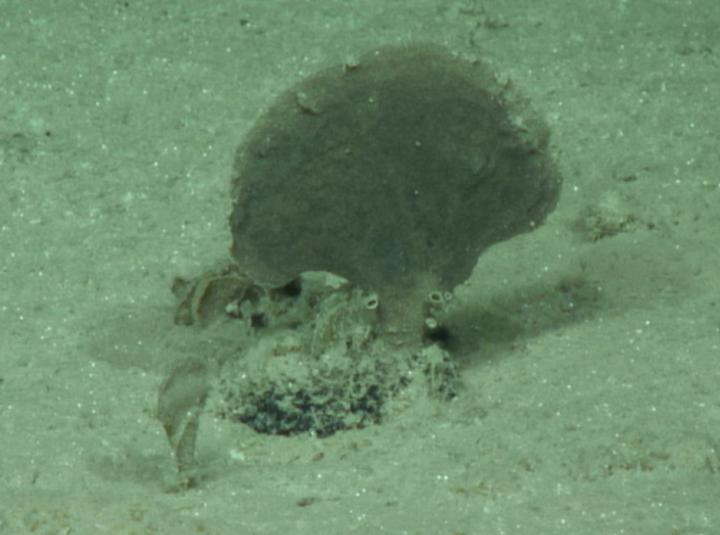
Credit: Jennifer Durden and Craig Smith, DeepCCZ Project.

Two new genera and four new species of giant, single-celled xenophyophores (protozoans belonging to a group called the foraminifera) were discovered in the deep Pacific Ocean during a joint project between scientists at the National Oceanography Centre, UK (NOC), the University of Hawai’i, and the University of Geneva. ‘Moana’ has inspired the name Moanammina for one of the new genera, while the second has been named Abyssalia in recognition of its abyssal habitat.

The species were described, based on morphology and genetic data, from specimens collected with the University of Hawai’i’s Remotely Operated Vehicle Lu’ukai on an expedition to the western Clarion Clipperton Zone (CCZ) aboard the RV Kilo Moana in 2018. The seabed in this area is over three miles deep. The CCZ occupies a vast swathe of the Pacific Ocean with extensive seafloor polymetallic nodule deposits, and is targeted for deep-sea mining.

“We were excited to find these beautiful new xenophyophores,” said Andrew Gooday, professor at NOC and lead author of the recently published findings. “It seemed appropriate to name one after ‘Moana’, a Hawaiian word meaning ocean. Xenophyophores are one of the most common types of large organism found on the CCZ abyssal plains, so the name of the second genus was chosen to reflect this.”

Like some other types of foraminifera, xenophyophores construct shells, called tests, composed of particles that they obtain from the surrounding environment. These are often elaborate structures that can reach sizes of four inches or more.

Moanammina semicircularis sp. nov., the new species of the new genus, has a stalked, fan-shaped test, around three inches tall and three and one-half inches wide. Two other new species, Abyssalia foliformis sp. nov. and Abyssalia sphaerica sp. nov., have tests that resemble a flat leaf and an almost perfect sphere, respectively. They are remarkable for being constructed entirely of glass sponge spicules. The fourth new species is Psammina tenuis sp. nov., which has a delicate, thin, plate-like test.

“These four new species and two new genera have increased the number of described xenophyophores in the CCZ abyss to 17 (22% of the global total for this group), with many more known but still undescribed,” said Gooday. “This part of the Pacific Ocean is clearly a hotspot of xenophyophore diversity.”

“The abundance and diversity of these giant single-celled organisms is truly amazing!” said oceanographer Craig Smith from the UH Mānoa School of Ocean and Earth Science and Technology (SOEST), co-author and Chief Scientist of the RV Kilo Moana cruise on which the xenophyophores were discovered.

“We see them everywhere on the seafloor in many different shapes and sizes. They clearly are very important members of the rich biological communities living in the CCZ. Among other things they provide microhabitats and potential food sources for other organisms. We need to learn much more about the ecology these weird protozoans if we wish to fully understand how seafloor mining might impact these seafloor communities.”

Moanammina semicircularis is genetically identical to another specimen found in 2017 in the eastern CCZ. Thus, this study provided the first genetic confirmation of wide geographic ranges (at least ~2,300 miles) for an abyssal xenophyophore species.

###

Media Contact
Marcie Grabowski
[email protected]

Related Journal Article

http://dx.doi.org/10.1016/j.ejop.2020.125715

Tags: BiodiversityBiologyCell BiologyDevelopmental/Reproductive BiologyEcology/EnvironmentMarine/Freshwater BiologyOceanography
Share12Tweet8Share2ShareShareShare2

Related Posts

Palmitoylation of Tfr1 Drives Platelet Ferroptosis and Exacerbates Liver Damage in Heat Stroke

February 7, 2026

Oxygen-Enhanced Dual-Section Microneedle Patch Improves Drug Delivery and Boosts Photodynamic and Anti-Inflammatory Treatment for Psoriasis

February 7, 2026

Scientists Identify SARS-CoV-2 PLpro and RIPK1 Inhibitors Showing Potent Synergistic Antiviral Effects in Mouse COVID-19 Model

February 7, 2026

Neg-Entropy: The Key Therapeutic Target for Chronic Diseases

February 7, 2026
Please login to join discussion

POPULAR NEWS

  • Robotic Ureteral Reconstruction: A Novel Approach

    Robotic Ureteral Reconstruction: A Novel Approach

    82 shares
    Share 33 Tweet 21
  • Digital Privacy: Health Data Control in Incarceration

    63 shares
    Share 25 Tweet 16
  • Study Reveals Lipid Accumulation in ME/CFS Cells

    57 shares
    Share 23 Tweet 14
  • Breakthrough in RNA Research Accelerates Medical Innovations Timeline

    53 shares
    Share 21 Tweet 13

About

We bring you the latest biotechnology news from best research centers and universities around the world. Check our website.

Follow us

Recent News

Palmitoylation of Tfr1 Drives Platelet Ferroptosis and Exacerbates Liver Damage in Heat Stroke

Oxygen-Enhanced Dual-Section Microneedle Patch Improves Drug Delivery and Boosts Photodynamic and Anti-Inflammatory Treatment for Psoriasis

Scientists Identify SARS-CoV-2 PLpro and RIPK1 Inhibitors Showing Potent Synergistic Antiviral Effects in Mouse COVID-19 Model

Subscribe to Blog via Email

Enter your email address to subscribe to this blog and receive notifications of new posts by email.

Join 73 other subscribers
  • Contact Us

Bioengineer.org © Copyright 2023 All Rights Reserved.

Welcome Back!

Login to your account below

Forgotten Password?

Retrieve your password

Please enter your username or email address to reset your password.

Log In
No Result
View All Result
  • Homepages
    • Home Page 1
    • Home Page 2
  • News
  • National
  • Business
  • Health
  • Lifestyle
  • Science

Bioengineer.org © Copyright 2023 All Rights Reserved.