• HOME
  • NEWS
  • EXPLORE
    • CAREER
      • Companies
      • Jobs
    • EVENTS
    • iGEM
      • News
      • Team
    • PHOTOS
    • VIDEO
    • WIKI
  • BLOG
  • COMMUNITY
    • FACEBOOK
    • INSTAGRAM
    • TWITTER
Tuesday, June 2, 2026
BIOENGINEER.ORG
No Result
View All Result
  • Login
  • HOME
  • NEWS
  • EXPLORE
    • CAREER
      • Companies
      • Jobs
        • Lecturer
        • PhD Studentship
        • Postdoc
        • Research Assistant
    • EVENTS
    • iGEM
      • News
      • Team
    • PHOTOS
    • VIDEO
    • WIKI
  • BLOG
  • COMMUNITY
    • FACEBOOK
    • INSTAGRAM
    • TWITTER
  • HOME
  • NEWS
  • EXPLORE
    • CAREER
      • Companies
      • Jobs
        • Lecturer
        • PhD Studentship
        • Postdoc
        • Research Assistant
    • EVENTS
    • iGEM
      • News
      • Team
    • PHOTOS
    • VIDEO
    • WIKI
  • BLOG
  • COMMUNITY
    • FACEBOOK
    • INSTAGRAM
    • TWITTER
No Result
View All Result
Bioengineer.org
No Result
View All Result
Home NEWS Science News Biology

Four in five bird species cannot tolerate intense human pressures

Bioengineer by Bioengineer
April 5, 2024
in Biology
Reading Time: 3 mins read
0
Birdnest and graffiti
Share on FacebookShare on TwitterShare on LinkedinShare on RedditShare on Telegram

In a recent study, researchers found that 78% of the world’s bird species do not thrive in the most modified human-dominated environments. These species are also most likely to have declining populations.
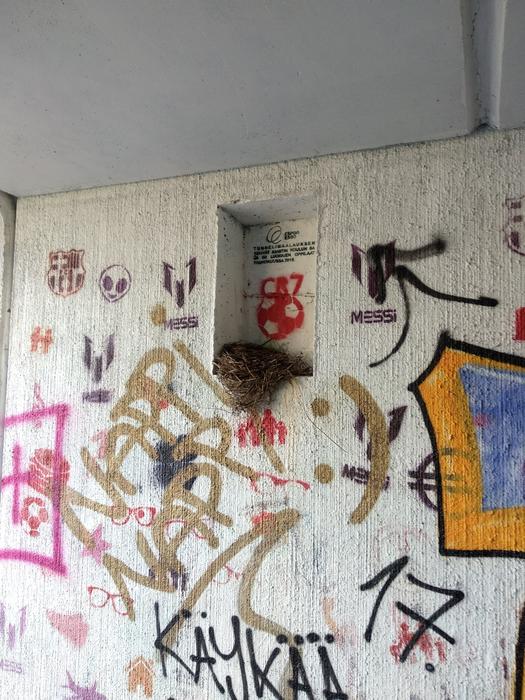
Birdnest and graffiti

Credit: Andrea Santangeli

In a recent study, researchers found that 78% of the world’s bird species do not thrive in the most modified human-dominated environments. These species are also most likely to have declining populations.

Currently 14% of the world’s 11,000 bird species are threatened with extinction. The new study assessed the populations of bird species across a spectrum of landscapes from pristine habitats to human-dominated environments. 

“Threatened species, and species with declining populations, are less tolerant to breeding in human-dominated habitats. For example, the Fern Wren, a species occurring only in tropical forests of northeastern Australia, is endangered, has a declining population and a very low tolerance to any human pressure,” says PhD Emma-Liina Marjakangas, leader of the study affiliated at both University of Helsinki in Finland and Aarhus University in Denmark. 

However, not all species are as sensitive to living alongside humans. “Some species can tolerate even the most intense human pressures on all continents. Common Swifts are an example of such species that can be found breeding in urban areas all around the world.”, explains Marjakangas.

Following the UN’s Kunming–Montreal Global Biodiversity Framework, goals have been set to protect 30% of the Earth’s land for conservation, but not much of that percentage will be pristine habitat. 

“This study enables us to identify species that are particularly sensitive to human activity and need more protected habitats to thrive, for example the Great Snipe in Europe, the Nkulengu Rail in Africa and the Hume’s Lark in Asia. Conservation action to protect or restore habitat can then be targeted towards the species and locations that need it most, explains senior curator Aleksi Lehikoinen from the Finnish Museum of Natural History at the University of Helsinki in Finland. 

Europe and North America had higher proportions of human-tolerant bird species than Latin America and Africa did. Europe has a long history of environmental impacts spanning millennia, which, according to the researchers, may have resulted in historical disappearances of sensitive species and also in a long time frame for the remaining species to adapt to the gradually changing landscapes. 

The researchers quantified tolerance to breeding in human-dominated environments for 6,000 bird species. The data on birds originated from citizen science observations from the eBird project from 2013–2021. The data on the extent of human impact was the Human Footprint Index that summarises the combined pressures of built environments, human population density, night-time lights, agriculture and roads.

The study is published in the international science journal Global Ecology and Biogeography, and it was a joint effort of researchers from the University of Helsinki (Finland), Aarhus University (Denmark), University of St Andrews (UK), and the Institute for Mediterranean Studies (Spain). 


Journal

Global Ecology and Biogeography

DOI

10.1111/geb.13816

Subject of Research

Animals

Article Title

Bird species’ tolerance to human pressures and associations with population change

Article Publication Date

14-Feb-2024

Share12Tweet8Share2ShareShareShare2

Related Posts

Researchers Uncover Genetic Trade-Off Between Youthfulness and Lifespan — Biology

Researchers Uncover Genetic Trade-Off Between Youthfulness and Lifespan

June 2, 2026
T Cells Could Hold the Key to Halting Measles Virus and Its Lethal Cousins — Biology

T Cells Could Hold the Key to Halting Measles Virus and Its Lethal Cousins

June 2, 2026

Epigenetic Changes Can Be Passed to Offspring Without Altering DNA in Animals

June 2, 2026

Robot Fish May Reveal How Our Ancient Ancestors Took Their First Steps

June 2, 2026

POPULAR NEWS

  • ESMO 2025: mRNA COVID Vaccines Enhance Efficacy of Cancer Immunotherapy

    321 shares
    Share 128 Tweet 80
  • Multi-Hospital Study Reveals Long Covid Burden Is Twice as High as Current Estimates

    86 shares
    Share 34 Tweet 21
  • Saying Goodbye to PGY-6: Pediatric Fellowship Realities

    66 shares
    Share 26 Tweet 17
  • Common Food Preservatives Associated with Elevated Blood Pressure and Increased Heart Disease Risk

    57 shares
    Share 23 Tweet 14

About

We bring you the latest biotechnology news from best research centers and universities around the world. Check our website.

Follow us

Recent News

Researchers Uncover Genetic Trade-Off Between Youthfulness and Lifespan

Scientists Create Adaptive Charging Technique to Minimize Electric Vehicle Battery Wear

Statin Use and Survival Outcomes in Early Breast Cancer Across Intrinsic Subtypes

Subscribe to Blog via Email

Enter your email address to subscribe to this blog and receive notifications of new posts by email.

Join 82 other subscribers
  • Contact Us

Bioengineer.org © Copyright 2023 All Rights Reserved.

Welcome Back!

Login to your account below

Forgotten Password?

Retrieve your password

Please enter your username or email address to reset your password.

Log In
No Result
View All Result
  • Homepages
    • Home Page 1
    • Home Page 2
  • News
  • National
  • Business
  • Health
  • Lifestyle
  • Science

Bioengineer.org © Copyright 2023 All Rights Reserved.