• HOME
  • NEWS
  • EXPLORE
    • CAREER
      • Companies
      • Jobs
    • EVENTS
    • iGEM
      • News
      • Team
    • PHOTOS
    • VIDEO
    • WIKI
  • BLOG
  • COMMUNITY
    • FACEBOOK
    • INSTAGRAM
    • TWITTER
Saturday, March 28, 2026
BIOENGINEER.ORG
No Result
View All Result
  • Login
  • HOME
  • NEWS
  • EXPLORE
    • CAREER
      • Companies
      • Jobs
        • Lecturer
        • PhD Studentship
        • Postdoc
        • Research Assistant
    • EVENTS
    • iGEM
      • News
      • Team
    • PHOTOS
    • VIDEO
    • WIKI
  • BLOG
  • COMMUNITY
    • FACEBOOK
    • INSTAGRAM
    • TWITTER
  • HOME
  • NEWS
  • EXPLORE
    • CAREER
      • Companies
      • Jobs
        • Lecturer
        • PhD Studentship
        • Postdoc
        • Research Assistant
    • EVENTS
    • iGEM
      • News
      • Team
    • PHOTOS
    • VIDEO
    • WIKI
  • BLOG
  • COMMUNITY
    • FACEBOOK
    • INSTAGRAM
    • TWITTER
No Result
View All Result
Bioengineer.org
No Result
View All Result
Home NEWS Science News Biology

Fossils’ soft tissues helping to solve puzzle that vexed Darwin

Bioengineer by Bioengineer
January 12, 2021
in Biology
Reading Time: 2 mins read
0
IMAGE
Share on FacebookShare on TwitterShare on LinkedinShare on RedditShare on Telegram

IMAGE

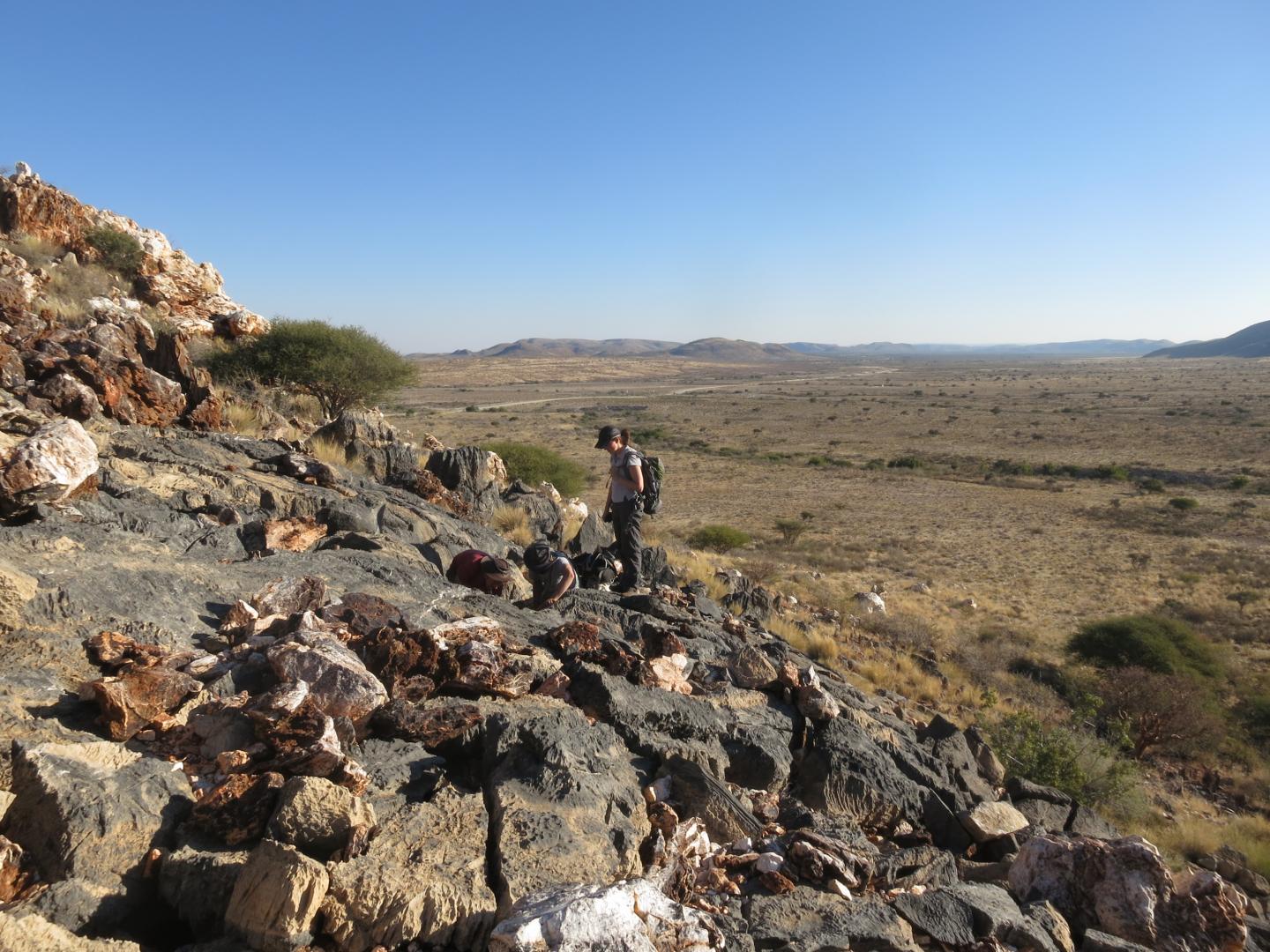
Credit: Rachel Wood

Remarkably well-preserved fossils are helping scientists unravel a mystery about the origins of early animals that puzzled Charles Darwin.

Analysis of the 547 million-year-old remains has enabled researchers to trace the ancestry of some of the world’s earliest animals further back than ever before.

Their study has uncovered the first known link between animals that evolved during the so-called Cambrian Explosion some 540 million-years-ago and one of their early ancestors.

Until recently, little was known about the origins of animals that evolved during the Cambrian event because of a lack of well-preserved fossil evidence.

The mysterious origins of animals that evolved at this time – when the diversity of life on Earth increased rapidly, giving rise to almost all modern-day animal groups – baffled 19th century naturalist Charles Darwin. It is often referred to as Darwin’s dilemma.

Prior to the new study, it had proven difficult to trace links with earlier animals because their soft tissues – which provide vital clues about the animals’ ancestry – almost always break down over time.

During fieldwork in Namibia, scientists from the University of Edinburgh unearthed the fossil remains of tiny animals – known as Namacalathus – that resemble a pin cushion attached to a short stalk.

Using an x-ray imaging technique, the team found some of the animals’ soft tissues immaculately preserved inside the fossils by a metallic mineral called pyrite. Until now, scientists had only ever identified skeletal remains of Namacalathus.

Studying the soft tissues – and comparing them with those in animals that evolved later – revealed that Namacalathus was an early ancestor of species that appeared during the Cambrian Explosion. Among them are types of prehistoric worms and molluscs.

The study, published in the journal Science Advances, was funded by the Natural Environment Research Council. The work also involved a researcher from Lomonosov Moscow State University, Russia.

Professor Rachel Wood, of the University of Edinburgh’s School of GeoSciences, said: “These are exceptional fossils, which give us a glimpse into the biological affinity of some of the oldest animals.

“They help us trace the roots of the Cambrian Explosion and the origin of modern animal groups. Such preservation opens up many new avenues of research into the history of life which was previously not possible.”

###

Media Contact
Corin Campbell
[email protected]

Related Journal Article

http://dx.doi.org/10.1126/sciadv.abf2933

Tags: Earth ScienceEvolutionGeology/Soil
Share13Tweet8Share2ShareShareShare2

Related Posts

How to sway group opinions: Encourage opponents to stay undecided

How to sway group opinions: Encourage opponents to stay undecided

March 23, 2026
Deep Learning Model Maps How Individual Cells Shape Disease Outcomes

Deep Learning Model Maps How Individual Cells Shape Disease Outcomes

March 20, 2026

Removing only 15 female sharks annually could endanger the entire population, scientists warn

March 20, 2026

Scientists Urge Fragrance Industry to Transition from Sustainability Talk to Active Funding of Plant Conservation

March 20, 2026
Please login to join discussion

POPULAR NEWS

  • blank

    Revolutionary AI Model Enhances Precision in Detecting Food Contamination

    96 shares
    Share 38 Tweet 24
  • Imagine a Social Media Feed That Challenges Your Views Instead of Reinforcing Them

    1004 shares
    Share 397 Tweet 248
  • Uncovering Functions of Cavernous Malformation Proteins in Organoids

    54 shares
    Share 22 Tweet 14
  • Promising Outcomes from First Clinical Trials of Gene Regulation in Epilepsy

    51 shares
    Share 20 Tweet 13

About

We bring you the latest biotechnology news from best research centers and universities around the world. Check our website.

Follow us

Recent News

In-Sensor Cryptography Links Physical Process to Digital Identity

Can Psychosocial Factors Influence Cancer Risk?

Depression Factors in Elderly: Pre vs. Post-COVID Analysis

Subscribe to Blog via Email

Success! An email was just sent to confirm your subscription. Please find the email now and click 'Confirm' to start subscribing.

Join 78 other subscribers
  • Contact Us

Bioengineer.org © Copyright 2023 All Rights Reserved.

Welcome Back!

Login to your account below

Forgotten Password?

Retrieve your password

Please enter your username or email address to reset your password.

Log In
No Result
View All Result
  • Homepages
    • Home Page 1
    • Home Page 2
  • News
  • National
  • Business
  • Health
  • Lifestyle
  • Science

Bioengineer.org © Copyright 2023 All Rights Reserved.