• HOME
  • NEWS
  • EXPLORE
    • CAREER
      • Companies
      • Jobs
    • EVENTS
    • iGEM
      • News
      • Team
    • PHOTOS
    • VIDEO
    • WIKI
  • BLOG
  • COMMUNITY
    • FACEBOOK
    • INSTAGRAM
    • TWITTER
Tuesday, October 6, 2026
BIOENGINEER.ORG
No Result
View All Result
  • Login
  • HOME
  • NEWS
  • EXPLORE
    • CAREER
      • Companies
      • Jobs
        • Lecturer
        • PhD Studentship
        • Postdoc
        • Research Assistant
    • EVENTS
    • iGEM
      • News
      • Team
    • PHOTOS
    • VIDEO
    • WIKI
  • BLOG
  • COMMUNITY
    • FACEBOOK
    • INSTAGRAM
    • TWITTER
  • HOME
  • NEWS
  • EXPLORE
    • CAREER
      • Companies
      • Jobs
        • Lecturer
        • PhD Studentship
        • Postdoc
        • Research Assistant
    • EVENTS
    • iGEM
      • News
      • Team
    • PHOTOS
    • VIDEO
    • WIKI
  • BLOG
  • COMMUNITY
    • FACEBOOK
    • INSTAGRAM
    • TWITTER
No Result
View All Result
Bioengineer.org
No Result
View All Result
Home NEWS Science News Biology

Fossil of smallest old world monkey species discovered in Kenya

Bioengineer by Bioengineer
July 15, 2019
in Biology
Reading Time: 2 mins read
0
IMAGE
Share on FacebookShare on TwitterShare on LinkedinShare on RedditShare on Telegram

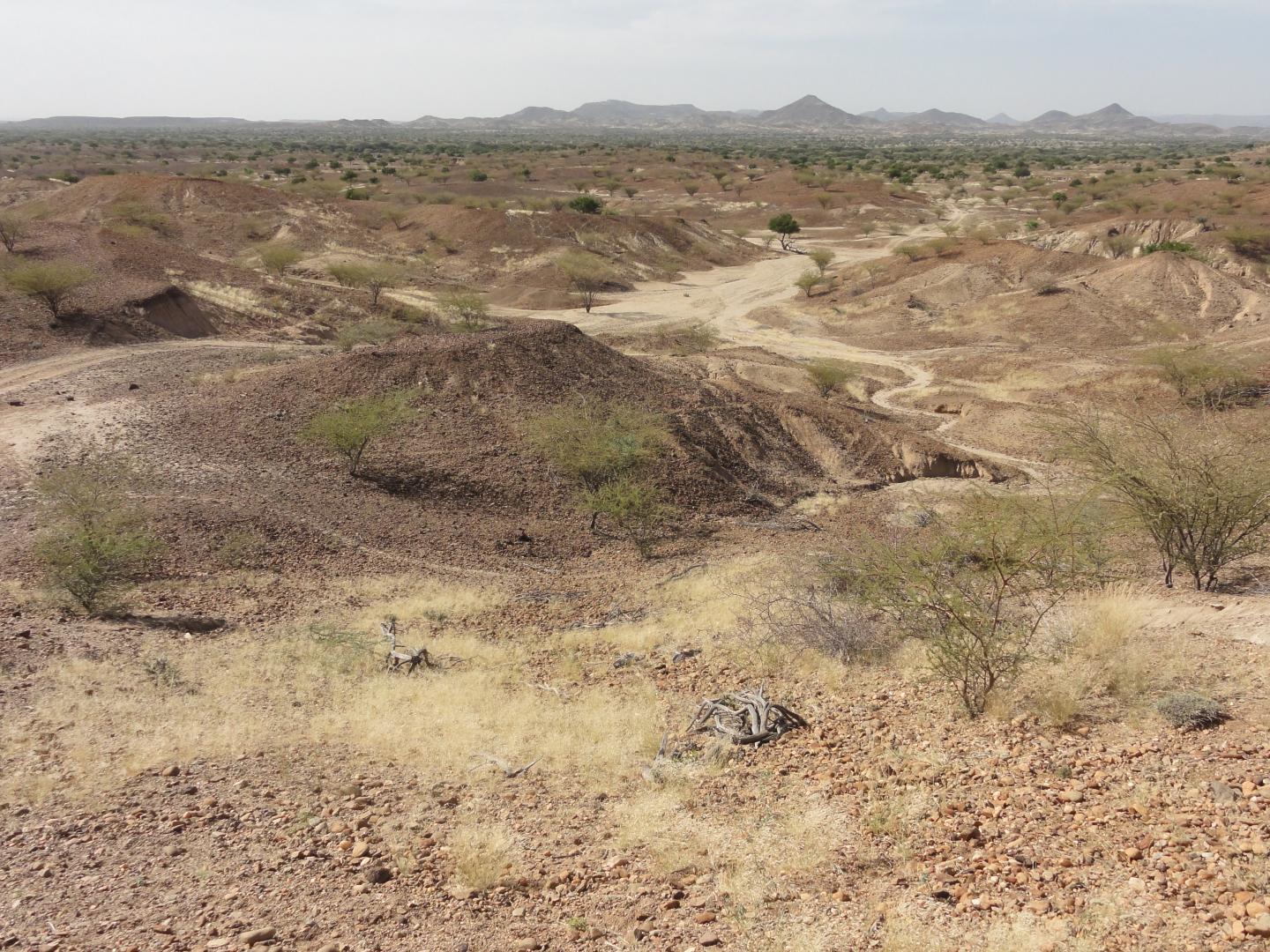
Research team discovered Nanopithecus browni near Kanapoi, Kenya, far from the habitat of other guenons
IMAGE

Credit: Carol Ward

Researchers from the National Museums of Kenya, University of Arkansas, University of Missouri and Duke University have announced the discovery of a tiny monkey that lived in Kenya 4.2 million years ago.

Nanopithecus browni was the same size as a modern talapoin monkey, the smallest living Old World monkey species that weighs only 2 to 3 pounds, about the size of a cottontail rabbit. Talapoins are part of a large group of monkeys called guenons, which are commonplace and widespread across Africa today. Most species are several times larger in size than Nanopithecus browni.

Guenon evolution is poorly understood but thought to be driven by changes in forest habitats, with the distribution of modern species reflecting the breakup and re-convergence of ancient forests. Talapoins live only in West Central Africa, are confined to tropical forests, and are thought to be dwarfed from a larger ancestor in response to life in woody, swampy habitats.

Nanopithecus browni, though, was found in Kenya on the eastern side of the continent, at a site called Kanapoi. The Kanapoi habitat was dry and covered with grasslands and open forests – a very different place from the tropical forests of Cameroon and Gabon in West Central Africa. It is also at Kanapoi where remains of some of the earliest human ancestors, Australopithecus anamensis, have been found and would have lived alongside Nanopithecus browni.

Nanopithecus browni is the second oldest guenon found so far, just younger than the guenon single tooth found 10 years ago on the Arabian Peninsula. The ancient date, combined with a habitat so different and so far away from that of modern talapoins, reveals a much more complex evolution of guenon monkeys than previously thought. This new enigmatic member of the primate family reveals that dwarfing occurred far longer ago than scientists suspected and may have happened more than once, and in very different habitats perhaps for different reasons.

Nanopithecus browni was discovered by the West Turkana Paleo Project, led by Fredrick Kyalo Manthi of the National Museums of Kenya, with project co-leaders Carol Ward of the University of Missouri and Michael Plavcan of the University of Arkansas. The fossils were analyzed in collaboration with Richard Kay of Duke University.

The fossil is housed at the National Museums of Kenya. The researchers published their findings in the Journal of Human Evolution.

“The discovery of Nanopithecus browni reaffirms Kenya’s contribution to understanding the evolution and diversity of Pliocene fauna and the environmental contexts in which they lived,” said Manthi. “Environmental changes during the Plio-Pleistocene may have influenced the present-day distribution of guenons.”

Nanopithecus browni is named after the late Francis Brown of the University of Utah for his contribution to understanding the geological history of the Omo-Turkana Basin within which the Kanapoi site is located.

###

Media Contact
Matt McGowan
[email protected]

Tags: BiologyEvolutionNew WorldPaleontology
Share12Tweet8Share2ShareShareShare2

Related Posts

Scientists Rank Genetic Switches That Power Gene Control in Sperm-Producing Cells

Scientists Rank Genetic Switches That Power Gene Control in Sperm-Producing Cells

October 6, 2026
AI Reveals Firm Size Dominates ESG Scores Across Five US Sectors

AI Reveals Firm Size Dominates ESG Scores Across Five US Sectors

October 6, 2026

Light Talks Directly to the Hypothalamus, Rewriting the Rules of the Body Clock

October 6, 2026

Tsetse flies in Mozambique reveal hidden web of parasites, hosts and microbes

October 6, 2026
Please login to join discussion

POPULAR NEWS

  • Alloys That Shrink Their Own Grains: New PIX Mechanism Refines Metals With Heat Alone

    Alloys That Shrink Their Own Grains: New PIX Mechanism Refines Metals With Heat Alone

    29 shares
    Share 12 Tweet 7
  • Endurance Exercise Reshapes the Liver in Males and Females Through Distinct Molecular Routes

    29 shares
    Share 12 Tweet 7
  • Single Transcription Factor PU.1 Rapidly Converts Fibroblasts into Macrophage-Lineage Cells

    29 shares
    Share 12 Tweet 7
  • New Scale Measures How Ready Nurse Educators Really Are for the AI Era

    29 shares
    Share 12 Tweet 7

About

We bring you the latest biotechnology news from best research centers and universities around the world. Check our website.

Follow us

Recent News

Alloys That Shrink Their Own Grains: New PIX Mechanism Refines Metals With Heat Alone

Endurance Exercise Reshapes the Liver in Males and Females Through Distinct Molecular Routes

Single Transcription Factor PU.1 Rapidly Converts Fibroblasts into Macrophage-Lineage Cells

Subscribe to Blog via Email

Success! An email was just sent to confirm your subscription. Please find the email now and click 'Confirm' to start subscribing.

Join 85 other subscribers
  • Contact Us

Bioengineer.org © Copyright 2023 All Rights Reserved.

Welcome Back!

Login to your account below

Forgotten Password?

Retrieve your password

Please enter your username or email address to reset your password.

Log In
No Result
View All Result
  • Homepages
    • Home Page 1
    • Home Page 2
  • News
  • National
  • Business
  • Health
  • Lifestyle
  • Science

Bioengineer.org © Copyright 2023 All Rights Reserved.