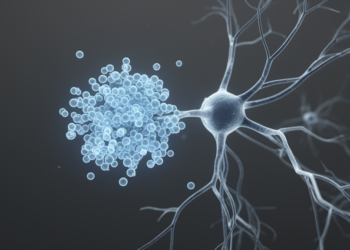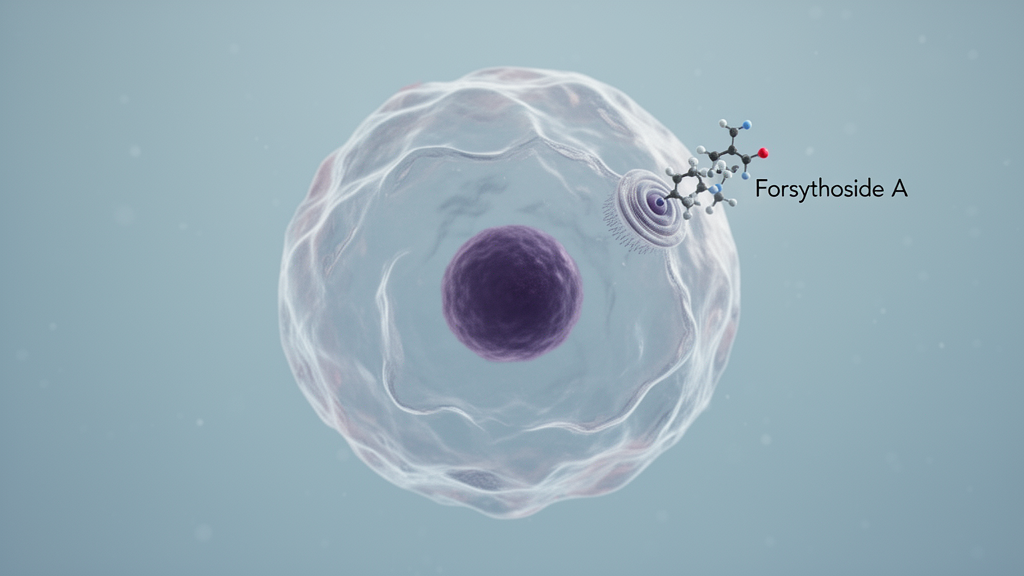
A preclinical investigation led by researchers evaluating natural compound therapeutics has identified that forsythoside A, an active constituent extracted from the dried fruits of Forsythia suspensa, significantly mitigates clinical severity, central nervous system inflammation, and spinal cord demyelination in a mouse model of multiple sclerosis known as experimental autoimmune encephalomyelitis. Multiple sclerosis is a debilitating inflammatory demyelinating disease of the central nervous system driven largely by autoreactive CD4-positive T cells and sustained microglial activation, with experimental autoimmune encephalomyelitis serving as a standard rodent model for dissecting disease mechanisms and potential therapies. By coupling in vivo mouse assays with computational simulations, surface plasmon resonance binding measurements, and genetic manipulation in BV2 microglial cells, the investigators traced the neuroprotective actions of forsythoside A to its direct binding of tumor necrosis factor alpha-induced protein 2, also designated as Tnfaip2, an effector molecule that operates within the tumor necrosis factor signaling network.
To assess functional efficacy in vivo, the research team induced experimental autoimmune encephalomyelitis in eight-week-old female C57BL/6 mice weighing between 16 and 18 grams through subcutaneous immunization with myelin oligodendrocyte glycoprotein peptide fragment 35 to 55 emulsified in complete Freund’s adjuvant containing Mycobacterium tuberculosis, combined with intraperitoneal pertussis toxin injections at immunization and 48 hours later. Following disease induction, mice were randomly assigned on day seven post-immunization to daily oral gavage consisting of vehicle control or forsythoside A at either a low dose of 20 milligrams per kilogram or a high dose of 60 milligrams per kilogram. Neurological symptoms in the model control group manifested around day 10 post-immunization, progressing through gait ataxia, limb weakness, flaccid tail tone, and paralysis until disease severity peaked around day 17. Oral administration of forsythoside A delayed disease onset and attenuated motor impairment in a dose-dependent manner; while the 20 milligram per kilogram dose produced a trend toward clinical improvement without reaching statistical significance, the 60 milligram per kilogram dose yielded statistically significant reductions in both cumulative and peak neurological scores.
Histological examinations conducted on lumbar spinal cord tissues dissected at the disease peak on day 15 post-immunization substantiated the motor improvements observed in the high-dose group. Hematoxylin and eosin staining demonstrated substantial inflammatory cellular infiltration within the lumbar spinal cords of untreated disease model mice, whereas high-dose forsythoside A treatment notably decreased the density of infiltrating inflammatory cells. Concurrent Luxol fast blue staining alongside immunofluorescence labeling of myelin basic protein revealed extensive demyelination within the white matter of diseased controls, an outcome markedly counteracted by the 60 milligram per kilogram daily regimen of forsythoside A. Blinded quantification confirmed that mice receiving the higher dosage preserved significantly greater proportions of intact myelin basic protein across spinal cord cryosections compared with their vehicle-treated counterparts, indicating that systemic treatment limited the pathological destruction of myelin sheaths.
In addition to mitigating structural spinal damage, forsythoside A administration altered peripheral immune cell populations within the spleen at the peak stage of experimental disease. Flow cytometric analysis of splenocytes harvested without perfusion revealed that experimental autoimmune encephalomyelitis mice exhibited elevated differentiation of both T helper 1 cells and T helper 17 cells, alongside a reduction in T helper 2 frequency. Daily oral administration of 60 milligrams per kilogram of forsythoside A significantly suppressed the peripheral proportion of interferon-gamma-producing T helper 1 cells relative to vehicle-treated mice. Conversely, the treatment did not produce statistically significant changes in the proportions of interleukin-17A-producing T helper 17 cells or interleukin-4-producing T helper 2 cells in the spleen, demonstrating a selective suppression of the peripheral T helper 1 subset under these experimental conditions.
Within the central nervous system parenchyma, the researchers monitored microglial activation by evaluating double-positive immunostaining for ionized calcium-binding adaptor molecule 1, a central nervous system microglial marker, and CD68, a recognized indicator of activated microglia and macrophages. Confocal analysis of the anterior funiculus in the lumbar intumescentia revealed abundant infiltration of activated Iba1-positive and CD68-positive cells during the acute peak of the disease, whereas high-dose forsythoside A treatment significantly attenuated this microglial accumulation. In parallel, real-time quantitative polymerase chain reaction performed on spinal cord tissue demonstrated that the elevated messenger RNA transcript levels of key pro-inflammatory mediators—specifically interleukin-1 beta, tumor necrosis factor alpha, and inducible nitric oxide synthase—were strongly downregulated in mice treated with the compound, confirming that central microglial activation and local cytokine expression were curtailed.
To uncover the molecular mechanism underlying this neuroprotection, the investigators integrated transcriptomic sequencing of spinal cord tissues from experimental autoimmune encephalomyelitis mice with network pharmacology databases. Kyoto Encyclopedia of Genes and Genomes pathway analysis identified 33 common targets shared between forsythoside A and multiple sclerosis disease annotations, pinpointing the tumor necrosis factor signaling pathway as a significantly enriched hub. Spinal cord differential gene expression profiling confirmed that tumor necrosis factor alpha-induced protein 2 was significantly downregulated in mice receiving the 60 milligram per kilogram dosage compared to untreated model controls. Immunofluorescence co-staining and Western blot analyses affirmed that Tnfaip2 expression was markedly elevated in spinal microglia during the acute phase of autoimmune encephalomyelitis, while forsythoside A administration substantially lowered both its microglial immunofluorescence signal and overall protein abundance.
Computational modeling and biophysical assays subsequently established that forsythoside A binds directly to Tnfaip2. Molecular docking simulations revealed that forsythoside A docks into the binding pocket of mouse Tnfaip2 with a calculated binding affinity of minus 7.5 kilocalories per mole, forming five hydrogen bonds with amino acid residues alanine-594, tyrosine-600, proline-639, and arginine-641 alongside van der Waals forces and pi-alkyl interactions. Subsequent 100-nanosecond molecular dynamics simulations in Gromacs demonstrated that the ligand-protein complex attained conformational stability after 90 nanoseconds, maintaining an average of one persistent hydrogen bond and low root mean square fluctuations below 5 angstroms across the majority of protein backbone residues. To validate this physical association experimentally, surface plasmon resonance assays were performed using purified recombinant mouse Tnfaip2 protein immobilized on a sensor chip; flowing serial concentrations of forsythoside A produced concentration-dependent response curves with an equilibrium dissociation constant of 28 micromolar and a maximum binding capacity of 18.68 resonance units.
In vitro mechanistic validation was executed in murine BV2 microglial cell cultures exposed to lipopolysaccharide at a concentration of 0.5 micrograms per milliliter. Lipopolysaccharide exposure induced rapid transcriptional and translational upregulation of Tnfaip2 alongside pro-inflammatory cytokines. Pretreatment of BV2 cells with non-cytotoxic concentrations of forsythoside A at 10, 20, and 40 micrograms per milliliter dose-dependently suppressed the messenger RNA expression of Tnfaip2, interleukin-1 beta, tumor necrosis factor alpha, and inducible nitric oxide synthase, with 40 micrograms per milliliter significantly blunting inflammatory polarization. Western blot evaluations revealed that forsythoside A decreased the phosphorylation of the nuclear factor kappa-B subunit p65 without altering total p65 levels. Knockdown of Tnfaip2 via targeted small interfering RNA reproduced these anti-inflammatory effects by attenuating lipopolysaccharide-induced p65 phosphorylation and cytokine synthesis, whereas transfecting BV2 cells with in vitro-transcribed Tnfaip2 messenger RNA abolished the therapeutic efficacy of forsythoside A, restoring high levels of p65 phosphorylation and inflammatory marker expression.
The study highlights how Tnfaip2 functions as an amplifying node in microglial neuroinflammation rather than an independent initiator. In resting microglial cells, overexpression or knockdown of Tnfaip2 alone did not trigger baseline phosphorylation of p65 or cytokine release; instead, inflammatory stimuli drove tumor necrosis factor alpha production, which induced Tnfaip2 transcription to sustain nuclear factor kappa-B signaling in a positive feedback loop that aggravated tissue injury. By directly targeting Tnfaip2, forsythoside A interrupted this feed-forward amplification loop, suppressing microglial polarization toward a destructive pro-inflammatory phenotype. The authors noted that identifying downstream mediators like Tnfaip2 offers a strategic path for neuroinflammatory interventions, particularly given clinical evidence that upstream systemic tumor necrosis factor alpha antagonists can paradoxically exacerbate multiple sclerosis symptoms in human patients.
The authors outlined several explicit limitations inherent to their preclinical findings. First, clinical validation remains absent because spinal cord or brain samples from acute-phase multiple sclerosis patients were not evaluated to verify whether Tnfaip2 levels are similarly elevated during human disease flares. Second, the study did not employ conditional, microglia-specific Tnfaip2 knockout mice, meaning that while in vitro genetic manipulation and in vivo correlations strongly link forsythoside A efficacy to Tnfaip2 suppression, the possibility of contributions from other reported targets such as Nrf2, TLR4, or JAK/STAT cannot be ruled out. Third, experiments were conducted using the immortalized BV2 microglial cell line, which possesses known differences in cytokine secretion thresholds and receptor profiles compared to primary microglia. Furthermore, the experimental design did not establish whether the reduction in peripheral T helper 1 cells and the inhibition of central microglial activation represent independent parallel actions of forsythoside A or causally linked phenomena across the blood-brain barrier, requiring future studies with transgenic mouse models to resolve these pathways.
Subject of Research: Preclinical investigation of forsythoside A targeting Tnfaip2 to reduce neuroinflammation in experimental autoimmune encephalomyelitis
Article Title: Forsythoside A alleviates experimental autoimmune encephalomyelitis by targeting Tnfaip2
Article References: Tang, P., Luo, G., Xue, H., & Yang, C. (2026). Forsythoside A alleviates experimental autoimmune encephalomyelitis by targeting Tnfaip2. Chinese Medicine, 21(1), Article 204. https://doi.org/10.1186/s13020-026-01476-z
Image Credits: AI Generated
DOI: 10.1186/s13020-026-01476-z
Keywords: Forsythoside A, Tnfaip2, experimental autoimmune encephalomyelitis, multiple sclerosis, microglia, neuroinflammation, NF-kappaB pathway, Forsythia suspensa, Forsythoside, alleviates, experimental, autoimmune
News Source: Ophelia Keating. (November 10, 2026). Forsythoside A Alleviates Experimental Autoimmune Encephalomyelitis by Targeting Tnfaip2. Scienmag.