Journal of the Academy of Nutrition and Dietetics: Researchers highlight factors that influence how effectively food suppliers and distributors can prepare for and respond to disasters
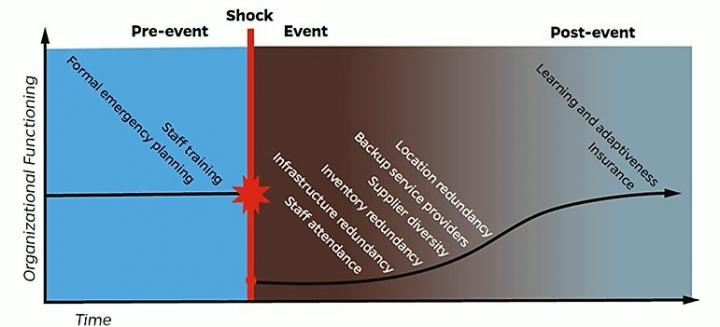
Credit: Johns Hopkins Center for a Livable Future
Philadelphia, December 6, 2018 – Food systems face growing threats as extreme weather events become more common and more extreme due to climate change. Events such as Hurricane Harvey in Texas and Hurricane Maria in Puerto Rico in 2017 have drawn attention to the havoc natural disasters can wreak. A new study from the Johns Hopkins Bloomberg School of Public Health, published in the Journal of the Academy of Nutrition and Dietetics, highlights characteristics of organizations involved in the food system that may lead them to be more prepared to respond to such disasters, and opportunities for local, state, and federal organizations to improve resilience across the urban food system.
Businesses and organizations involved in growing, distributing, and supplying food must be able to withstand and rebound from acute disruptions such as civil unrest and cyber attacks, as well as those with more gradual impact, such as drought, sea level rise, or funding cuts. Policymakers and researchers are in the early stages of considering ways to improve resilience to both natural and human-generated threats across the food system.
Amelie Hecht, a doctoral candidate in the Department of Health Policy and Management at the Johns Hopkins Bloomberg School of Public Health, Baltimore, MD, USA, wanted to explore the following issues: what factors may be associated with organization-level food system resilience; how might these factors play out in disaster response; and how do they relate to organizations’ confidence in their ability to withstand disruptive events?
The research was performed as part of a larger project led by Roni A. Neff, PhD, Assistant Professor, Center for a Livable Future, Department of Environmental Health & Engineering, Department of Health Policy and Management. Dr. Neff and colleagues interviewed representatives of 26 businesses and organizations in Baltimore that supply, distribute, and promote access to food. The organizations were asked about how they have tried to prevent, minimize, and respond to the effects of disruptive events like snowstorms and civil unrest in the past, and how they plan to address similar challenges in the future.
Researchers identified several factors that influence how resilient an organization is during times of emergency. They found that the organizations able to recover more quickly had ten characteristics in common: formal emergency planning; staff training; reliable staff attendance; redundancy of food supply, food suppliers, infrastructure, location, and service providers; insurance; and post-event learning after a disruptive event. Organizations that were large, well-resourced, and affiliated with national or government partners tended to display more of these characteristics.
The authors conclude that a more resilient food system is needed in order to ensure all people have safe and reliable access to food following both acute and longer-term crises. They highlight several critical areas for targeted intervention by local, state, and federal governments, such as creating opportunities for smaller, less-resourced organizations to share information and pool resources. Further research is needed to add to an emerging understanding of the factors that contribute to resilience in order to help food system organizations, researchers, and government officials identify vulnerabilities in their regional food systems and strategies to improve food system resilience in the face of ongoing and growing threats.
###
Media Contact
Eileen Leahy
[email protected]
732-238-3628
Related Journal Article
http://dx.