• HOME
  • NEWS
  • EXPLORE
    • CAREER
      • Companies
      • Jobs
    • EVENTS
    • iGEM
      • News
      • Team
    • PHOTOS
    • VIDEO
    • WIKI
  • BLOG
  • COMMUNITY
    • FACEBOOK
    • INSTAGRAM
    • TWITTER
Friday, September 25, 2026
BIOENGINEER.ORG
No Result
View All Result
  • Login
  • HOME
  • NEWS
  • EXPLORE
    • CAREER
      • Companies
      • Jobs
        • Lecturer
        • PhD Studentship
        • Postdoc
        • Research Assistant
    • EVENTS
    • iGEM
      • News
      • Team
    • PHOTOS
    • VIDEO
    • WIKI
  • BLOG
  • COMMUNITY
    • FACEBOOK
    • INSTAGRAM
    • TWITTER
  • HOME
  • NEWS
  • EXPLORE
    • CAREER
      • Companies
      • Jobs
        • Lecturer
        • PhD Studentship
        • Postdoc
        • Research Assistant
    • EVENTS
    • iGEM
      • News
      • Team
    • PHOTOS
    • VIDEO
    • WIKI
  • BLOG
  • COMMUNITY
    • FACEBOOK
    • INSTAGRAM
    • TWITTER
No Result
View All Result
Bioengineer.org
No Result
View All Result
Home NEWS Science News Chemistry

‘Flying salt shakers of death:’ Fungal-infected zombie cicadas, explained by WVU research

Bioengineer by Bioengineer
June 25, 2019
in Chemistry
Reading Time: 3 mins read
0
IMAGE
Share on FacebookShare on TwitterShare on LinkedinShare on RedditShare on Telegram

IMAGE

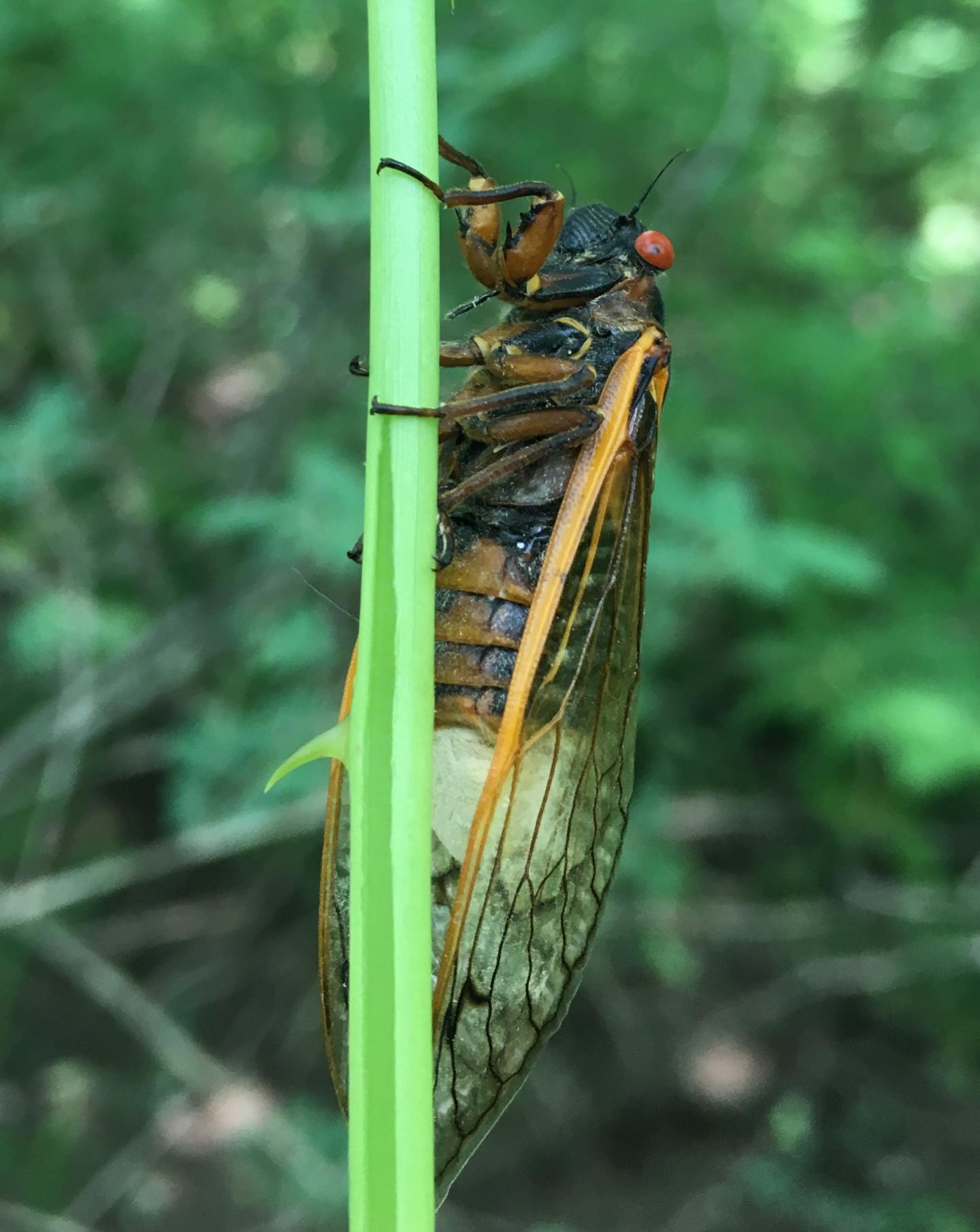
Credit: Matt Kasson

MORGANTOWN, W.Va. — If cicadas made horror movies, they’d probably study the actions of their counterparts plagued by a certain psychedelic fungus.

West Virginia University researchers have discovered that a cicada fungus called Massopora contains chemicals similar to those found in hallucinogenic mushrooms.

The fungus causes cicadas to lose their limbs and eccentric behavior sets in: Males try to mate with everything they encounter, although the fungus has consumed their genitals and butts.

Despite the horrid physical state of infected cicadas, they continue to roam around freely as if nothing’s wrong, dousing other cicadas with a dose of their disease.

You’ve heard of “The Walking Dead.” This is “The Flying Dead.”

“They are only zombies in the sense that the fungus is in control of their bodies,” said Matt Kasson, assistant professor of forest pathology and one of the study’s authors.

Cicadas first encounter the fungus underground where they spend 13 to 17 years before emerging to the surface as adults, Kasson said. Within seven to 10 days above ground, the abdomen begins to slough off revealing the fungal infection at the end of the cicada, he continued.

It’s quite the coming out party.

“Infected adults maintain or accelerate normal host activity during sporulation, enabling rapid and widespread dispersal prior to host death,” Kasson said. “They also engage in hypersexual behaviors.”

Joining Kasson on this research published in Fungal Ecology are his Davis College of Agriculture, Natural Resources and Design colleagues Greg Boyce, Kasson’s former Ph.D. student in the Division of Plant and Soil Sciences; and Daniel Panaccione, professor of plant and soil sciences.

The impetus of the study came in 2016 when billions of cicadas ascended upon the northeast United States. Two of Kasson’s students loved cicadas. One, Matt Berger, convinced the professor to study the fungus. Another student, Angie Macias, coined a creative, heavy metal sounding name for the cicadas: “flying salt shakers of death.”

Initially, the research team tried infecting the cicadas in a lab but that method did not work. But they managed to examine enough infected cicadas from the wild to make the new discovery.

For those of you wondering if you can get “high” from the psychedelic chemicals in a Massospora-infected cicada, Kasson’s answer is “maybe, if you’re motivated enough.”

“Here is the thing,” he said. “These psychoactive compounds were just two of less than 1,000 compounds found in these cicadas. Yes, they are notable but there are other compounds that might be harmful to humans. I wouldn’t take that risk.”

Kasson and his team are buzzing along on additional cicada research. They recently collected cicadas from this year’s emergence in Pennsylvania and West Virginia. They plan to resequence the genome of the fungus and analyze the gene expression in both healthy and infected cicadas to better understand the genetic aspects of the discovery.

And beyond the discovery being downright creepy and fascinating, it may lead to someday benefiting the greater society instead of serving as nightmare fuel.

“We anticipate these discoveries will foster a renewed interest in early diverging fungi and their pharmacologically important secondary metabolites, which may serve as the next frontier for novel drug discovery.

“I love them (cicadas). They still scare me when they fall down my shirt or walk up my neck but I can appreciate something that spends almost two decades underground for six weeks of bliss, with or without the fungus.”

###

STUDY LINK: https://www.sciencedirect.com/science/article/pii/S1754504819300352#!

Media Contact
Jake Stump
[email protected]

Original Source

https://wvutoday.wvu.edu/stories/2019/06/25/-flying-salt-shakers-of-death-the-lives-of-fungal-infected-zombie-cicadas-explained-by-wvu-researchers

Related Journal Article

http://dx.doi.org/10.1016/j.funeco.2019.06.002

Tags: BiologyChemistry/Physics/Materials SciencesEntomologyMycologyParasitology
Share12Tweet8Share2ShareShareShare2

Related Posts

Tea Compounds Show Surprising Power Against Cancer and Aging Proteins

Tea Compounds Show Surprising Power Against Cancer and Aging Proteins

September 25, 2026
Volcanic Rock Buoys Could End Microplastic Pollution in Oyster Farms

Volcanic Rock Buoys Could End Microplastic Pollution in Oyster Farms

September 25, 2026

Metal-Organic Framework Nanoparticles Turn Biopolymer Hydrogel into Antibacterial Wound Dressing

September 25, 2026

Fig Latex and Sodium Phytate Team Up to Tenderize and Protect Cooked Beef

September 25, 2026
Please login to join discussion

POPULAR NEWS

  • Open Chromatin Is Not So Open: Active Genes Ride on Condensed Domains

    29 shares
    Share 12 Tweet 7
  • Trapped-Ion Quantum Computer Simulates Particle Physics With Qubits and Phonons Together

    29 shares
    Share 12 Tweet 7
  • Traditional Chinese Herb Extends Lifespan by Switching On a Cellular Longevity Pathway

    29 shares
    Share 12 Tweet 7
  • Silent Signals: How Stroke Rewires Brain Astrocytes to Accelerate Glioma Growth

    29 shares
    Share 12 Tweet 7

About

We bring you the latest biotechnology news from best research centers and universities around the world. Check our website.

Follow us

Recent News

Open Chromatin Is Not So Open: Active Genes Ride on Condensed Domains

Trapped-Ion Quantum Computer Simulates Particle Physics With Qubits and Phonons Together

Traditional Chinese Herb Extends Lifespan by Switching On a Cellular Longevity Pathway

Subscribe to Blog via Email

Enter your email address to subscribe to this blog and receive notifications of new posts by email.

Join 85 other subscribers
  • Contact Us

Bioengineer.org © Copyright 2023 All Rights Reserved.

Welcome Back!

Login to your account below

Forgotten Password?

Retrieve your password

Please enter your username or email address to reset your password.

Log In
No Result
View All Result
  • Homepages
    • Home Page 1
    • Home Page 2
  • News
  • National
  • Business
  • Health
  • Lifestyle
  • Science

Bioengineer.org © Copyright 2023 All Rights Reserved.