• HOME
  • NEWS
  • EXPLORE
    • CAREER
      • Companies
      • Jobs
    • EVENTS
    • iGEM
      • News
      • Team
    • PHOTOS
    • VIDEO
    • WIKI
  • BLOG
  • COMMUNITY
    • FACEBOOK
    • INSTAGRAM
    • TWITTER
Wednesday, October 28, 2026
BIOENGINEER.ORG
No Result
View All Result
  • Login
  • HOME
  • NEWS
  • EXPLORE
    • CAREER
      • Companies
      • Jobs
        • Lecturer
        • PhD Studentship
        • Postdoc
        • Research Assistant
    • EVENTS
    • iGEM
      • News
      • Team
    • PHOTOS
    • VIDEO
    • WIKI
  • BLOG
  • COMMUNITY
    • FACEBOOK
    • INSTAGRAM
    • TWITTER
No Result
View All Result
Bioengineer.org
No Result
View All Result
Home NEWS Science News Health

Fluorocellobiose PET tracer shows strongest signal in live Aspergillus fumigatus infection

by
October 28, 2026
in Health
Reading Time: 2 mins read
0
Fluorocellobiose PET tracer shows strongest signal in live Aspergillus fumigatus infection

Fluorocellobiose PET tracer shows strongest signal in live Aspergillus fumigatus infection

Share on FacebookShare on TwitterShare on LinkedinShare on RedditShare on Telegram

A head-to-head comparison of four carbohydrate-based PET tracers has identified 2-deoxy-2-[18F]fluorocellobiose (FCB) as the most promising candidate for imaging live Aspergillus fumigatus infection, according to an open-access original research article published in EJNMMI Research on 15 October 2026. In the study, FCB showed the highest uptake of the four tested tracers in A. fumigatus in vitro and delivered the highest target-to-non-target ratios in PET imaging of a murine A. fumigatus myositis model.

Invasive fungal infections remain a major health concern in immunocompromised patients, largely because diagnosis is often late and unspecific. Pathogen-specific PET radiotracers such as 2-deoxy-2-[18F]fluorocellobiose and 2-deoxy-2-[18F]fluorosorbitol (FDS) have previously shown potential to distinguish between different types of infection. Building on promising in vitro results with L-Rhamnose, the research team developed 2-deoxy-2-[18F]fluoro-L-Rhamnose (F-Rham) as a potential fungus-specific ligand. However, the authors note that direct comparisons across tracers have been limited because different institutions have used inconsistent experimental conditions, which is why the new study evaluated FCB, FDS, F-Rham and 2-deoxy-2-[18F]fluoro-D-glucose (FDG) in identical A. fumigatus animal models, and additionally compared FCB and FDS performance in identical bacterial animal models.

The comparison produced a clear separation between the tracers. Unlike FDG, FCB distinguished live infection from heat-killed inoculations in the murine model, a property the authors link to its potential for detecting metabolically active fungal infection. F-Rham, despite its promising in vitro origins, did not show specific accumulation at either the live or the heat-killed inoculation sites, meaning the newly developed candidate did not perform as hoped in vivo. When FDS and FCB were compared directly, FCB uptake was higher in A. fumigatus than in bacterial infections caused by Escherichia coli and Staphylococcus aureus, whereas FDS preferentially accumulated in E. coli, a pattern observed both in vitro and in vivo.

The authors conclude that FCB shows the highest accumulation in live A. fumigatus infection, while FDS was preferably taken up by E. coli, and that among the tested tracers FCB showed the most promise for successful detection of live A. fumigatus infection when translated to humans. The findings are limited to the preclinical models and tracer set described in the study, and the article is being shared early as a peer-reviewed, accepted version that is citable and carries a permanent DOI, subject to further edits before the final Version of Record. Within those boundaries, the work offers a standardized benchmark for carbohydrate-based fungal PET imaging, suggesting that FCB warrants further evaluation as a pathogen-specific imaging agent for invasive aspergillosis.

Subject of Research: Comparative evaluation of carbohydrate-based PET tracers for imaging Aspergillus fumigatus infection

Article Title: Comparative evaluation of carbohydrate-based PET tracers for Aspergillus fumigatus imaging

Article References: Lai, J., Shah, S., Martinez-Orengo, N., Peiravi, M., Conrad, B., Khan, A. M. A. M., Jones, P. M., Shi, J., Basuli, F., Swenson, R. E., & Hammoud, D. A. (2026). Comparative evaluation of carbohydrate-based PET tracers for Aspergillus fumigatus imaging. EJNMMI Research. https://doi.org/10.1186/s13550-026-01524-7

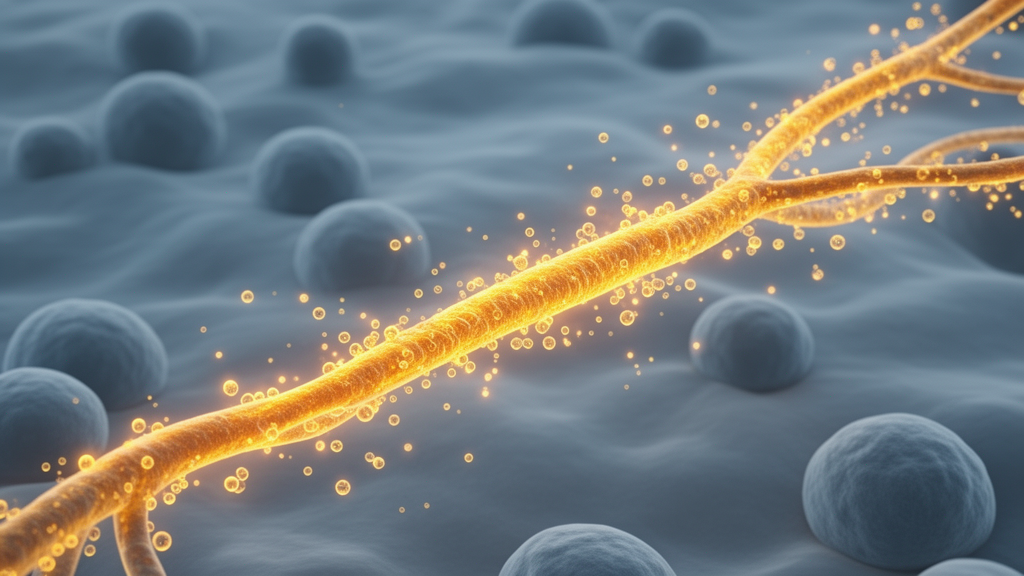
Image Credits: AI Generated

DOI: 10.1186/s13550-026-01524-7

Keywords: PET imaging, Aspergillus fumigatus, fluorocellobiose, fluorosorbitol, F-Rham, FDG, invasive fungal infection, radiotracers, murine myositis model, E. coli, Staphylococcus aureus, molecular imaging

News Source: Kristina Jarvis. (October 28, 2026). Fluorocellobiose PET tracer shows strongest signal in live Aspergillus fumigatus infection. Scienmag.
Tags: Aspergillus fumigatusE. coliF-RhamFDGfluorocellobiosefluorosorbitolinvasive fungal infectionmolecular imagingmurine myositis modelPET imagingradiotracersStaphylococcus aureus
Share12Tweet7Share2ShareShareShare1

Related Posts

Resorbable Self-Locking Device for Canine Ovarian Pedicle Ligation Tested Across Four Veterinary Centres

Resorbable Self-Locking Device for Canine Ovarian Pedicle Ligation Tested Across Four Veterinary Centres

October 28, 2026
Light Therapy Shows Promise for Stubborn Eye Surface Diseases, Review Finds

Light Therapy Shows Promise for Stubborn Eye Surface Diseases, Review Finds

October 28, 2026

UN-backed social and solidarity economy could reshape global health, researchers argue

October 28, 2026

Digital medication alerts in German primary care show no clear cost savings, trial finds

October 28, 2026

POPULAR NEWS

  • Resorbable Self-Locking Device for Canine Ovarian Pedicle Ligation Tested Across Four Veterinary Centres

    Resorbable Self-Locking Device for Canine Ovarian Pedicle Ligation Tested Across Four Veterinary Centres

    29 shares
    Share 12 Tweet 7
  • Faster Bandwidth Exploration Brings Near-Real-Time Spatial-Temporal Kernel Density Visualizations

    29 shares
    Share 12 Tweet 7
  • Marine heatwaves and typhoons reshaped Yellow Sea fungal communities, study finds

    29 shares
    Share 12 Tweet 7
  • Mixed reality office reads bodies and moods to reshape virtual space

    29 shares
    Share 12 Tweet 7

About

We bring you the latest biotechnology news from best research centers and universities around the world. Check our website.

Follow us

Recent News

Resorbable Self-Locking Device for Canine Ovarian Pedicle Ligation Tested Across Four Veterinary Centres

Faster Bandwidth Exploration Brings Near-Real-Time Spatial-Temporal Kernel Density Visualizations

Marine heatwaves and typhoons reshaped Yellow Sea fungal communities, study finds

Subscribe to Blog via Email

Enter your email address to subscribe to this blog and receive notifications of new posts by email.

Join 85 other subscribers
  • Contact Us

Bioengineer.org © Copyright 2023 All Rights Reserved.

Welcome Back!

Login to your account below

Forgotten Password?

Retrieve your password

Please enter your username or email address to reset your password.

Log In
No Result
View All Result
  • Homepages
    • Home Page 1
    • Home Page 2
  • News
  • National
  • Business
  • Health
  • Lifestyle
  • Science

Bioengineer.org © Copyright 2023 All Rights Reserved.