• HOME
  • NEWS
  • EXPLORE
    • CAREER
      • Companies
      • Jobs
    • EVENTS
    • iGEM
      • News
      • Team
    • PHOTOS
    • VIDEO
    • WIKI
  • BLOG
  • COMMUNITY
    • FACEBOOK
    • INSTAGRAM
    • TWITTER
Wednesday, September 30, 2026
BIOENGINEER.ORG
No Result
View All Result
  • Login
  • HOME
  • NEWS
  • EXPLORE
    • CAREER
      • Companies
      • Jobs
        • Lecturer
        • PhD Studentship
        • Postdoc
        • Research Assistant
    • EVENTS
    • iGEM
      • News
      • Team
    • PHOTOS
    • VIDEO
    • WIKI
  • BLOG
  • COMMUNITY
    • FACEBOOK
    • INSTAGRAM
    • TWITTER
  • HOME
  • NEWS
  • EXPLORE
    • CAREER
      • Companies
      • Jobs
        • Lecturer
        • PhD Studentship
        • Postdoc
        • Research Assistant
    • EVENTS
    • iGEM
      • News
      • Team
    • PHOTOS
    • VIDEO
    • WIKI
  • BLOG
  • COMMUNITY
    • FACEBOOK
    • INSTAGRAM
    • TWITTER
No Result
View All Result
Bioengineer.org
No Result
View All Result
Home NEWS Science News Biology

Florida State-led team offers new rules for algae species classification

Bioengineer by Bioengineer
September 14, 2020
in Biology
Reading Time: 3 mins read
0
IMAGE
Share on FacebookShare on TwitterShare on LinkedinShare on RedditShare on Telegram

IMAGE

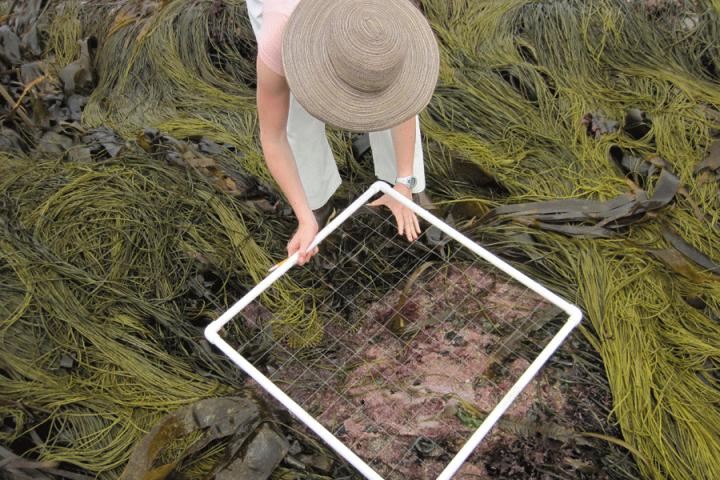
Credit: Photo by Sophie McCoy.

FSU Assistant Professor of Biological Science Sophie McCoy and her team are proposing formal definitions for algae species and subcategories for the research community to consider: They are recommending algae be classified first by DNA and then by other traits.

The work, which includes collaborations with Stacy Krueger-Hadfield, assistant professor of biology at the University of Alabama at Birmingham, and Nova Mieszkowska, a research fellow at the Marine Biological Association in the United Kingdom, was published this week in the Journal of Phycology .

“Algal species should evolve separately from other lineages, so that’s DNA-based, but we should also take into account differences in their ecology, such as what they look like or their role in the environment,” McCoy said.

The article was published as a perspective rather than offering definitive answers, and the team hopes the larger scientific community will comment on it and start an important conversation.

Algae matter more than most people realize because the organisms make about half of the oxygen in the world, McCoy said. Humanity depends on algae, as does the entire food web of the ocean.

Scientists have established ways to define animal species, such as determining an organism’s ability to produce viable offspring that can subsequently reproduce. For instance, a horse and a donkey can create a mule, but a mule cannot reproduce. That helps classify horses and donkeys as separate species. But that type of categorization doesn’t work well for algae because it has unique and complex life stages and very often interbreeds with other algal species.

“Rather than having a ‘species tree,’ like a family tree, algae have more of a web,” McCoy said.

That intricacy has made it difficult to formalize categories to classify algae species. Some scientists might classify offspring of two algal species as a distinct new species while others would not. Or some might classify algae species by discrete DNA while others classify by physical characteristics.

“We aren’t all using the same rules, so are we actually looking at different breeds or populations and then artificially calling them species?” McCoy said. “Depending on how we apply these rules, the number of species could go way up or way down.”

The International Union for Conservation of Nature Red List of Threatened Species is the world’s most comprehensive inventory of the global conservation status of biological species. The IUCN red list helps scientists evaluate a species’ extinction risk. So, how a species is defined changes the perception of biodiversity and conservation, she said.

Beyond conservation, catastrophes — from algal blooms in waterways to the destruction of coral reefs — could be mitigated by discussing and clarifying algal species classification. McCoy said some of the mysteries surrounding this type of growth are likely related to a lack of uniform identification.

“If we are mistakenly separating or grouping species, we’re just not going to understand how different types of algae are responding to pollution or climate change,” she said.

This philosophical change in what it means to be a species is a starting point for McCoy and the team. In addition to starting a conversation, she plans to conduct research that builds on the concept over the next year.

###

Media Contact
Tom Morgan
[email protected]

Original Source

https://news.fsu.edu/news/science-technology/2020/09/14/florida-state-led-team-offers-new-rules-for-algae-species-classification/

Related Journal Article

http://dx.doi.org/10.1111/jpy.13059

Tags: BiologyMarine/Freshwater BiologyZoology/Veterinary Science
Share13Tweet8Share2ShareShareShare2

Related Posts

Engineered mini CRISPR enzyme gets a 60-fold power boost for gene editing

Engineered mini CRISPR enzyme gets a 60-fold power boost for gene editing

September 27, 2026
Vitamin D Receptor Gene Variants Tied to Diabetic Foot Ulcer Risk in Kerala Study

Vitamin D Receptor Gene Variants Tied to Diabetic Foot Ulcer Risk in Kerala Study

September 27, 2026

Approved Metabolism Drugs Rescue Disease Signs in SMA Mice

September 27, 2026

Infant Gut Microbes and Diet-Derived Metabolites Linked to Childhood Asthma Risk

September 27, 2026
Please login to join discussion

POPULAR NEWS

  • Trunk Control May Hold a Key to Balance and Fall Risk in Older Adults

    29 shares
    Share 12 Tweet 7
  • AI Tells Doctors When It Is Unsure About Cancer Treatment Success

    29 shares
    Share 12 Tweet 7
  • Engineered mini CRISPR enzyme gets a 60-fold power boost for gene editing

    29 shares
    Share 12 Tweet 7
  • When Autism Diagnoses Fade: Early Intervention and Milder Symptoms Mark Children Who Lose the Label

    29 shares
    Share 12 Tweet 7

About

We bring you the latest biotechnology news from best research centers and universities around the world. Check our website.

Follow us

Recent News

Trunk Control May Hold a Key to Balance and Fall Risk in Older Adults

AI Tells Doctors When It Is Unsure About Cancer Treatment Success

Engineered mini CRISPR enzyme gets a 60-fold power boost for gene editing

Subscribe to Blog via Email

Enter your email address to subscribe to this blog and receive notifications of new posts by email.

Join 85 other subscribers
  • Contact Us

Bioengineer.org © Copyright 2023 All Rights Reserved.

Welcome Back!

Login to your account below

Forgotten Password?

Retrieve your password

Please enter your username or email address to reset your password.

Log In
No Result
View All Result
  • Homepages
    • Home Page 1
    • Home Page 2
  • News
  • National
  • Business
  • Health
  • Lifestyle
  • Science

Bioengineer.org © Copyright 2023 All Rights Reserved.