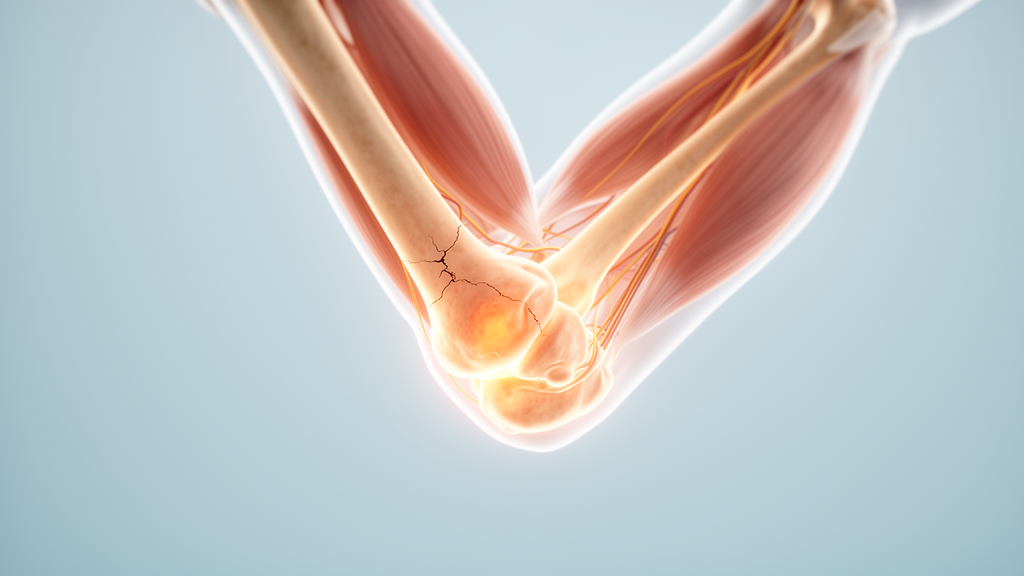
Children who sustain a rare and feared injury known as a floating elbow may recover elbow function just as well as children who break only the bone above the elbow, according to a retrospective study of surgically treated patients published in Archives of Orthopaedic and Trauma Surgery. The single-center analysis, led by Beibei Liu, Pan Ren and Yuxi Su, compared 27 children with floating elbow injuries against 86 children with isolated supracondylar humeral fractures treated at the same hospital between May 2016 and May 2023. After an average follow-up of 44 months, the researchers could not detect a statistically significant difference in elbow function between the two groups, a result that challenges long-standing assumptions borrowed from adult trauma care.
A floating elbow is defined as an ipsilateral supracondylar humerus fracture combined with fractures of the ulna and radius, which together sever the bony continuity linking the elbow and forearm and leave the limb unstable. In children the pattern is uncommon, accounting for roughly 3 to 13 percent of all supracondylar humeral fractures in pediatric populations. Historically, pediatric floating elbow has been presumed to behave like the adult injury, which is typically caused by high-energy trauma and carries a high incidence of neurovascular injury and acute compartment syndrome, a limb-threatening condition in which pressure builds inside a muscle compartment. The adult incidence of compartment syndrome in elbow or forearm fractures has been reported at 15 percent, a figure that has fueled anxiety about the pediatric presentation.
The new study set out to test that assumption directly in children. The researchers retrospectively collected clinical data on sex, age, body mass index, mechanism of injury, affected limb, fracture displacement, neurovascular injury, open or closed injury type, Gartland classification of the humeral fracture, and occurrence of acute compartment syndrome. Compartment syndrome was diagnosed clinically when at least two findings were present, including severe pain out of proportion to the injury, pain with passive stretch, paresthesia, palpable tenseness of the compartment, or an intracompartmental pressure exceeding 30 mmHg. Elbow function was scored with the Mayo Elbow Performance Score, a measure the authors note was primarily validated in adults but has been used in previous pediatric elbow studies, and they acknowledge that a pediatric-specific outcome measure would be preferable.
The cohort comprised 113 children, 80 boys and 33 girls, with 57 left and 56 right elbow injuries. The floating elbow group included 27 patients, 22 males and 5 females, with a median age of 8 years and a range of 1 to 13 years. Twelve of these children had high-energy injuries and 15 had low-energy injuries; five had open fractures, two graded Gustilo-Anderson Grade I, two Grade II and one Grade IIIA, while 22 had closed injuries. All 27 were extension-type injuries, with 3 classified as Gartland type II and 24 as type III. Before surgery, 12 patients, or 44.44 percent, had a nerve injury defined as impaired finger sensation or movement, and one patient, 3.70 percent, showed a vascular injury. Among those who underwent open reduction, 15 patients, 55.6 percent, showed intraoperative nerve contusions accompanied by edema, a deliberately inclusive definition that captured even subtle perineural changes.
The comparison group of 86 children, 58 males and 28 females with a median age of 8 years and a range of 1 to 14 years, looked strikingly different in how the injuries happened. Only three patients sustained high-energy injuries while 83 had low-energy mechanisms, and just one patient, 1.2 percent, had an open fracture. Eighty-five children, 98.8 percent, had extension-type fractures, with 18 classified as Gartland type II and 67 as type III. The incidence of preoperative nerve injury in this group was 5.81 percent, and two children, 2.32 percent, presented with acute vascular injuries. Among patients who underwent open reduction, 43 patients, or 50 percent, exhibited intraoperative nerve contusion, a rate statistically indistinguishable from the floating elbow group.
When the groups were compared directly, three features separated them with statistical significance. High-energy injury mechanisms were far more prevalent in the floating elbow group, as were open fractures, and the floating elbow group also showed a markedly higher rate of preoperative nerve injury, 44.44 percent versus 5.81 percent. The authors attribute the higher open fracture rate to the high-energy trauma mechanism typically associated with floating elbow injuries. Notably, however, 55.56 percent of the floating elbow injuries in this cohort actually resulted from low-energy injuries, which the authors interpret as evidence that the plasticity of children’s bones allows floating elbow patterns to arise from both high- and low-energy trauma, in contrast to adults, in whom undisplaced floating elbow injuries are rare and almost always follow high-energy accidents.
Compartment syndrome findings carried the most nuance. Overall, two children in the floating elbow group, 7.41 percent, developed acute compartment syndrome, a rate far below the 15 percent reported in adults with elbow or forearm fractures and not significantly different from the rate seen in the isolated fracture group, with the between-group comparison yielding a p value of 0.055. Within the floating elbow group, however, the incidence of compartment syndrome differed significantly between open and closed fractures, with p equal to 0.028, suggesting that an open wound may act as a risk factor in this fracture pattern. The authors repeatedly caution that this result rests on only two events and must be interpreted with caution. Both affected children had sustained high-energy injuries with open fractures and multiple concomitant fractures, were treated with incision and decompression of the affected limb followed by plaster immobilization, and showed functional recovery during follow-up without postoperative worsening of symptoms such as pain and swelling.
Functional outcomes told the most reassuring story. At the mean follow-up of 44 months, the floating elbow group recorded 25 excellent and two good Mayo Elbow Performance Score results, corresponding to 92.6 percent and 7.4 percent, with no moderate or poor outcomes, while the supracondylar fracture group recorded 84 excellent and two good results, 97.7 percent and 2.3 percent, also with no moderate or poor outcomes. The difference between the groups was not statistically significant, with p equal to 0.105. One child in the comparison group with more severe nerve contusions showed normal hand function after rehabilitation training. The authors are careful to state that the absence of a statistically significant difference should not be read as proof of equivalence, and they call for further adequately powered studies. They also observed that pain and dysfunction of the affected limb were rare complications, while internal and external rotation deformities of the elbow joint occurred in 21.4 percent of floating elbow patients, typically involving angles under 10 degrees without significant functional impairment, and that the incidence of cubitus varus deformity did not differ significantly between the groups.
Anatomically, the fractures followed a consistent pattern. Distal third fractures of the forearm accounted for 88.89 percent of floating elbow cases, 24 of 27 patients, a distribution consistent with a previous report in which distal fractures made up 91.49 percent of the cohort. The authors hypothesize that a fall onto an extended palm transmits force proximally through the forearm to the humeral condyle, which would explain both the predominance of distal forearm fractures and the extension-type humeral fractures seen in nearly every patient. No patient in the floating elbow group had a flexion fracture, and the prevalence of different Gartland types did not differ between groups, suggesting that floating elbows did not produce more severe humeral fractures. The location of the forearm fracture, distal or non-distal, was not associated with compartment syndrome development, with p equal to 1.000, a relationship the authors say has not been previously investigated.
The study’s conclusions come with important caveats. Its retrospective design, single-hospital setting and small sample size may have introduced bias, and the analysis was restricted to surgically treated patients, excluding children managed with cast immobilization alone and those with nondisplaced or minimally displaced fractures, a choice made to ensure comparability between groups but one that limits generalizability to the full spectrum of pediatric supracondylar fractures. Within those limits, the authors conclude that floating elbow injuries in children were accompanied by more open fractures and a higher probability of neurologic injury than isolated supracondylar humeral fractures, yet when treated with similar surgical principles they did not produce significantly worse elbow function. They suggest that floating elbow injuries may not require a unique treatment protocol and can be managed similarly to isolated supracondylar fractures, with the addition of fixation of the ulnar or radial fractures where present, while larger prospective multicenter studies are needed to confirm these findings and determine whether true equivalence exists.
Subject of Research: Comparison of surgically treated pediatric floating elbow injuries and supracondylar humeral fractures
Article Title: Comparison of surgically treated floating elbow injuries and supracondylar humeral fractures in children
Article References: Liu, B., Ren, P., & Su, Y. (2026). Comparison of surgically treated floating elbow injuries and supracondylar humeral fractures in children. Archives of Orthopaedic and Trauma Surgery, 146(1), Article 382. https://doi.org/10.1007/s00402-026-06427-9
Image Credits: AI Generated
DOI: 10.1007/s00402-026-06427-9
Keywords: floating elbow, supracondylar humeral fracture, pediatric orthopedics, elbow fractures, acute compartment syndrome, nerve injury, open fractures, Mayo Elbow Performance Score, Kirschner wire fixation, retrospective study, children's fractures, orthopedic surgery
News Source: Ophelia Keating. (October 28, 2026). Floating elbow injuries in children fare no worse than isolated humeral fractures in surgical study. Scienmag.