• HOME
  • NEWS
  • EXPLORE
    • CAREER
      • Companies
      • Jobs
    • EVENTS
    • iGEM
      • News
      • Team
    • PHOTOS
    • VIDEO
    • WIKI
  • BLOG
  • COMMUNITY
    • FACEBOOK
    • INSTAGRAM
    • TWITTER
Thursday, May 14, 2026
BIOENGINEER.ORG
No Result
View All Result
  • Login
  • HOME
  • NEWS
  • EXPLORE
    • CAREER
      • Companies
      • Jobs
        • Lecturer
        • PhD Studentship
        • Postdoc
        • Research Assistant
    • EVENTS
    • iGEM
      • News
      • Team
    • PHOTOS
    • VIDEO
    • WIKI
  • BLOG
  • COMMUNITY
    • FACEBOOK
    • INSTAGRAM
    • TWITTER
  • HOME
  • NEWS
  • EXPLORE
    • CAREER
      • Companies
      • Jobs
        • Lecturer
        • PhD Studentship
        • Postdoc
        • Research Assistant
    • EVENTS
    • iGEM
      • News
      • Team
    • PHOTOS
    • VIDEO
    • WIKI
  • BLOG
  • COMMUNITY
    • FACEBOOK
    • INSTAGRAM
    • TWITTER
No Result
View All Result
Bioengineer.org
No Result
View All Result
Home NEWS Science News Biology

Fish under threat release chemicals to warn others of danger

Bioengineer by Bioengineer
April 18, 2019
in Biology
Reading Time: 2 mins read
0
IMAGE
Share on FacebookShare on TwitterShare on LinkedinShare on RedditShare on Telegram

IMAGE

Credit: Katherine Fedoroff.

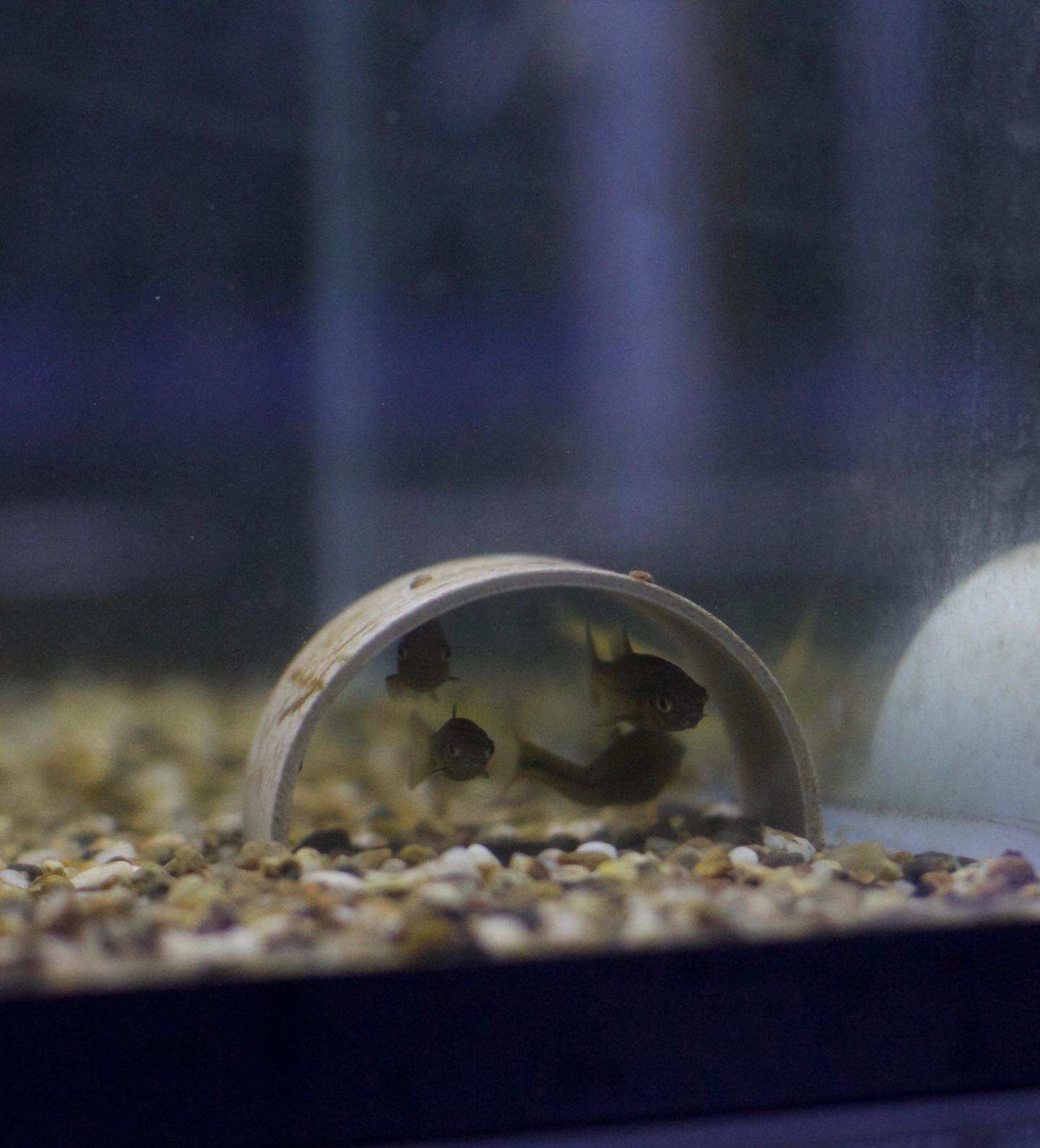
Fish warn each other about danger by releasing chemicals into the water as a signal, research by the University of Saskatchewan (USask) has found.

The USask researchers discovered that wild fish release chemicals called ‘disturbance cues’ to signal to other fish about nearby dangers, such as predators.

The findings may have implications for fish conservation efforts across the globe.

“Disturbance cues may help to explain why some fish populations crash after they decline past a certain point,” said Kevin Bairos-Novak, a graduate student member of the research team.

While researchers have been aware that fish release chemicals into the water for 30 years, this is the first time their use has been studied.

The findings, involving researchers from the USask biology department and the Western College of Veterinary Medicine, are published in the Journal of Animal Ecology.

Fish signaled most when in the presence of familiar fish, but signaled far less or not at all when in the presence of strangers, or when on their own.

The signals provoked a ‘fright response’ in fish they knew, including freezing, dashing about and then shoaling tightly together. Fish use this behavior to defend themselves against predators.

“When minnows were present alongside familiar minnows, they were much more likely to produce signals that initiated close grouping of nearby fish, a strategy used to avoid being eaten by predators,” said Bairos-Novak, who is now at James Cook University, Australia.

Disturbance cues are voluntarily released by prey after being chased, startled or stressed by predators.

One of the main constituents of the signal is urea, found in fish urine.

Fathead minnows, caught at a lake, were placed in groups with familiar fish, unfamiliar fish or as isolated individuals. The research team then simulated a predator chase. The fish responded by shoaling, freezing and dashing when they received a signal from a group they knew. But they did not take significant defensive action when receiving cues from unfamiliar fish or isolated minnows.

Disturbance cues are voluntarily released by prey after being chased, startled or stressed by predators.

“It is exciting to discover a new signaling pathway in animals,” said Maud Ferrari, Bairos-Novak’s supervisor and a behavioural ecologist in the veterinary college’s Department of Veterinary Biomedical Sciences. “We found that fish are able to manipulate the behaviour of other individuals nearby by issuing a signal.”

###

The research was funded by the Natural Sciences and Engineering Research Council of Canada (NSERC).

Media Contact
Jennifer Thoma
[email protected]

Related Journal Article

http://dx.doi.org/10.1111/1365-2656.12986

Tags: BiologyMarine/Freshwater Biology
Share12Tweet8Share2ShareShareShare2

Related Posts

UMass Chan Scientists Pioneer Gene Editing Technology That Rewrites Entire Genome Chapters — Biology

UMass Chan Scientists Pioneer Gene Editing Technology That Rewrites Entire Genome Chapters

May 13, 2026
Scientists Observe Rice Plants Capturing and Eliminating Fall Armyworm Caterpillars — Biology

Scientists Observe Rice Plants Capturing and Eliminating Fall Armyworm Caterpillars

May 13, 2026

Study Finds Genetic Risk for Schizophrenia Emerges in Early Adolescence

May 13, 2026

How Water Fleas Sense Their Predators: A Scientific Insight

May 13, 2026
Please login to join discussion

POPULAR NEWS

  • Research Indicates Potential Connection Between Prenatal Medication Exposure and Elevated Autism Risk

    842 shares
    Share 337 Tweet 211
  • New Study Reveals Plants Can Detect the Sound of Rain

    729 shares
    Share 291 Tweet 182
  • Salmonella Haem Blocks Macrophages, Boosts Infection

    62 shares
    Share 25 Tweet 16
  • Breastmilk Balances E. coli and Beneficial Bacteria in Infant Gut Microbiomes

    57 shares
    Share 23 Tweet 14

About

We bring you the latest biotechnology news from best research centers and universities around the world. Check our website.

Follow us

Recent News

Enamel Proteins Reveal Insights from Six Homo erectus

New Global Study Reveals Challenges in Combating High Blood Pressure Effectively

Ultra-Faint Primitive Galaxy Forms During Reionization

Subscribe to Blog via Email

Enter your email address to subscribe to this blog and receive notifications of new posts by email.

Join 82 other subscribers
  • Contact Us

Bioengineer.org © Copyright 2023 All Rights Reserved.

Welcome Back!

Login to your account below

Forgotten Password?

Retrieve your password

Please enter your username or email address to reset your password.

Log In
No Result
View All Result
  • Homepages
    • Home Page 1
    • Home Page 2
  • News
  • National
  • Business
  • Health
  • Lifestyle
  • Science

Bioengineer.org © Copyright 2023 All Rights Reserved.