Oral supplementation with a specific preparation of fish-derived collagen peptides accelerated the closure of excisional skin wounds in type 2 diabetic mice, restored key histological features of healthy skin, and produced comparable improvements in wounded human skin explants maintained in culture. The study, published as open access research in the journal Collagen and Leather on 16 July 2026, examined a commercially available collagen peptide product known as Naticol®, supplied by Weishardt International and hydrolyzed from the skins of mainly tilapia (Oreochromis genus) and Pangasius (Pangasianodon genus). The product consists of type I collagen fragments (95–97 percent) and type III collagen fragments (3–5 percent), with an average molecular weight of approximately 2 kDa as estimated by the standardized Gelatine Manufacturers of Europe method. Rather than acting as a passive structural supplement, the peptides appeared to reprogram the wound microenvironment itself, shifting it toward antioxidant, anti-inflammatory and pro-remodeling states across mouse, human cell and human tissue models.
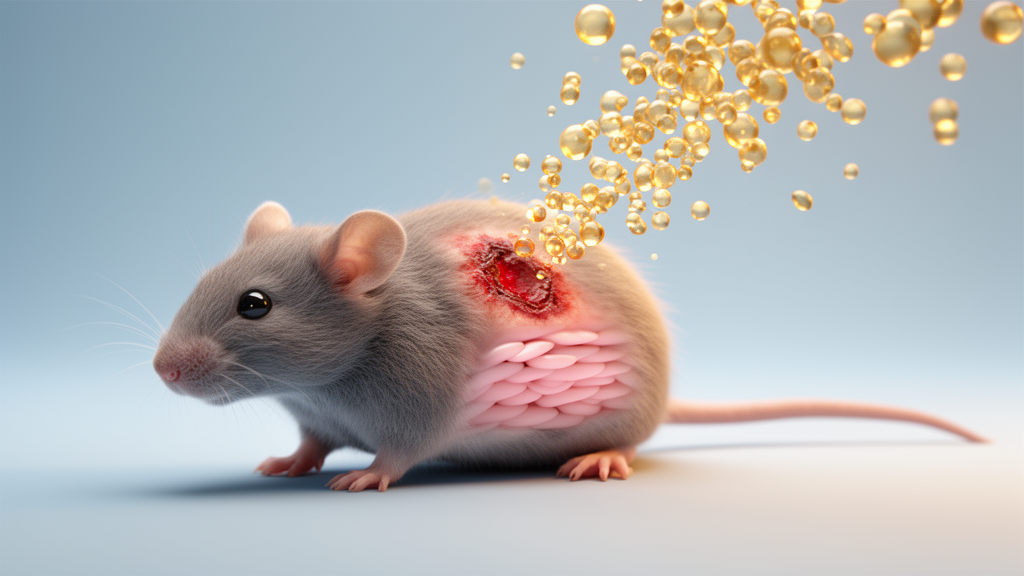
The in vivo evidence came from diet-induced diabetic mice. Eight-week-old male C57BL/6J mice fed a high-fat diet received 0.8 cm-diameter excisional wounds on their backs, and the treated group drank water containing Naticol® at a dose of 0.1 g/kg/day while controls received plain water. From day 4 after injury, wound closure was markedly faster in the supplemented animals, reaching 39.5 ± 3.90 percent versus only 5.75 ± 6.82 percent in untreated controls. The advantage persisted through day 12, when treated mice had achieved 93.8 ± 1.61 percent closure compared with 62.1 ± 9.41 percent in controls, which consequently needed an additional five days to close completely. A similar acceleration of healing was observed in db/db mice, a second model of type 2 diabetes, suggesting the effect was not confined to a single diabetic mouse strain.
Histological analysis at day 12 showed that supplementation restored normal skin architecture, with a continuous epidermis and organized dermis, whereas untreated wounds displayed persistent tissue disruption and dense inflammatory infiltrates at the wound margins. Histological scores integrating epidermal integrity, dermal organization and immune cell infiltration were significantly improved in the treated group. Myeloperoxidase activity, a marker of neutrophil-driven inflammation, was markedly reduced in the granulation tissue of supplemented mice, indicating attenuation of excessive inflammatory cell accumulation. Beyond inflammation control, the treatment significantly enhanced extracellular matrix deposition, demonstrated by increased hydroxyproline content and elevated type I collagen levels within granulation tissue. Because impaired collagen synthesis is a hallmark of diabetic wound pathology, the authors interpret these data as evidence that collagen peptide supplementation promotes both structural restoration and functional tissue remodeling.
Molecular profiling of granulation tissue at day 4 revealed the mechanisms behind the accelerated repair. Treated wounds showed markedly reduced expression of genes involved in reactive oxygen species production, including Nos2, Ncf1 and Gp91, alongside a significant increase in Arg1 expression. The shift from inducible nitric oxide synthase toward arginase is a defining feature of antioxidant, pro-repair macrophages and is considered essential for the resolution of inflammation. In parallel, the collagen peptides dampened inflammatory signaling: expression of the pro-inflammatory cytokines Tnf-α, Il-12 and Il-1β was significantly reduced, while the anti-inflammatory mediators Il-10 and Il-1ra were upregulated. This profile persisted, with protein levels of TNF-α and IL-1β remaining markedly reduced at day 12, TGF-β levels increased and IL-10 showing a similar upward trend, indicating a sustained transition from inflammation toward tissue repair.
Analysis of arachidonic acid metabolism uncovered a redirection of lipid mediator biosynthesis during healing. Supplementation suppressed expression of Pges and Lta4h while upregulating Alox15, a key enzyme in the biosynthesis of the pro-resolving lipid mediator lipoxin A4. Because leukotriene B4, generated by Lta4h, is a potent neutrophil chemoattractant, this metabolic redirection toward lipoxin production provides a mechanistic basis for improved inflammation control. The study also documented enhanced efferocytosis, the process by which macrophages engulf apoptotic neutrophils, which is a prerequisite for inflammation resolution. At days 3 and 5 after injury, the proportion of F4/80⁺Ly6G⁺ cells, representing macrophages that had engulfed neutrophils, was significantly increased in wound exudates from treated mice: 13.2 ± 0.46 percent versus 8.5 ± 0.17 percent at day 3, and 8.6 ± 0.89 percent versus 4.8 ± 0.22 percent at day 5. This enhanced clearance was accompanied by increased expression of the scavenger receptors Cd36, Marco and Mertk.
To test whether the peptides act directly on human cells, the researchers treated human blood monocytes and keratinocytes in vitro. In both cell types, Naticol® significantly reduced ROS production induced by LPS and IFN-γ challenge and markedly decreased secretion of IL-1β, TNF-α and IL-12, while modestly increasing IL-10 and TGF-β, indicating a direct antioxidant and anti-inflammatory action on both immune and epidermal compartments. In a scratch assay on HaCaT keratinocyte monolayers, treated cells tended to accelerate re-epithelialization at 8 hours and significantly increased wound closure by 16 hours, reaching 77.9 ± 3.3 percent versus 39.3 ± 8.8 percent in untreated cells, without affecting cell proliferation as measured by BrdU incorporation. This aligns with the understanding that re-epithelialization is initially driven predominantly by keratinocyte migration rather than proliferation.
An immunocompetent co-culture system combining human monocytes with primary human dermal fibroblasts, derived from abdominal dermolipectomy tissue, extended these findings to stromal cells. Treatment reduced ROS production and suppressed pro-inflammatory cytokine secretion while enhancing IL-10 and TGF-β release. The anti-inflammatory shift was associated with enhanced production of lipoxin A4, which rose from 438.3 ± 382.2 pg/mL to 1950.0 ± 280.2 pg/mL, and a tendency toward reduced leukotriene B4, which fell from 917.5 ± 203.4 pg/mL to 691.4 ± 102.2 pg/mL, correlated with increased ALOX15 expression and decreased LTA4H expression. Prostaglandin E2 production and the expression of its biosynthetic enzymes COX-2, PGES and PGDS were unaltered. The treatment also normalized extracellular matrix remodeling pathways by reducing MMP9 expression and inducing TIMP2 and TIMP3 in both monocytes and fibroblasts, while upregulating types I and III collagen genes and increasing expression of the efferocytosis-associated receptors CD36, MARCO and MERTK in monocytes, mirroring the in vivo results.
The translational relevance was tested in an ex vivo model of wounded human skin explants obtained from abdominal reduction surgeries, with tissue architecture and viability preserved up to day 11 of culture. Naticol® improved wound closure in explants from both individuals with BMI below 30 (n = 3) and individuals with BMI above 30 (n = 3). The response was more pronounced in the lower-BMI group, where the area under the curve of wound closure kinetics rose from 499 ± 42.2 in controls to 685.6 ± 40.1 in treated explants. In explants from individuals with BMI above 30, wound repair was also enhanced, though to a lesser extent, with AUC values rising from 359.7 ± 69.6 to 503.1 ± 78.2, suggesting efficacy even in an obesity-associated inflammatory environment. Molecular analyses of the explant wounds revealed a conserved shift toward an antioxidant and pro-resolving microenvironment, characterized by increased ARG1 and HO-1 expression, enhanced ALOX15, reduced LTA4H expression and LTB4 release, and sustained IL-10 and TGF-β production. Extracellular matrix remodeling improved with reduced MMP9, increased TIMP2 and enhanced COL1A1 and COL3A1 expression, and early induction of the efferocytosis-associated genes CD36, MARCO and MERTK indicated improved clearance of apoptotic cells within the wound bed.
The authors conclude that these combined effects, observed across in vivo, ex vivo and human cellular models including skin from individuals with elevated BMI, position fish-derived collagen peptides as a promising nutraceutical approach to support chronic wound healing by promoting antioxidant, anti-inflammatory and tissue-remodeling responses. Several caveats temper the enthusiasm. The mouse work used a fixed dose delivered in drinking water with no formal sample-size calculation, the human explant cohorts comprised only three donors per BMI group, and the in vitro findings rely on a keratinocyte cell line and donor-derived cells cultured under laboratory conditions. Because an elevated MMP-9/TIMP-1 ratio predicts poor healing in diabetic foot ulcers, restoration of this balance in cell and explant models is mechanistically encouraging, but the study did not test oral supplementation in patients with chronic wounds. The findings therefore support the product’s potential as a complementary, non-pharmacological strategy for impaired cutaneous repair while leaving clinical efficacy in chronic wound patients to be established by future human studies.
Subject of Research: Effects of oral fish-derived collagen peptide supplementation on cutaneous wound healing in diabetic mice, human skin explants and human cell models
Article Title: Bioactive fish-derived collagen peptides enhance cutaneous repair by reprogramming the wound microenvironment toward antioxidant, anti-inflammatory and pro-remodeling status
Article References: Salon, M., Rahabi, M., Bonnet, C., Gadelorge, M., Lavernhe, M., Farno, M., Blot, C., Parny, M., Authier, H., Peyrot, C., Raymond-Letron, I., Jolimaitre, P., Lefèvre, L., & Coste, A. (2026). Bioactive fish-derived collagen peptides enhance cutaneous repair by reprogramming the wound microenvironment toward antioxidant, anti-inflammatory and pro-remodeling status. Collagen and Leather, 8(1), Article 28. https://doi.org/10.1186/s42825-026-00260-x
Image Credits: AI Generated
DOI: 10.1186/s42825-026-00260-x
Keywords: collagen peptides, wound healing, type 2 diabetes, fish-derived collagen, Naticol, efferocytosis, inflammation resolution, macrophages, keratinocytes, fibroblasts, lipoxin A4, skin explants
News Source: Denise Maddox. (October 29, 2026). Fish-derived collagen peptides speed wound healing in diabetic mice and human skin. Scienmag.