


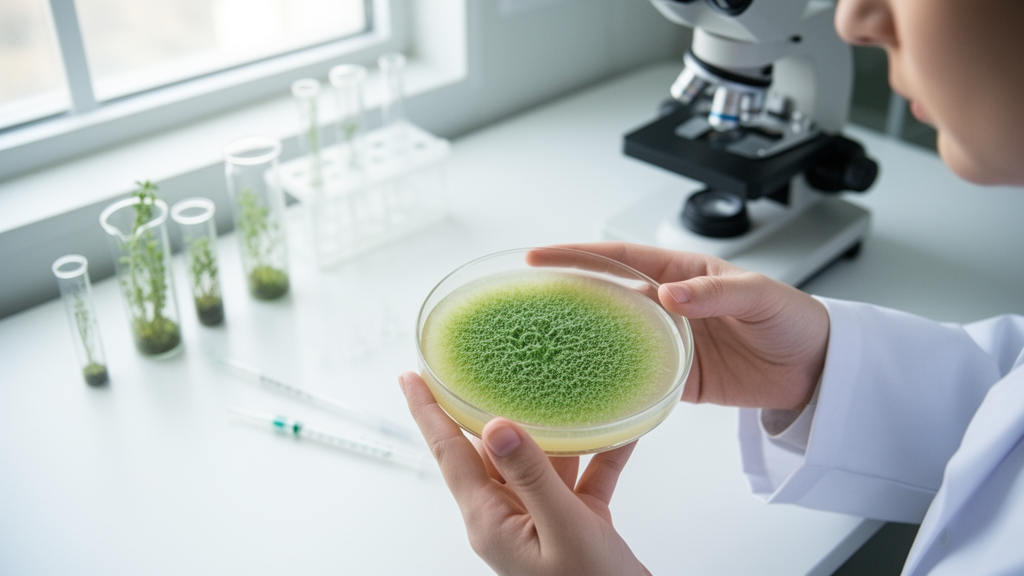
Scientists have assembled the first high-quality whole genome of Trichoderma lixii, an endophytic fungus that lives quietly inside plant tissues, and the sequence is shedding light on the genetic toolkit that lets the microbe colonize its hosts without triggering their defenses. The genome, sequenced with Illumina HiSeq technology, measures 41.1 million base pairs distributed across 1,670 scaffolds, with an N50 of 184,154 base pairs. Within it, the researchers predicted 15,430 genes, of which 7,918 could be functionally annotated against existing protein databases. The assembly size is compatible with a previously reported genome of another T. lixii strain, lending confidence to the estimate.
The study, published in the journal Current Genetics, was carried out by Arjan Singh and Meenu Katoch, who cultured their fungal strain, designated IIIM-B4, in potato dextrose broth before extracting genomic DNA with a CTAB-based method. Sequencing on a HiSeq 2500 platform generated more than 15 million raw reads, which were filtered for quality and assembled using the ABySS assembler followed by SSPACE scaffolding. Gene prediction was performed with Augustus using an intronless gene model and the yeast Saccharomyces cerevisiae as a reference species, and functional annotation relied on BLASTx comparisons against the non-redundant protein database, where T. harzianum supplied the largest number of top hits.
A striking feature of the genome is its sheer unexplored territory. Roughly 48 percent of the predicted genes, some 7,512 in total, encode hypothetical proteins with no detectable homologs in any sequence database currently available. The authors suggest this reservoir of unknown genes could harbor novel functions related to niche adaptation and secondary metabolism, making the genome a rich but largely untapped resource for future functional studies.
Central to the analysis was the annotation of carbohydrate-active enzymes, or CAZymes, the molecular machinery fungi use to dismantle plant cell walls and other complex polysaccharides. In total, 418 genes in the T. lixii genome could be assigned to CAZyme families, distributed across 120 families. Glycoside hydrolases dominated with 229 genes, followed by glycosyl transferases with 78, auxiliary activities with 64, carbohydrate esterases with 24, carbohydrate-binding modules with 17, and polysaccharide lyases with 6. Comparative analysis against six other Trichoderma species, including both endophytic and non-endophytic strains, showed that T. lixii displays a broadly similar CAZyme distribution, with a notably larger glycoside hydrolase class relative to glycosyl transferases.
The researchers paid particular attention to enzyme families involved in cellulose and hemicellulose degradation. The genome contains, among others, GH1 (1 gene), GH3 (14), GH5 (10), GH6 (1), GH7 (4), GH10 (3), GH11 (3), GH12 (1), GH28 (4), GH45 (2), CE1 (3), CE5 (5), CE8 (2), AA1 (7), AA3 (20), AA9 (2), GT2 (14), GT4 (4), and GT8 (3). Glycoside hydrolases such as GH5, GH6, and GH28 break down cellulose and pectin, aiding entry into host tissues, while AA9 lytic polysaccharide monooxygenases and CE1 esterases contribute to the mild oxidative and ester-bond cleavage of complex polymers. Glycosyl transferases, especially GT2 and GT4, participate in fungal cell wall synthesis and glycosylation, processes that can influence how the host perceives the invader.
Equally telling is what the genome lacks. Families of chitin-degrading enzymes, such as GH18 (18 genes), GH75 (2), and the beta-(1,3)-glucan-degrading GH55 (8) and GH16 (10), were less enriched in T. lixii than in the other Trichoderma species examined. The authors interpret this reduced repertoire of fungal cell wall-degrading enzymes as consistent with a benign interaction strategy: degrading another fungus’s cell wall aggressively is the hallmark of mycoparasitic Trichoderma species, whereas a gentler enzymatic profile may allow an endophyte to reside within plant tissue without provoking strong immune responses.
Secondary metabolism emerged as another headline finding. AntiSMASH analysis identified 53 secondary metabolite biosynthetic gene clusters in the genome, indicating strong biosynthetic potential. Polyketide synthase clusters were the most prevalent with 16, followed by 12 hybrid NRPS-PKS clusters, with terpene and NRPS clusters also present. When the researchers compared KEGG pathway assignments with the endophytic T. harzianum strain T6776, they found T. lixii carried more genes in several categories: 2,469 genes mapped to KEGG functional pathways in T. lixii versus 2,027 in T. harzianum T6776, and genes associated with other secondary metabolite pathways numbered 29 in T. lixii against 16 in the comparison strain. T. lixii also had more genes involved in the biosynthesis of novobiocin, carbapenem antibiotics, and alkaloids, while both species carried equal numbers of genes in terpenoid and polyketide metabolism.
Beyond secondary metabolism, KEGG annotation distributed 2,469 genes across five broad pathway categories: metabolism, cellular processes, environmental processing, genetic information processing, and organismal systems, further subdivided into 23 sub-pathways. Signal transduction, carbohydrate metabolism, amino acid metabolism, and translation were the predominant categories. The authors note that endophytes living inside plant cells can regulate secondary metabolite production through their signal transduction pathways, potentially influencing the accumulation of relevant compounds in the host, an observation drawn from the broader endophyte literature rather than demonstrated experimentally in this study.
The genome survey also included a scan for simple sequence repeats, the tandemly repeated microsatellite motifs widely used as molecular markers. Around 72 percent of the examined scaffolds contained SSRs, and about 67 percent of those carried more than one. Mononucleotide repeats accounted for 55 percent of SSRs, dinucleotide for 16 percent, and trinucleotide for 18 percent. The most frequent dinucleotide repeats were TA at 24 percent and AT at 19 percent, followed by TC at 13 percent, and the dominant trinucleotide repeat was TTA at 9 percent. These markers should prove useful for population genetics and strain identification work on the species.
The authors position the genome as a foundation for future research on biocontrol and endophytic functions, noting that T. lixii strains have previously yielded metabolites with reported anticancer potential, a peptaibol with antifungal activity, and applications in mycoremediation of aromatic hydrocarbons and heavy metals. As with any genome-annotation study, however, the findings are predictions based on sequence similarity and domain recognition rather than direct functional demonstrations; the large fraction of hypothetical proteins in particular awaits experimental characterization. What the assembly does establish is a reference resource: a complete gene catalog for an endophytic T. lixii strain, revealing preserved genomic features shared across the genus Trichoderma alongside distinctive enrichments in plant cell wall enzymes and secondary metabolite clusters that plausibly underpin its ecological flexibility inside living plants.
Subject of Research: Whole-genome sequencing and comparative genomics of the endophytic fungus Trichoderma lixii
Article Title: Whole-genome assembly and comparative genomic analyses provide insight into the endophytic lifestyle of Trichoderma lixii
Article References: Singh, A., & Katoch, M. (2025). Whole-genome assembly and comparative genomic analyses provide insight into the endophytic lifestyle of Trichoderma lixii. Current Genetics, 71(1), Article 20. https://doi.org/10.1007/s00294-025-01324-x
Image Credits: AI Generated
DOI: 10.1007/s00294-025-01324-x
Keywords: Trichoderma lixii, whole-genome assembly, endophytic fungus, CAZymes, secondary metabolite gene clusters, comparative genomics, Illumina sequencing, plant colonization, biocontrol, KEGG pathways, microsatellites, fungal genomics
News Source: Juliet Wilcox. (October 30, 2026). First Whole Genome of Endophytic Fungus Trichoderma lixii Reveals Enzymatic Secrets. Scienmag.



