• HOME
  • NEWS
  • EXPLORE
    • CAREER
      • Companies
      • Jobs
    • EVENTS
    • iGEM
      • News
      • Team
    • PHOTOS
    • VIDEO
    • WIKI
  • BLOG
  • COMMUNITY
    • FACEBOOK
    • INSTAGRAM
    • TWITTER
Sunday, June 28, 2026
BIOENGINEER.ORG
No Result
View All Result
  • Login
  • HOME
  • NEWS
  • EXPLORE
    • CAREER
      • Companies
      • Jobs
        • Lecturer
        • PhD Studentship
        • Postdoc
        • Research Assistant
    • EVENTS
    • iGEM
      • News
      • Team
    • PHOTOS
    • VIDEO
    • WIKI
  • BLOG
  • COMMUNITY
    • FACEBOOK
    • INSTAGRAM
    • TWITTER
  • HOME
  • NEWS
  • EXPLORE
    • CAREER
      • Companies
      • Jobs
        • Lecturer
        • PhD Studentship
        • Postdoc
        • Research Assistant
    • EVENTS
    • iGEM
      • News
      • Team
    • PHOTOS
    • VIDEO
    • WIKI
  • BLOG
  • COMMUNITY
    • FACEBOOK
    • INSTAGRAM
    • TWITTER
No Result
View All Result
Bioengineer.org
No Result
View All Result
Home NEWS Science News Biology

First study to compare citrus varieties with combination of metabolomics and microbiome

Bioengineer by Bioengineer
December 30, 2019
in Biology
Reading Time: 2 mins read
0
IMAGE
Share on FacebookShare on TwitterShare on LinkedinShare on RedditShare on Telegram

IMAGE

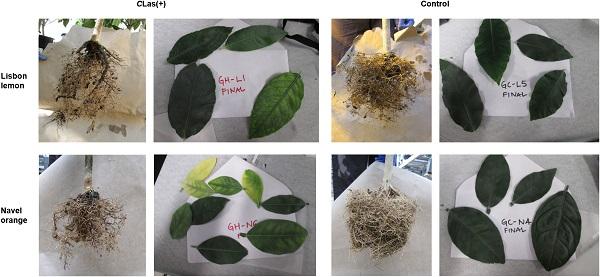
Credit: Emily M. T. Padhi, Nilesh Maharaj, Shin-Yi Lin, Darya O. Mishchuk, Elizabeth Chin, Kris Godfrey, Elizabeth Foster, Marylou Polek, Johan H. J. Leveau, and Carolyn M. Slupsky


Citrus greening disease, or Huanglongbing (HLB), is deadly, incurable, and the most significant threat to the citrus industry. Most HLB research focuses on the tree canopy, but scientists in California studied the impact of HLB on root systems. They recently published the first study to report on the response of two different varieties of citrus to the causal bacterium, ‘Candidatus Liberibacter asiaticus‘ using metabolomics and microbiome technologies.

“Metabolomics is a cutting-edge field of study that provides snapshot information about the metabolism of living things,” explains author Emily M. T. Padhi, “while microbiome studies provide valuable information about the microbial communities living in a particular ecological niche – some microbes are beneficial to the host, while others can be harmful.”

Padhi and colleagues wanted to see how the root system of two varieties of citrus responded to HLB. They collected roots from healthy and infected Lisbon lemon and Washington Navel orange trees grown in greenhouses at the same time and under the same conditions.

They found that both varieties experienced a reduction in root sugars and amino acids when exposed to HLB. However, they also found differences. While the concentration of malic acid and quinic acid (two metabolites involved in plant defense) increased in the navel roots, they decreased in the lemon roots. They also found that the beneficial bacteria Burkholderia increased substantially in navel plants but not in lemons, which contradicts previous studies.

“Overall, this is the first study to compare two varieties of citrus using a combined metabolomics and microbiome approach and demonstrates that scion influences root microbial community composition and, to a lesser extent, the root metabolome.”

There is evidence to suggest that the causal bacterium moves to the root system soon after a plant becomes infected. A key strategy for preserving the health of an infected tree is root system management and research on different responses to HLB may help devise new variety-specific preventative and treatment measures.

###

For more information about this study, read “Metabolome and Microbiome Signatures in the Roots of Citrus Affected by Huanglongbing” published in the December issue of Phytopathology, an international journal publishing articles on fundamental research that advances understanding of the nature of plant diseases, the agents that cause them, their spread, the losses they cause, and measures used to control them.

Media Contact
Ashley Bergman Carlin
[email protected]
651-994-3832

Related Journal Article

http://dx.doi.org/10.1094/PHYTO-03-19-0103-R

Tags: Agricultural Production/EconomicsAgricultureBacteriologyBioinformaticsBiotechnologyFood/Food ScienceMicrobiologyPlant Sciences
Share12Tweet8Share2ShareShareShare2

Related Posts

Natural Hallucinogens: Evolution’s Ecological Tools, Not Mere Chemical Byproducts

June 25, 2026

This Famous Butterfly Revealed: Three Distinct Species Hidden in One

June 25, 2026

Scientists Attack Soybean Cyst Nematode by Starving Its Food Source

June 25, 2026

Decoding the Secret Code of a Crucial Immune Sensor

June 24, 2026
Please login to join discussion

POPULAR NEWS

  • Saying Goodbye to PGY-6: Pediatric Fellowship Realities

    103 shares
    Share 41 Tweet 26
  • Multi-Hospital Study Reveals Long Covid Burden Is Twice as High as Current Estimates

    92 shares
    Share 36 Tweet 23
  • Detection of EDCs in Breast Milk and Infant Urine Up to Six Months Highlights Early Exposure Risks

    77 shares
    Share 31 Tweet 19
  • New Drug Candidate Developed at McMaster Shows Potential for Treating Brain Cancer

    58 shares
    Share 23 Tweet 15

About

We bring you the latest biotechnology news from best research centers and universities around the world. Check our website.

Follow us

Recent News

Tracking Lanthanide-Labeled Microplastics in Plants

POSTECH Researchers Slash Cost of Reconstituted Cell-Free Systems by 95%

AI and Physics Collaborate to Design Advanced Hydrogen Storage Materials

Subscribe to Blog via Email

Success! An email was just sent to confirm your subscription. Please find the email now and click 'Confirm' to start subscribing.

Join 82 other subscribers
  • Contact Us

Bioengineer.org © Copyright 2023 All Rights Reserved.

Welcome Back!

Login to your account below

Forgotten Password?

Retrieve your password

Please enter your username or email address to reset your password.

Log In
No Result
View All Result
  • Homepages
    • Home Page 1
    • Home Page 2
  • News
  • National
  • Business
  • Health
  • Lifestyle
  • Science

Bioengineer.org © Copyright 2023 All Rights Reserved.