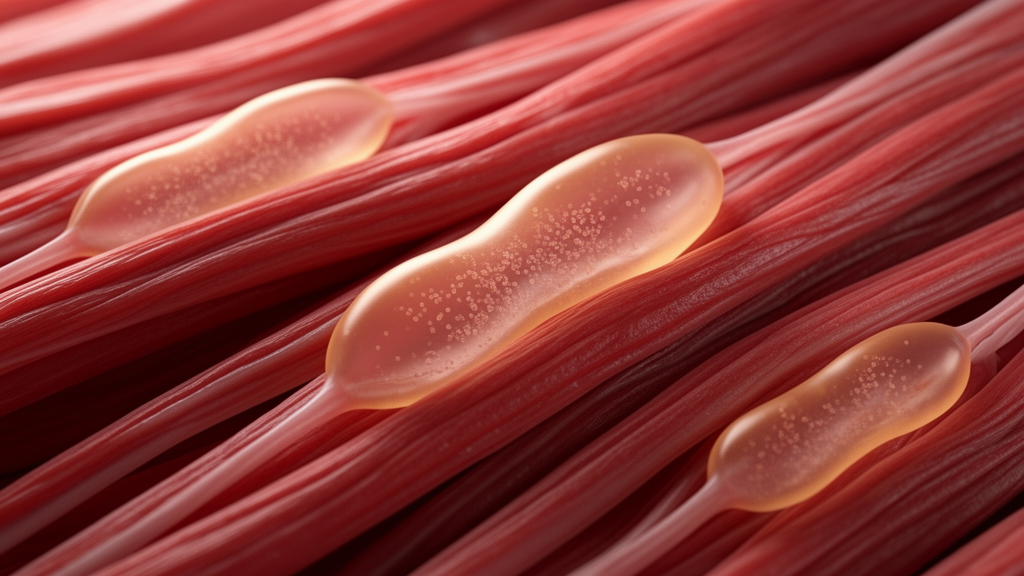
A microscopic sarcocyst resembling the protozoan parasite Sarcocystis felis has been documented for the first time in the skeletal muscle of a Eurasian lynx (Lynx lynx), according to a case report published in Acta Veterinaria Scandinavica. The cyst was discovered in tissue from an adult female lynx killed in central Sweden in 1999 during a nationwide monitoring program, and its identification relied on histology and transmission electron microscopy rather than molecular tools, which are not yet available for definitive species identification in felids.
The animal at the center of the report, archived under case number SVA V393/99, was an adult female weighing 14 kilograms that originated from the county of Jämtland in central Sweden. It was trapped and euthanised with a shot to the head in March 1999, and its carcass was shipped to the Swedish Veterinary Agency (SVA) for a standard necropsy. The lynx was in generally good bodily condition, and its stomach contained remains of a capercaillie (Tetrao urogallus). Histological examination revealed secondary findings of multifocal adrenal cortex hyperplasia and spleen atrophy, alongside the single Sarcocystis sarcocyst.
The cyst itself was found in a haematoxylin and eosin (H&E) stained histological section of an unspecified skeletal muscle. No accompanying cellular reaction was observed around it. In the H&E sections, the sarcocyst wall appeared thin, at less than 1 micrometre thick, with barely perceptible serrations. The cyst had been cut in cross section, so its length remained undetermined.
To characterise the parasite further, the sarcocyst was removed from the paraffin block and examined by transmission electron microscopy (TEM). Ultrastructurally, the cyst wall was around 1 micrometre thick and bore pleomorphic villar protrusions classified as Type 9c under the classification system of Dubey and colleagues. The ground substance layer was smooth and without granules.
Because molecular markers are currently lacking for definitive identification of Sarcocystis species in felids, the authors designated the parasite in this report as S. felis-like rather than assigning it a firm species name. Sarcocystis felis was originally described from a bobcat (Lynx rufus) in the USA. Until recently, all muscular sarcocysts in felids were considered to be S. felis, but later studies have shown that bobcats carry more than two morphologically distinct sarcocysts, complicating the picture.
The Eurasian lynx is the largest free-living feline species in Europe. In Sweden, the 2025 population is estimated at approximately 1,400 individuals, present in most parts of the country though most prevalent in the central and northern regions. Swedish lynx are subject to restricted hunting to keep the population at a viable level, and over the last two decades an average of 90 animals have been hunter-harvested annually under licensed hunting. Under Swedish legislation, all carcasses of free-ranging lynx found dead or shot by hunters must be submitted to the SVA for post-mortem examination to monitor the population’s health status and the impact of environmental disturbances.
The case emerged from an unusually detailed screening effort. In 1999, 96 lynx were submitted to the SVA for post-mortem investigation. While necropsy and tissue sampling are performed on all lynx submitted to the agency, histopathology is usually not carried out unless gross changes are noted. That year, however, a more detailed study of all lynx carcasses included histopathology screening of multiple tissues, which is how this single sarcocyst came to light.
The rarity of such findings in Swedish lynx is underscored by a follow-up check. When an unspecified muscle sample from this same lynx was retrieved from the SVA biobank freezer in 2025, no further sarcocysts were found at histopathology, even after sectioning through the whole thickness of the muscle sample. Only one single sarcocyst had been detected in the original case. This contrasts with the situation in bobcats in the USA, where sarcocysts are common. The authors note, however, that this apparent rarity in L. lynx in Sweden is based on the limited general histopathology screening performed in 1999.
There may also be a sampling blind spot worth addressing. In the bobcat, the tongue appears to be a prevailing location for S. felis, but tongue muscle has not routinely been studied histologically in the Swedish lynx material. The authors suggest it may be a target in future screening to study the prevalence of sarcocysts in lynx in Sweden. Whether the presence of S. felis sarcocysts in various feline species indicates that these animals are merely accidental, aberrant hosts, or that they play an as yet undetermined role in the parasite’s life cycle, remains unknown.
Sarcocystis species have an obligatory two-host life cycle, with herbivores serving as intermediate hosts and carnivores or omnivores as definitive hosts. Definitive hosts become infected by ingesting tissues of intermediate hosts containing sarcocysts, while intermediate hosts become infected by ingesting sporocysts, an environmentally resistant stage excreted in the faeces of the definitive host. Recently, Sarcocystis sporocysts were reported in the intestine or faeces of the Eurasian lynx in China and in the Canada lynx (Lynx canadensis) in the USA, adding to the evidence that these wild felids interact with the genus. The present report, describing the first muscular sarcocyst recorded in a Eurasian lynx, adds a Swedish data point to that emerging picture, while leaving open the questions of prevalence, host role and definitive species identity for future study.
Subject of Research: First record of a Sarcocystis felis-like muscular sarcocyst in a Eurasian lynx from Sweden
Article Title: First record of a Sarcocystis felis-like sarcocyst in skeletal muscle of the Eurasian lynx (Lynx lynx)
Article References: Uggla, A., & Ågren, E. (2026). First record of a Sarcocystis felis-like sarcocyst in skeletal muscle of the Eurasian lynx (Lynx lynx). Acta Veterinaria Scandinavica, 68(1), Article 31. https://doi.org/10.1186/s13028-026-00873-6
Image Credits: AI Generated
DOI: 10.1186/s13028-026-00873-6
Keywords: Sarcocystis felis, Eurasian lynx, Lynx lynx, sarcocyst, Sweden, Swedish Veterinary Agency, transmission electron microscopy, histopathology, wildlife monitoring, bobcat, parasite life cycle, Acta Veterinaria Scandinavica
News Source: Drew Townsend. (October 29, 2026). First Sarcocystis felis-Like Parasite Cyst Found in Eurasian Lynx Muscle. Scienmag.