• HOME
  • NEWS
  • EXPLORE
    • CAREER
      • Companies
      • Jobs
    • EVENTS
    • iGEM
      • News
      • Team
    • PHOTOS
    • VIDEO
    • WIKI
  • BLOG
  • COMMUNITY
    • FACEBOOK
    • INSTAGRAM
    • TWITTER
Friday, May 15, 2026
BIOENGINEER.ORG
No Result
View All Result
  • Login
  • HOME
  • NEWS
  • EXPLORE
    • CAREER
      • Companies
      • Jobs
        • Lecturer
        • PhD Studentship
        • Postdoc
        • Research Assistant
    • EVENTS
    • iGEM
      • News
      • Team
    • PHOTOS
    • VIDEO
    • WIKI
  • BLOG
  • COMMUNITY
    • FACEBOOK
    • INSTAGRAM
    • TWITTER
  • HOME
  • NEWS
  • EXPLORE
    • CAREER
      • Companies
      • Jobs
        • Lecturer
        • PhD Studentship
        • Postdoc
        • Research Assistant
    • EVENTS
    • iGEM
      • News
      • Team
    • PHOTOS
    • VIDEO
    • WIKI
  • BLOG
  • COMMUNITY
    • FACEBOOK
    • INSTAGRAM
    • TWITTER
No Result
View All Result
Bioengineer.org
No Result
View All Result
Home Headlines

First of a kind footage of a living stylodactylid shrimp…

Bioengineer.org by Bioengineer.org
January 19, 2018
in Headlines, Health, Science News
Reading Time: 2 mins read
0
Share on FacebookShare on TwitterShare on LinkedinShare on RedditShare on Telegram
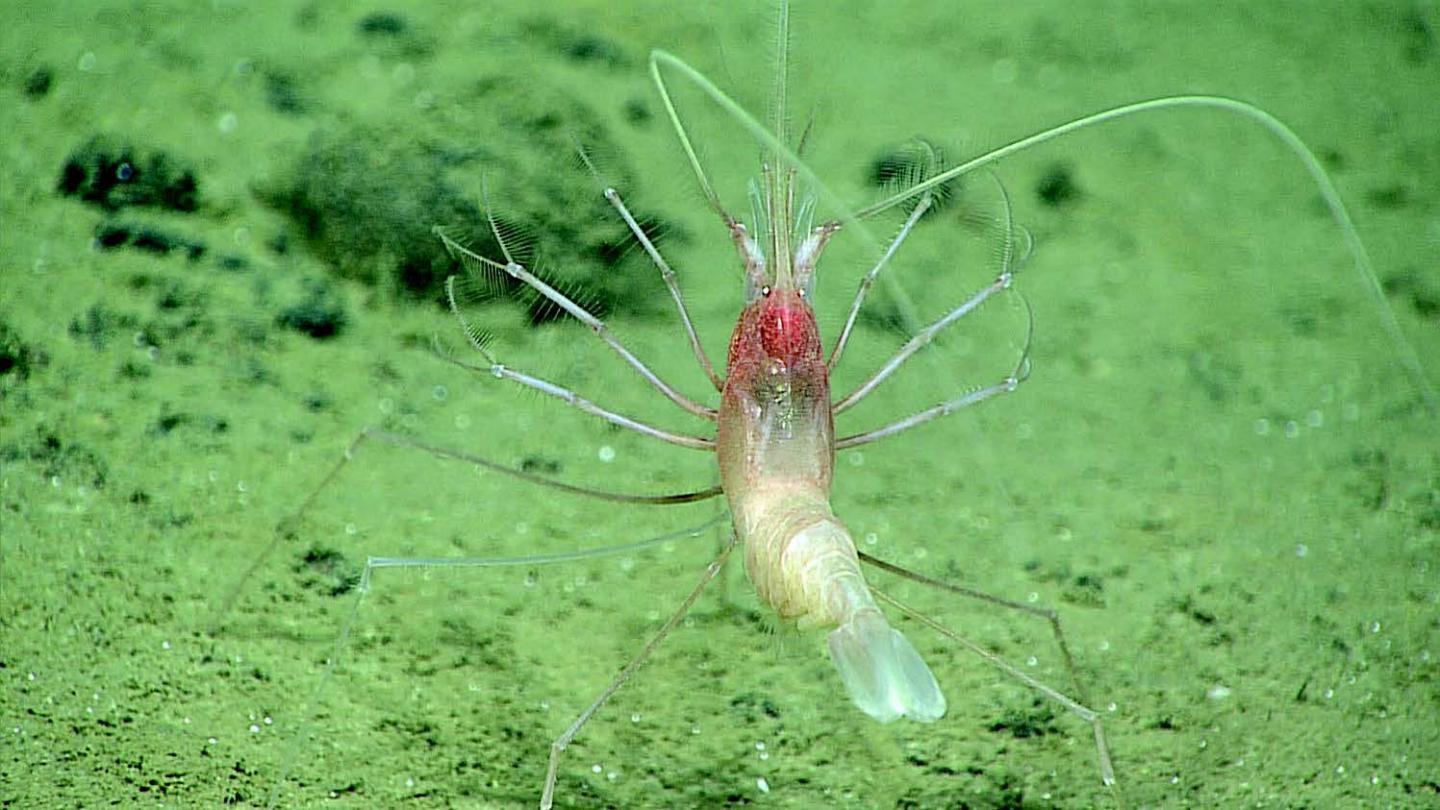
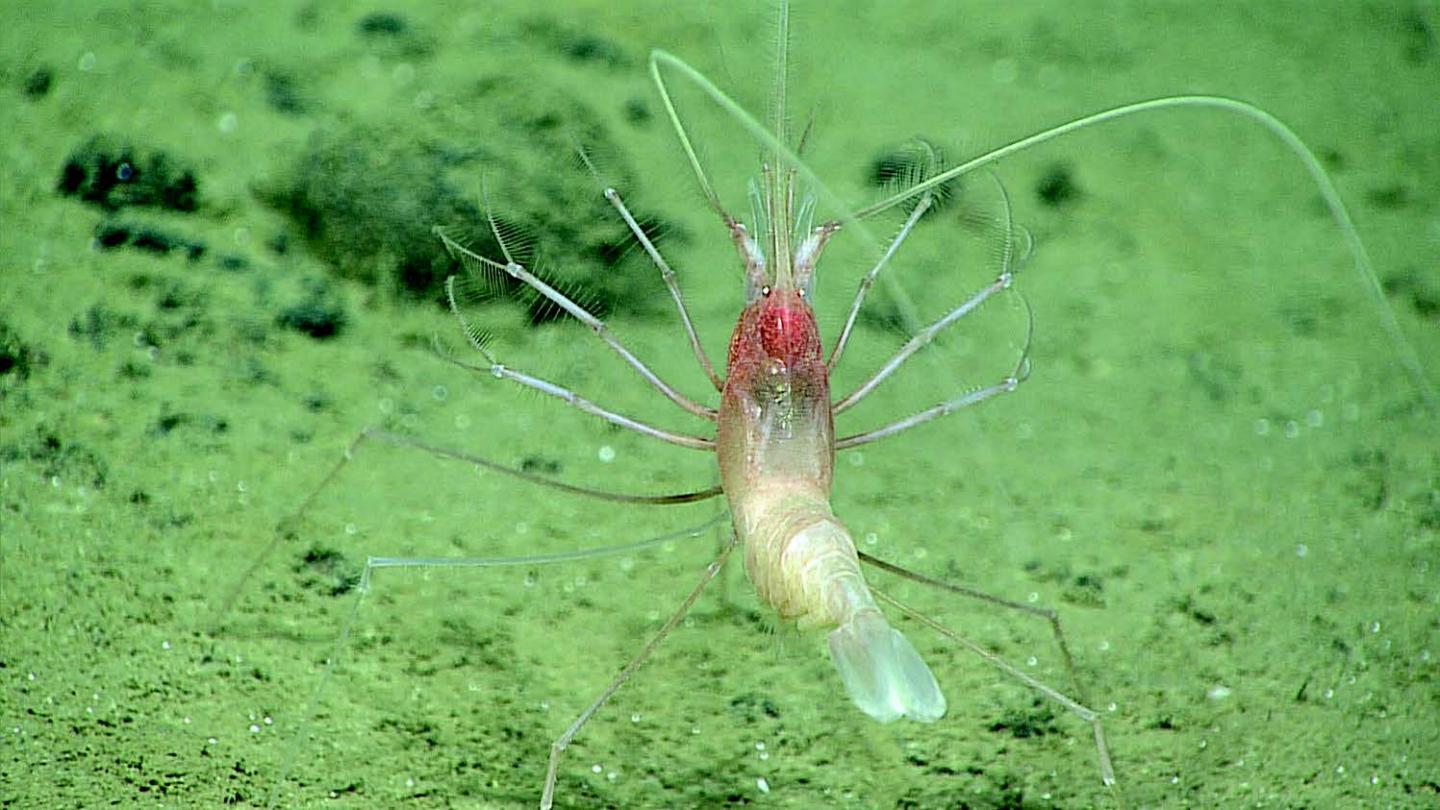
IMAGE

Credit: Dr. Mary Wicksten

Depths such as those at the Marianas Trench Marine National Monument are an extreme challenge for explorers, providing scarce information about their inhabitants, let alone their behavior.

While most of them are known from dead specimens gathered by trawls, a team of scientists, led by Dr. Mary Wicksten, Texas A&M University, USA, have recently retrieved footage of a living shrimp from the seafloor at a striking depth of 4826 m. The video presumably shows a species, previously known from a single broken specimen from the Coral Sea, while filter-feeding. The observation is published in the open access journal ZooKeys.

With the help of the remotely operated vehicle Deep Discoverer, part of the equipment the U.S. National Oceanographic and Atmospheric Administration (NOAA) have used in the "2016 Exploration of the Marianas" expedition, the researchers have obtained the first footage of a living deep-sea benthic shrimp of the Stylodactylidae family. In fact, the video was of such high-quality that the scientists believe they have recognised the shrimp at a species level (Bathystylodactylus bathyalis). This is also the deepest record for this group of shrimps.

Navigating through the seafloor, mostly thickly sedimented with clay-like particles easily disturbed into clouds, the Deep Discoverer spent nearly five hours traversing the bottom, letting the scientists at the shore observe depths ranging from 4840 to 4787 meters. When it reached 4826 m, it approached a tiny shrimp measuring about 120 mm in length.

As soon as they noticed it, the researchers moved the vehicle so that it could face the shrimp and take some detailed shots. At first, the crustacean was seen to stay immobile facing the current for a few minutes, before raising to its back legs and beginning to use the front ones to form what seems to be a "filter basket" that captures particles. Curiously, while such passive feeding behavior is known from some crabs, it has not been observed within any group of carideans, the shrimp infraorder where the studied species belongs.

NOAA's ship Okeanos Explorer, administered through the Office of Exploration and Research and used in the deep-water expedition, is equipped with the remotely-operated vehicle Deep Discoverer and a camera sled. It relies on two maneuverable and four fixed video cameras, as well as 26 LED lamps. High-speed communication capabilities enable scientists to participate in ship operations via telepresence. Thanks to this technology, anyone with Internet access is able to observe live video feeds from and participate in real time via a private chat room and satellite teleconference line.

Okeanos Explorer is to be employed once again in 2017 to continue its explorative mission focused on deepwater areas of U.S. marine protected areas in the central and western Pacific.

###

Original source:

Wicksten M, De Grave S, France S, Kelley C (2017) Presumed filter-feeding in a deep-sea benthic shrimp (Decapoda, Caridea, Stylodactylidae), with records of the deepest occurrence of carideans. ZooKeys 646: 17-23. https://doi.org/10.3897/zookeys.646.10969

Media Contact

Dr. Mary Wicksten
[email protected]
@Pensoft

http://www.pensoft.net

Share12Tweet8Share2ShareShareShare2

Related Posts

Hanyang University Researchers Pinpoint 2.5 Nanometers as Minimum Coating Thickness for Durable Solid-State EV Batteries — Chemistry

Hanyang University Researchers Pinpoint 2.5 Nanometers as Minimum Coating Thickness for Durable Solid-State EV Batteries

May 15, 2026

Axonic Spine Synapses Trigger Action Potentials, Direct Signals

May 15, 2026

New Study Uncovers Why Breast Cancer Becomes More Lethal with Age

May 15, 2026

Study Reveals Heat-Based Therapy Reshapes Brain Networks in Epilepsy

May 15, 2026
Please login to join discussion

POPULAR NEWS

  • Research Indicates Potential Connection Between Prenatal Medication Exposure and Elevated Autism Risk

    843 shares
    Share 337 Tweet 211
  • New Study Reveals Plants Can Detect the Sound of Rain

    729 shares
    Share 291 Tweet 182
  • Salmonella Haem Blocks Macrophages, Boosts Infection

    62 shares
    Share 25 Tweet 16
  • Breastmilk Balances E. coli and Beneficial Bacteria in Infant Gut Microbiomes

    58 shares
    Share 23 Tweet 15

About

We bring you the latest biotechnology news from best research centers and universities around the world. Check our website.

Follow us

Recent News

Hanyang University Researchers Pinpoint 2.5 Nanometers as Minimum Coating Thickness for Durable Solid-State EV Batteries

Axonic Spine Synapses Trigger Action Potentials, Direct Signals

New Study Uncovers Why Breast Cancer Becomes More Lethal with Age

Subscribe to Blog via Email

Enter your email address to subscribe to this blog and receive notifications of new posts by email.

Join 82 other subscribers
  • Contact Us

Bioengineer.org © Copyright 2023 All Rights Reserved.

Welcome Back!

Login to your account below

Forgotten Password?

Retrieve your password

Please enter your username or email address to reset your password.

Log In
No Result
View All Result
  • Homepages
    • Home Page 1
    • Home Page 2
  • News
  • National
  • Business
  • Health
  • Lifestyle
  • Science

Bioengineer.org © Copyright 2023 All Rights Reserved.