• HOME
  • NEWS
  • EXPLORE
    • CAREER
      • Companies
      • Jobs
    • EVENTS
    • iGEM
      • News
      • Team
    • PHOTOS
    • VIDEO
    • WIKI
  • BLOG
  • COMMUNITY
    • FACEBOOK
    • INSTAGRAM
    • TWITTER
Sunday, December 21, 2025
BIOENGINEER.ORG
No Result
View All Result
  • Login
  • HOME
  • NEWS
  • EXPLORE
    • CAREER
      • Companies
      • Jobs
        • Lecturer
        • PhD Studentship
        • Postdoc
        • Research Assistant
    • EVENTS
    • iGEM
      • News
      • Team
    • PHOTOS
    • VIDEO
    • WIKI
  • BLOG
  • COMMUNITY
    • FACEBOOK
    • INSTAGRAM
    • TWITTER
  • HOME
  • NEWS
  • EXPLORE
    • CAREER
      • Companies
      • Jobs
        • Lecturer
        • PhD Studentship
        • Postdoc
        • Research Assistant
    • EVENTS
    • iGEM
      • News
      • Team
    • PHOTOS
    • VIDEO
    • WIKI
  • BLOG
  • COMMUNITY
    • FACEBOOK
    • INSTAGRAM
    • TWITTER
No Result
View All Result
Bioengineer.org
No Result
View All Result
Home NEWS Science News Chemistry

First in-human study of drug targeting brain inflammation supports further development

Bioengineer by Bioengineer
April 9, 2020
in Chemistry
Reading Time: 2 mins read
0
IMAGE
Share on FacebookShare on TwitterShare on LinkedinShare on RedditShare on Telegram

University of Kentucky
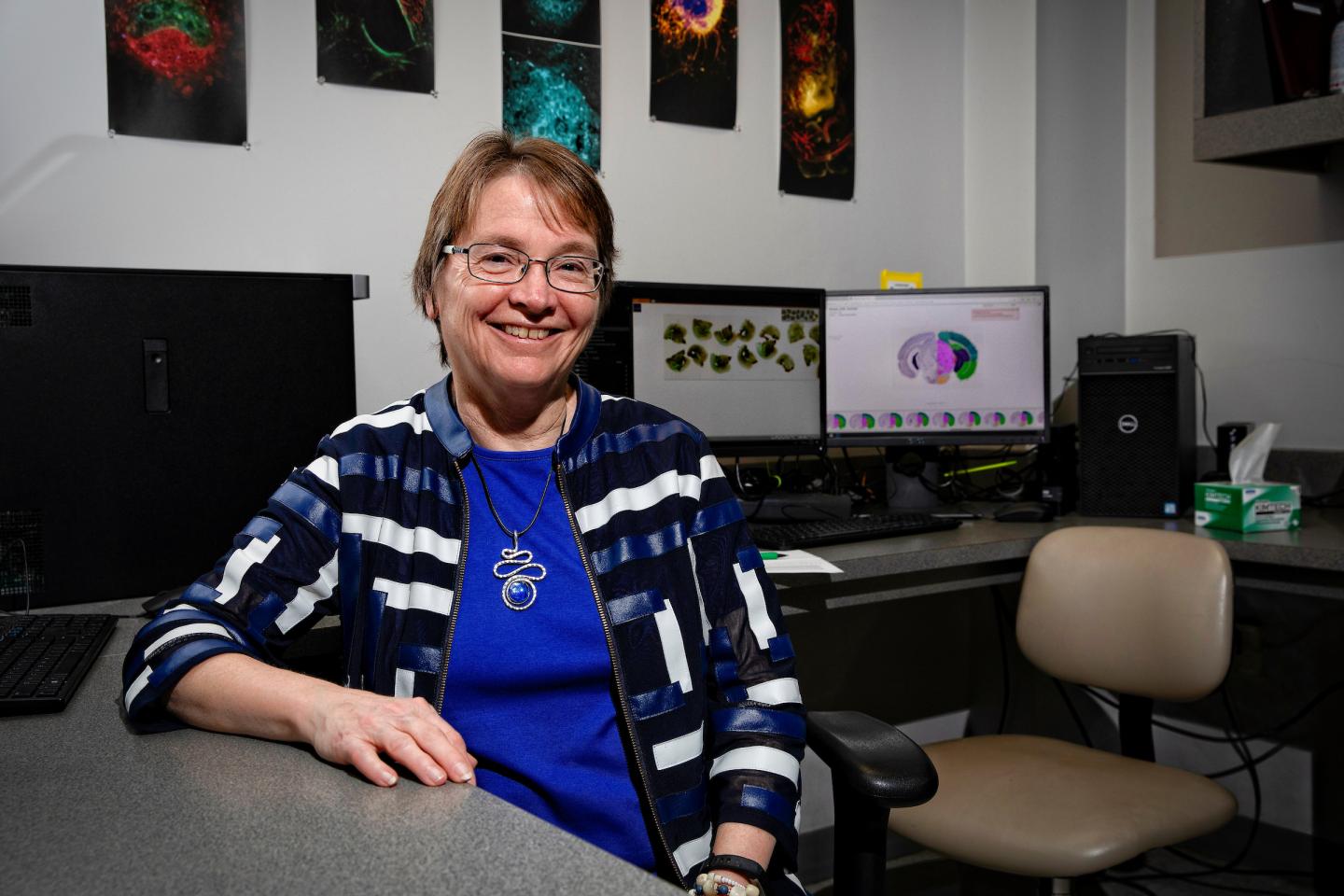
IMAGE

Credit: Mark Cornelison | UKphoto

LEXINGTON, Ky. (April 9, 2020) — Linda J. Van Eldik, director of the Sanders-Brown Center on Aging at the University of Kentucky, co-authored a paper reporting the first human clinical study of a drug candidate that suppresses injury and disease-induced inflammation of the brain.

The paper was accepted in February by Clinical Pharmacology in Drug Development and the article published online this week. Clinical Pharmacology in Drug Development is an international, peer-reviewed, online publication focused on publishing high-quality clinical studies, especially those presenting first-time in-human study results.

The article explains how acute brain injuries resulting from trauma or cerebrovascular injury, such as traumatic brain injury (TBI) and intracerebral hemorrhage (ICH), are major medical problems that cause substantial mortality and neurologic damage. The authors state in the article, “Although there have been significant advances in the medical management of patients with acute brain injuries, there is a clear and urgent need for interventions that improve neurologic recovery and outcomes.”

To address that need, a small-molecule drug candidate now known as MW189 was developed. MW189 blocks abnormal inflammation in the brain that is known to contribute to injury- and disease-induced neurologic impairments in a number of acute and chronic brain disorders. This study examining MW189 in healthy adult volunteers was performed by a collaborative team from UK, Duke University, and Northwestern University. The work by Van Eldik and the rest of the team is substantial as it is the first time MW189 had been tested in humans. The study was open to healthy men and women between the ages of 18 and 50 years.

The article reports that MW189 was safe and well-tolerated by volunteers, with no clinically significant concerns after either a single dose or multiple administrations of MW189. “This is an important result,” said Van Eldik, “because in order to get future FDA approval of any drug for patients, the drug candidate first has to be tested and shown to be safe in healthy volunteers.” Van Eldik goes on to say “overall, these studies support further development of MW189 for treatment of patients with acute brain injuries such as TBI or hemorrhagic stroke.”

###

The study was supported in part by an Alzheimer’s Association Part the Cloud grant.

Media Contact
Hillary Smith
[email protected]

Original Source

https://uknow.uky.edu/research/sanders-brown-director-leads-first-human-study-drug-targeting-brain-inflammation

Related Journal Article

http://dx.doi.org/10.1002/cpdd.795

Tags: AlzheimerBiochemistryClinical TrialsGerontologyMedicine/HealthMolecular BiologyneurobiologyPharmaceutical Sciences
Share12Tweet8Share2ShareShareShare2

Related Posts

Cutting Electrolyte Reduction Boosts High-Energy Battery Performance

Cutting Electrolyte Reduction Boosts High-Energy Battery Performance

December 19, 2025
Microenvironment Shapes Gold-Catalysed CO2 Electroreduction

Microenvironment Shapes Gold-Catalysed CO2 Electroreduction

December 11, 2025

Photoswitchable Olefins Enable Controlled Polymerization

December 11, 2025

Cation Hydration Entropy Controls Chloride Ion Diffusion

December 10, 2025
Please login to join discussion

POPULAR NEWS

  • Nurses’ Views on Online Learning: Effects on Performance

    Nurses’ Views on Online Learning: Effects on Performance

    70 shares
    Share 28 Tweet 18
  • NSF funds machine-learning research at UNO and UNL to study energy requirements of walking in older adults

    71 shares
    Share 28 Tweet 18
  • Unraveling Levofloxacin’s Impact on Brain Function

    54 shares
    Share 22 Tweet 14
  • Exploring Audiology Accessibility in Johannesburg, South Africa

    51 shares
    Share 20 Tweet 13

About

We bring you the latest biotechnology news from best research centers and universities around the world. Check our website.

Follow us

Recent News

MINFLUX Reveals Cardiac Ryanodine Receptor Structure in 3D

Antisense Therapy Reverses Developmental Defects in SMA Organoids

Black Soldier Fly Larvae Boost African Catfish Growth

Subscribe to Blog via Email

Enter your email address to subscribe to this blog and receive notifications of new posts by email.

Join 70 other subscribers
  • Contact Us

Bioengineer.org © Copyright 2023 All Rights Reserved.

Welcome Back!

Login to your account below

Forgotten Password?

Retrieve your password

Please enter your username or email address to reset your password.

Log In
No Result
View All Result
  • Homepages
    • Home Page 1
    • Home Page 2
  • News
  • National
  • Business
  • Health
  • Lifestyle
  • Science

Bioengineer.org © Copyright 2023 All Rights Reserved.