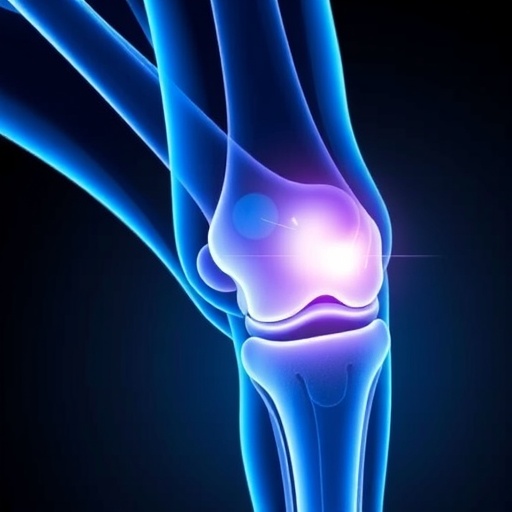
In a groundbreaking advancement poised to transform the management of degenerative joint diseases, researchers have unveiled the first-in-human, multicenter phase I clinical trial outcomes of OSCA therapy for knee osteoarthritis (OA). This innovative treatment leverages the intersection of cutting-edge molecular medicine and regenerative approaches, presenting a beacon of hope for millions suffering from this debilitating condition worldwide.
Knee osteoarthritis remains a significant global health burden, characterized by progressive degeneration of articular cartilage, subchondral bone remodeling, inflammation, and persistent pain leading to substantial disability. Traditional management options largely focus on symptomatic relief through pharmacotherapy and, in advanced stages, surgical intervention such as joint replacement. Despite these measures, the absence of effective disease-modifying therapies leaves a pressing void to be addressed. OSCA therapy seeks to fill this gap by targeting the underlying pathological mechanisms with unprecedented precision.
The phase I trial, conducted across multiple centers and enrolling a diverse cohort of patients, was primarily designed to evaluate the safety and tolerability of OSCA therapy. Participants were administered the treatment via intra-articular injections, enabling direct delivery to the knee joint microenvironment. The therapy’s molecular composition consists of optimized stem cell analogs engineered to enhance cartilage regeneration, modulate inflammatory cascades, and restore tissue homeostasis. This multi-pronged approach embodies a paradigm shift from conventional symptomatic care to regenerative medicine.
An essential facet of OSCA’s formulation is its capacity to harness the innate reparative potential of stem cells while circumventing associated challenges such as immune rejection and tumorigenicity. By utilizing tailored synthetic analogs, the therapy achieves a controlled bioactive profile, promoting chondrogenesis without the pitfalls of uncontrolled cell proliferation. Preclinical data had demonstrated promising outcomes, including enhanced cartilage matrix synthesis, reduced pro-inflammatory cytokine release, and improved joint biomechanics, which provided a robust foundation for initiating human trials.
During the trial, meticulous monitoring of clinical parameters and biomarker profiles enabled comprehensive assessment of therapeutic effects. Participants reported notable reductions in pain scores, improved joint function, and enhanced quality of life metrics over the course of treatment. Imaging modalities, including advanced MRI techniques, revealed stabilization and, in some cases, partial regeneration of cartilage lesions, a feat rarely observed with existing interventions. Although the primary endpoint was safety, these secondary indicators underscore OSCA’s therapeutic promise.
Another remarkable aspect of the study pertains to the immunomodulatory properties of OSCA therapy. Osteoarthritis is increasingly recognized as a complex inflammatory disorder, wherein chronic low-grade inflammation perpetuates tissue damage. OSCA’s engineered molecules actively attenuated local immune cell infiltration and downregulated key cytokines such as IL-1β and TNF-α within the synovium. By recalibrating the joint’s inflammatory milieu, the therapy fosters an environment conducive to regeneration rather than degeneration.
The trial also highlighted the feasibility of multicenter collaboration in deploying novel biologic treatments. Standardized protocols for administration, rigorous patient selection criteria, and harmonized outcome measures ensured data reliability and replicability. Importantly, no serious adverse events related to OSCA therapy were reported, affirming its safety profile in a clinical context. Mild transient reactions such as local swelling and discomfort were managed conservatively, further supporting tolerability.
From a mechanistic standpoint, OSCA therapy’s design embodies the integration of biomolecular engineering with cell biology. Synthetic stem cell analogs are crafted to mimic the secretome—the complex array of growth factors, cytokines, and extracellular vesicles—that orchestrates tissue repair. This cell-free approach eliminates logistical challenges associated with live cell therapies, including storage, scalability, and regulatory hurdles, positioning OSCA as a practical and efficacious therapeutic modality.
Moreover, the adaptability of OSCA therapy extends beyond knee osteoarthritis. The underlying platform holds potential for application across a spectrum of musculoskeletal disorders characterized by tissue degeneration and inflammation, such as hip OA, rheumatoid arthritis, and even certain tendinopathies. Ongoing research aims to refine dosing regimens, optimize delivery systems, and explore synergistic combinations with other regenerative agents to maximize clinical benefit.
The enthusiasm surrounding OSCA therapy is not solely scientific but also resonates with patients and healthcare providers eager for alternatives that transcend symptomatic management. By restoring joint integrity and alleviating pain through biological repair mechanisms, this approach promises to reduce dependency on analgesics and delay or obviate the need for invasive surgeries. This shift could have far-reaching implications for healthcare systems globally by improving outcomes and reducing costs associated with osteoarthritis care.
While the phase I results are encouraging, scientists emphasize the necessity for further investigation through phase II and III trials to establish efficacy definitively, determine long-term safety, and evaluate comparative performance against existing standards of care. These subsequent trials will incorporate larger populations, extended follow-up periods, and more nuanced functional assessments to delineate OSCA’s true therapeutic impact comprehensively.
In addition, exploring biomarkers predictive of response to OSCA therapy may pave the way for personalized treatment strategies. Given the heterogeneity of osteoarthritis pathology across individuals, tailoring interventions based on molecular signatures could optimize outcomes and minimize unnecessary exposure. Integration with advanced diagnostics and imaging modalities will likely play a crucial role in this precision medicine framework.
The paradigm presented by OSCA therapy aligns with broader trends in translational medicine where bench-to-bedside pathways harness biotechnology advances to tackle intractable diseases. Its successful translation from preclinical promise to clinical feasibility exemplifies how interdisciplinary collaboration, innovative engineering, and patient-centered research converge to redefine therapeutic possibilities for osteoarthritis.
As the field moves forward, the implications of OSCA therapy’s pioneering clinical trial extend beyond the confines of knee osteoarthritis treatment alone. They herald a new era wherein molecularly engineered stem cell analogs may become central to regenerative medicine’s armamentarium. This transformative approach embodies hope for millions suffering from degenerative joint conditions, potentially restoring mobility and quality of life with a science-driven yet practical therapeutic solution.
With an estimated 250 million individuals affected by osteoarthritis globally and the growing aging population exacerbating this epidemic, the advent of OSCA therapy symbolizes a beacon of hope amid longstanding challenges. The convergence of synthetic biology, molecular medicine, and clinical research showcased in this study underscores the potential of innovative therapeutic strategies to rewrite the future of musculoskeletal health.
In summary, the multicenter phase I study of OSCA therapy for knee osteoarthritis represents a seminal breakthrough, demonstrating safety and promising early signs of efficacy through regenerative and immunomodulatory mechanisms. This innovative treatment modality stands at the forefront of translational medicine, offering new horizons for disease modification in osteoarthritis and related disorders. The scientific community and patients alike anticipate further clinical developments that will validate and extend the transformative impact of OSCA therapy in the coming years.
Subject of Research: The first-in-human clinical evaluation of OSCA therapy, a synthetic stem cell analog-based regenerative treatment for knee osteoarthritis.
Article Title: First-in-human and multicenter phase I study of OSCA therapy for knee osteoarthritis.
Article References:
Suh, D.K., Lee, S.H., Bae, Y. et al. First-in-human and multicenter phase I study of OSCA therapy for knee osteoarthritis. Exp Mol Med (2026). https://doi.org/10.1038/s12276-026-01728-w
Image Credits: AI Generated
DOI: 10.1038/s12276-026-01728-w
Keywords: Knee osteoarthritis, OSCA therapy, regenerative medicine, stem cell analogs, intra-articular injection, cartilage regeneration, immunomodulation, phase I clinical trial, biomolecular engineering.
Tags: cartilage regeneration in knee osteoarthritisdisease-modifying therapies for osteoarthritisfirst-in-human clinical trial for osteoarthritisinflammation modulation in osteoarthritisintra-articular injection therapy for knee OAmolecular medicine in osteoarthritis treatmentOSCA therapy for knee osteoarthritisphase I clinical trial outcomesregenerative medicine for joint diseasessafety and tolerability of OSCA therapystem cell analog therapy for cartilage repairtreatment of degenerative joint diseases