

• HOME
  • NEWS
  • EXPLORE
    • CAREER
      • Companies
      • Jobs
    • EVENTS
    • iGEM
      • News
      • Team
    • PHOTOS
    • VIDEO
    • WIKI
  • BLOG
  • COMMUNITY
    • FACEBOOK
    • INSTAGRAM
    • TWITTER
Sunday, October 4, 2026
BIOENGINEER.ORG
No Result
View All Result
  • Login
  • HOME
  • NEWS
  • EXPLORE
    • CAREER
      • Companies
      • Jobs
        • Lecturer
        • PhD Studentship
        • Postdoc
        • Research Assistant
    • EVENTS
    • iGEM
      • News
      • Team
    • PHOTOS
    • VIDEO
    • WIKI
  • BLOG
  • COMMUNITY
    • FACEBOOK
    • INSTAGRAM
    • TWITTER
  • HOME
  • NEWS
  • EXPLORE
    • CAREER
      • Companies
      • Jobs
        • Lecturer
        • PhD Studentship
        • Postdoc
        • Research Assistant
    • EVENTS
    • iGEM
      • News
      • Team
    • PHOTOS
    • VIDEO
    • WIKI
  • BLOG
  • COMMUNITY
    • FACEBOOK
    • INSTAGRAM
    • TWITTER
No Result
View All Result
Bioengineer.org
No Result
View All Result
Home Headlines

First detailed decoding of complex finger millet genome

Bioengineer.org by Bioengineer.org
January 20, 2018
in Headlines, Health, Science News
Reading Time: 2 mins read
0
Share on FacebookShare on TwitterShare on LinkedinShare on RedditShare on Telegram
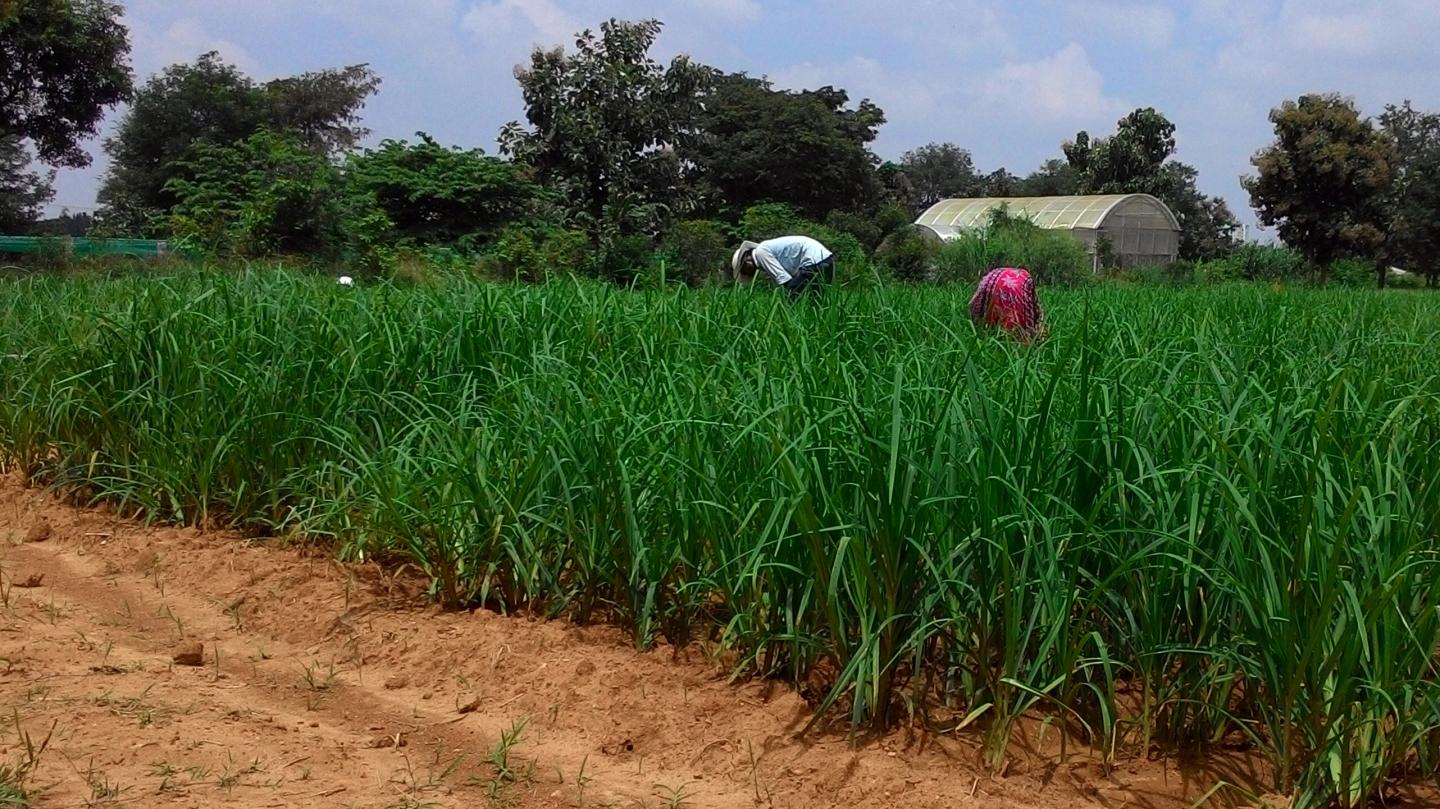
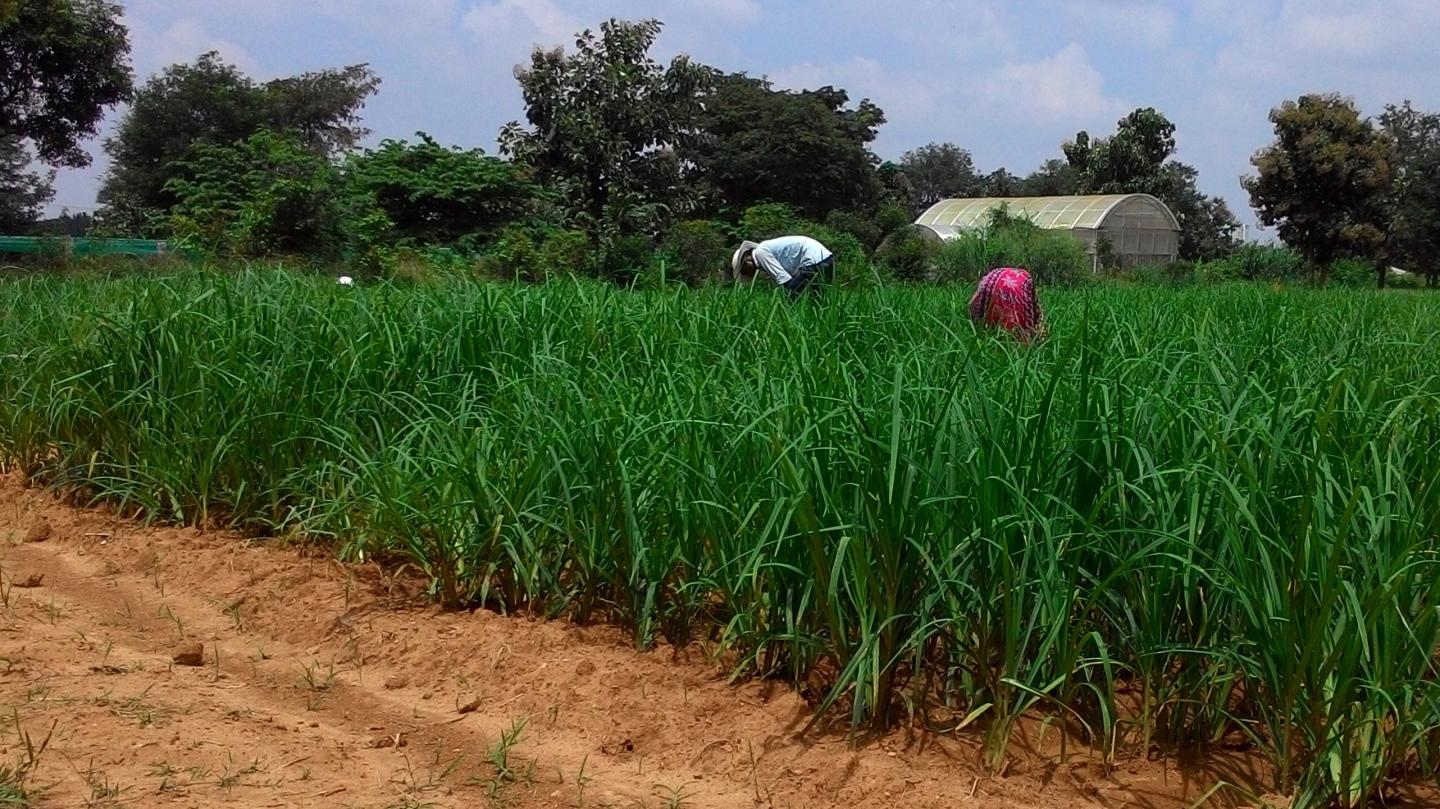
IMAGE

Credit: Mathi Thumilan Balachadran

For many poor farmers in India and Africa, finger millet is a major staple food. The crop species is not only a rich source of minerals like calcium, iron, magnesium and zinc, and it contains many vitamins and essential amino acids. The plant is also characterized by its resistance to drought and heat. As it is very healthy and gluten-free, it is finding increased use as a food in industrial countries as well. Despite its importance, finger millet has been given very little scientific attention until now.

Large and complex genome due to fusion of two plant species

Finger millet arose through the hybridization of two different plant species. The plant is therefore polyploid, which means it has a four-fold set of chromosomes and almost twice as many genes as its original species. The size and complexity of the genome are thought to have conferred the broad environmental tolerance of finger millet, while making genome research extremely difficult. For the first time, an international team of researchers from the University of Zurich has now managed to decode the complex genome of finger millet in great detail. It comprises about 2.6 million base pairs and has more than 62,300 genes – about twice as many as rice, for example.

New strategy for genome sequencing and mapping

A good 57,900 finger millet genes – over 90 percent – occur in more than two copies. As their DNA sequences are very similar, it was difficult to correctly allocate the numerous, decoded DNA sections within the entire genome. In cooperation with Ralph Schlapbach and Sirisha Aluri from the Functional Genomics Center at the University of Zurich and ETH Zurich, the team headed up by Kentaro Shimizu, professor at the UZH Department of Evolutionary Biology and Environmental Studies, has managed to overcome these difficulties. For this purpose, the scientists combined a sophisticated bioinformatics strategy developed by Masaomi Hatakeyama that uses state-of-the-art sequencing methods with a new technology that can optically map the long, individual DNA molecules in the genome. "Our newly developed strategy will help sequence the genome of other polyploid cultivated plants that have not been able to be determined until now," Shimizu says.

Improving the supply of nutrients and drought resistance

An interdisciplinary team of researchers from Zurich and Bangalore, India, worked together on this project. The work was supported by Indo-Swiss Collaboration in Biotechnology (ISCB), a bilateral research and development program financed by the Swiss and Indian governments, as well as by the Japan Science and Technology Agency. The objective is to improve food security and to develop the capacity of biotechnological research in India. "The newly available genome data of finger millet opens up numerous possibilities for modern plant breeding," Shimizu emphasizes. "On the one hand, to help people with mineral deficiencies in India and in industrialized countries and, on the other hand, to make important crop plants more resistant to drought and aridness."

###

Media Contact

Kentaro K. Shimizu
[email protected]
41-446-356-740
@uzh_news

http://www.uzh.ch

Original Source

http://www.media.uzh.ch/en/Press-Releases/2017/Finger-millet-genome.html http://dx.doi.org/10.1093/dnares/dsx036

Share12Tweet8Share2ShareShareShare2

Related Posts

Landmark Nationwide Trial Shows Genome Sequencing Beats Standard Testing for Developmental Disorders

Landmark Nationwide Trial Shows Genome Sequencing Beats Standard Testing for Developmental Disorders

October 4, 2026
Brain Network Scans Reveal Depression Looks Different in Teenagers and Adults

Brain Network Scans Reveal Depression Looks Different in Teenagers and Adults

October 4, 2026

MRI Radiomics Model Predicts Breast Cancer Chemotherapy Response by Reading the Tumor and Its Surroundings

October 4, 2026

Silent Model Failure in Remote Health Monitoring Gets a Real-Time Drift Alarm

October 4, 2026
Please login to join discussion

POPULAR NEWS

  • Alloys That Shrink Their Own Grains: New PIX Mechanism Refines Metals With Heat Alone

    Alloys That Shrink Their Own Grains: New PIX Mechanism Refines Metals With Heat Alone

    29 shares
    Share 12 Tweet 7
  • Endurance Exercise Reshapes the Liver in Males and Females Through Distinct Molecular Routes

    29 shares
    Share 12 Tweet 7
  • Single Transcription Factor PU.1 Rapidly Converts Fibroblasts into Macrophage-Lineage Cells

    29 shares
    Share 12 Tweet 7
  • New Scale Measures How Ready Nurse Educators Really Are for the AI Era

    29 shares
    Share 12 Tweet 7

About

We bring you the latest biotechnology news from best research centers and universities around the world. Check our website.

Follow us

Recent News

Alloys That Shrink Their Own Grains: New PIX Mechanism Refines Metals With Heat Alone

Endurance Exercise Reshapes the Liver in Males and Females Through Distinct Molecular Routes

Single Transcription Factor PU.1 Rapidly Converts Fibroblasts into Macrophage-Lineage Cells

Subscribe to Blog via Email

Success! An email was just sent to confirm your subscription. Please find the email now and click 'Confirm' to start subscribing.

Join 85 other subscribers
  • Contact Us

Bioengineer.org © Copyright 2023 All Rights Reserved.

Welcome Back!

Login to your account below

Forgotten Password?

Retrieve your password

Please enter your username or email address to reset your password.

Log In
No Result
View All Result
  • Homepages
    • Home Page 1
    • Home Page 2
  • News
  • National
  • Business
  • Health
  • Lifestyle
  • Science

Bioengineer.org © Copyright 2023 All Rights Reserved.
