• HOME
  • NEWS
  • EXPLORE
    • CAREER
      • Companies
      • Jobs
    • EVENTS
    • iGEM
      • News
      • Team
    • PHOTOS
    • VIDEO
    • WIKI
  • BLOG
  • COMMUNITY
    • FACEBOOK
    • INSTAGRAM
    • TWITTER
Saturday, April 18, 2026
BIOENGINEER.ORG
No Result
View All Result
  • Login
  • HOME
  • NEWS
  • EXPLORE
    • CAREER
      • Companies
      • Jobs
        • Lecturer
        • PhD Studentship
        • Postdoc
        • Research Assistant
    • EVENTS
    • iGEM
      • News
      • Team
    • PHOTOS
    • VIDEO
    • WIKI
  • BLOG
  • COMMUNITY
    • FACEBOOK
    • INSTAGRAM
    • TWITTER
  • HOME
  • NEWS
  • EXPLORE
    • CAREER
      • Companies
      • Jobs
        • Lecturer
        • PhD Studentship
        • Postdoc
        • Research Assistant
    • EVENTS
    • iGEM
      • News
      • Team
    • PHOTOS
    • VIDEO
    • WIKI
  • BLOG
  • COMMUNITY
    • FACEBOOK
    • INSTAGRAM
    • TWITTER
No Result
View All Result
Bioengineer.org
No Result
View All Result
Home NEWS Science News Biology

Fertilizers’ impact on soil health compared

Bioengineer by Bioengineer
October 31, 2018
in Biology
Reading Time: 2 mins read
0
Share on FacebookShare on TwitterShare on LinkedinShare on RedditShare on Telegram
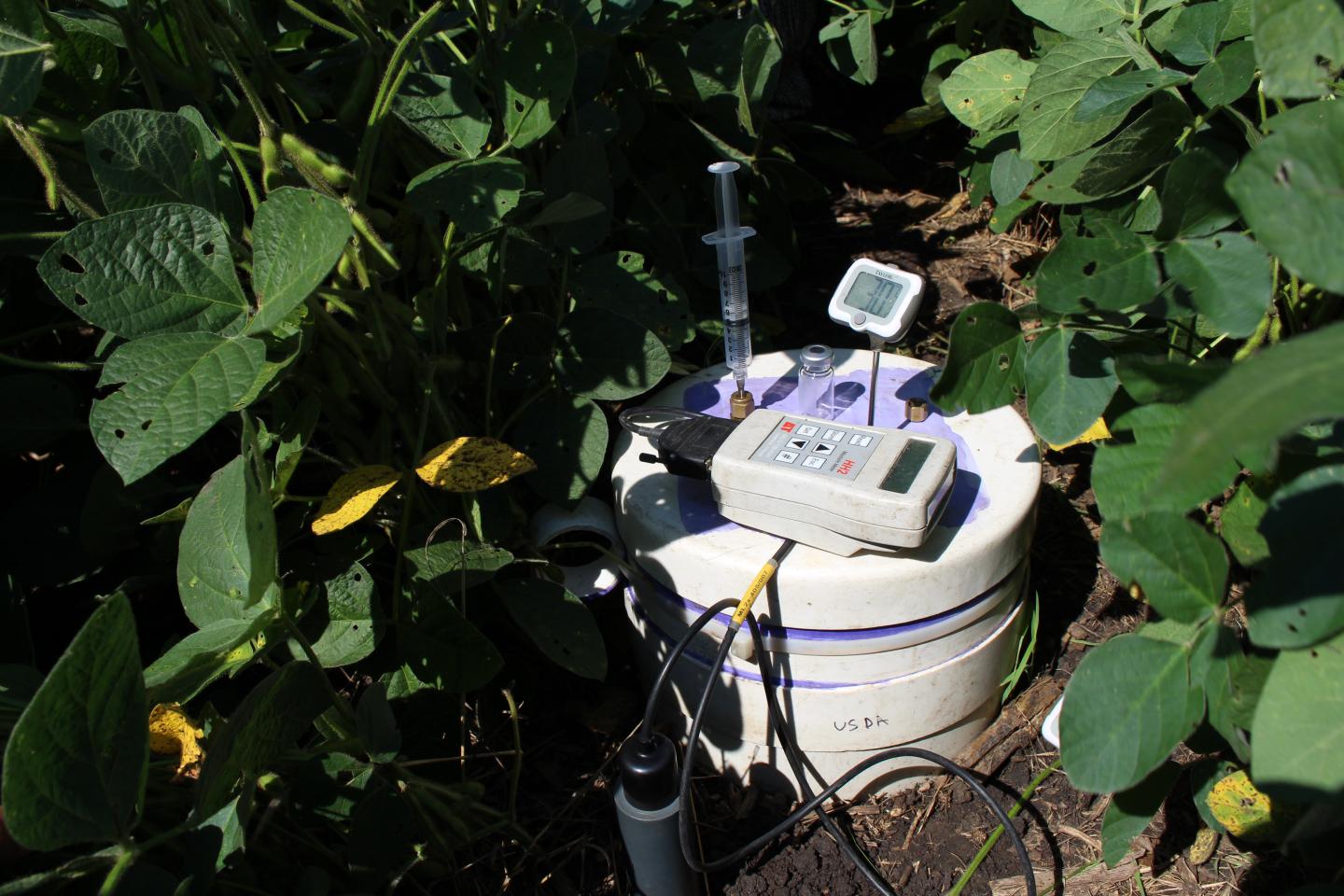
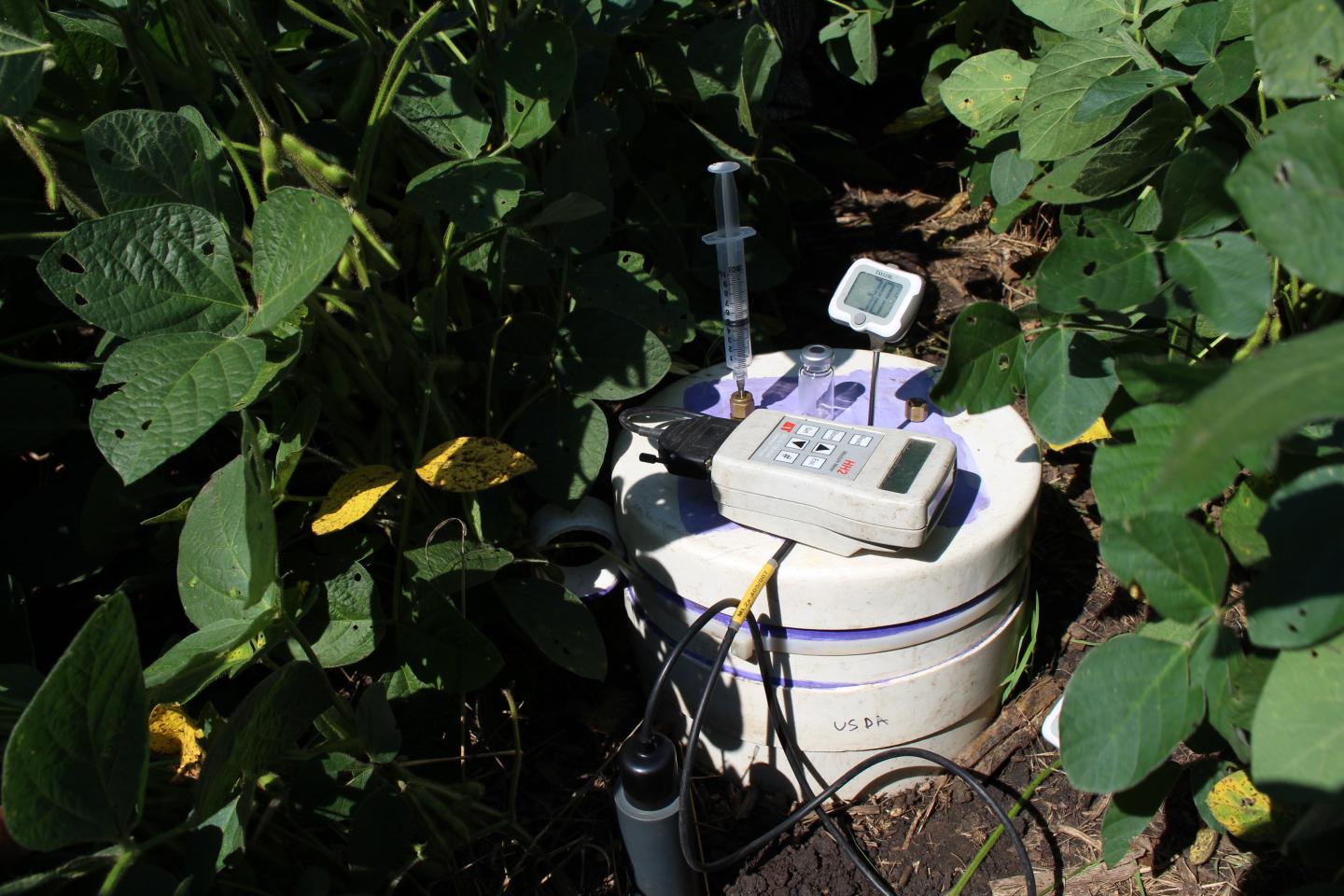
IMAGE

Credit: Sandeep Kumar and team.

In a newly published study, researchers dug into how fertilizing with manure affects soil quality, compared with inorganic fertilizer.

Ekrem Ozlu of the University of Wisconsin-Madison and his team studied two fields in South Dakota. From 2003 to 2015, the research team applied either manure or inorganic fertilizer to field plots growing corn and soybeans. They used low, medium, and high manure levels, and medium and high inorganic fertilizer levels. They also had a control treatment of no soil additives to provide a comparison.

In the summer of 2015, they collected soil samples at a variety of depths using a push probe auger. Then they analyzed the samples.

    >>Manure helped keep soil pH–a measure of acidity or alkalinity–in a healthy range for crops. Inorganic fertilizer made the soil more acidic.

    >>Manure increased soil organic carbon for all the measured soil depths compared to inorganic fertilizer and control treatments. More carbon means better soil structure.

    >>Manure significantly increased total nitrogen compared to fertilizer treatments. Nitrogen is key to plant growth.

    >>Manure increased water-stable aggregates. These are groups of soil particles that stick to each other. Increased water-stable aggregates help soil resist water erosion. Inorganic fertilizer application decreased these aggregates.

    >>Manure increased soil electrical conductivity at all soil depths in comparison to inorganic fertilizer and control treatments. Higher soil electrical conductivity means higher salt levels in the soil.

Ozlu and his team concluded that long-term annual application of manure improved most soil quality properties compared to inorganic fertilizer. "Increased electrical conductivity is one of the few negative impacts of manure," Ozlu said.

The team also measured the effects of larger and smaller doses of each treatment at different soil depths. This will provide useful guidance to growers.

So, what could a backyard gardener learn from this study? Ozlu said, "I recommend gardeners use composted manure, especially in solid form, because manure is the fertilizer that supports better soil quality by improving almost all soil properties. Inorganic fertilizer is better in terms of electrical conductivity, but it does not improve other soil properties and crop yields better than manure."

Ozlu concluded, "If you think of soil as a heart, manure is the lifeblood going through it."

This is a poetic view of manure, to be sure. But perhaps this humble yet enormously useful substance deserves a little poetry.

###

Sandeep Kumar of South Dakota State University contributed to this research. It is published in Soil Science Society of America Journal. This research work was partially supported by the Agricultural Experiment Station (AES) of South Dakota State University (SDSU), and the General Directorate of Agricultural Research and Policies, Ministry of Food, Agriculture, and Livestock, Republic of Turkey.

Media Contact

Susan Fisk
[email protected]
608-273-8091
@ASA_CSSA_SSSA

http://www.agronomy.org

Related Journal Article

http://dx.doi.org/10.2136/sssaj2018.02.0082

Share12Tweet8Share2ShareShareShare2

Related Posts

On-Demand Growth of Liver Tissue Directly Within the Body

On-Demand Growth of Liver Tissue Directly Within the Body

April 17, 2026
Conserved DNA Architect Links Chloroplasts to Cell Cycle

Conserved DNA Architect Links Chloroplasts to Cell Cycle

April 17, 2026

UTS Study Reveals Toxic Metal Exposure from E-Cigarette Devices

April 17, 2026

Can Exercise Help You Beat Stress Hormones? New Insights from a Clinical Trial

April 17, 2026
Please login to join discussion

POPULAR NEWS

  • Scientists Investigate Possible Connection Between COVID-19 and Increased Lung Cancer Risk

    62 shares
    Share 25 Tweet 16
  • NSF funds machine-learning research at UNO and UNL to study energy requirements of walking in older adults

    100 shares
    Share 40 Tweet 25
  • Boosting Breast Cancer Risk Prediction with Genetics

    47 shares
    Share 19 Tweet 12
  • Popular Anti-Aging Compound Linked to Damage in Corpus Callosum, Study Finds

    46 shares
    Share 18 Tweet 12

About

We bring you the latest biotechnology news from best research centers and universities around the world. Check our website.

Follow us

Recent News

Cadmium Exposure Boosts Metallothionein, Oxidative Damage Markers

Wearable Sensors Track Parkinson’s Progression Accurately

Global Inequities Shape Neonatal Survival Limits

Subscribe to Blog via Email

Enter your email address to subscribe to this blog and receive notifications of new posts by email.

Join 79 other subscribers
  • Contact Us

Bioengineer.org © Copyright 2023 All Rights Reserved.

Welcome Back!

Login to your account below

Forgotten Password?

Retrieve your password

Please enter your username or email address to reset your password.

Log In
No Result
View All Result
  • Homepages
    • Home Page 1
    • Home Page 2
  • News
  • National
  • Business
  • Health
  • Lifestyle
  • Science

Bioengineer.org © Copyright 2023 All Rights Reserved.