


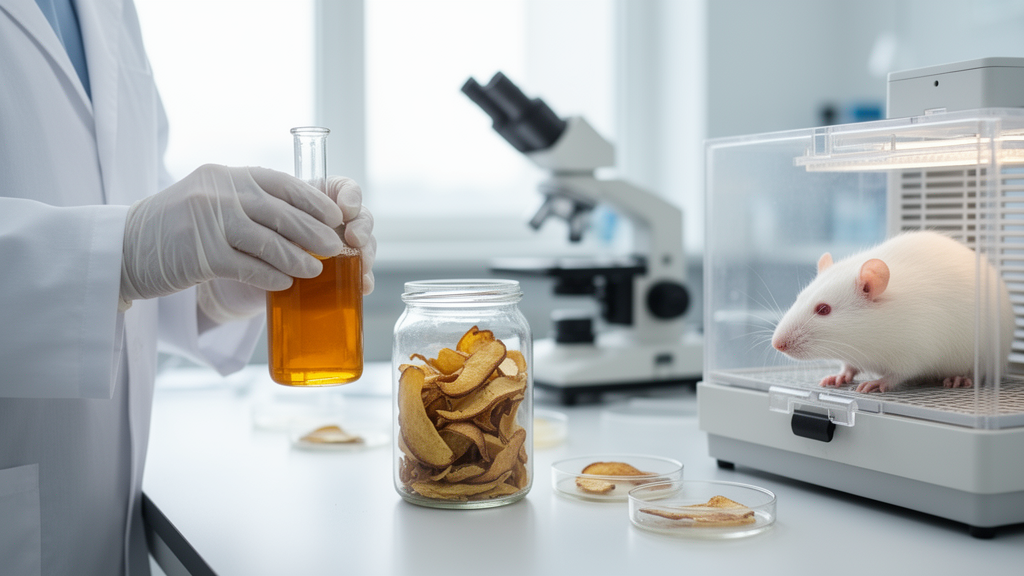
Food processing waste may be hiding a liver remedy. In a study published in Food Production, Processing and Nutrition, researchers in Thailand report that an extract of potato peel fermented with the fungus Rhizopus oryzae reduced hepatic fat accumulation, improved blood lipid profiles, and blunted oxidative stress in rats made obese with a high-fat diet. The work positions one of the world’s most abundant agro-industrial by-products as a candidate functional ingredient against metabolic dysfunction-associated steatotic liver disease, or MASLD, though the findings remain at the animal-model stage and have not yet been tested in humans.
MASLD is defined by excessive lipid accumulation in the liver alongside at least one cardiometabolic risk factor. Its global prevalence is estimated at roughly 38 percent and is expected to rise, with about 75 percent of cases occurring in people with obesity. Left unchecked, the condition can progress to metabolic dysfunction-associated steatohepatitis, an inflammatory stage marked by hepatocellular injury that may advance to cirrhosis and hepatocellular carcinoma. Current pharmacological options remain limited; the authors note that existing drugs show only partial efficacy evidence and uncertain long-term safety, while resmetirom, the agent approved for MASLD and MASH, faces constraints of limited clinical efficacy and high cost.
The rationale for looking at potato peels rests on their chemistry. Potato peel extract contains polyphenols, chlorogenic acid, policosanol, fatty acids, and dietary fiber. Polyphenols have been reported to reduce hepatic lipid accumulation and oxidative stress in high-fat diet-fed rats, and policosanol, a plant wax-derived mixture of long-chain aliphatic alcohols, has been studied as a lipid-lowering agent. The team’s key twist was bioprocessing: fermentation with Rhizopus oryzae, a strain isolated from sweet fermented glutinous rice, a traditional Thai food. Prior work has shown that such fermentation enhances the quantity and activity of bioactive compounds, particularly phenolics, by breaking down plant cell walls through fungal enzymes such as beta-galactosidase, beta-glucosidase, cellulases, and pectinase.
The analytical data supported that premise. Unfermented potato peel extract contained octacosanol at 19.07 plus or minus 0.31 micrograms per gram; after fermentation the concentration rose significantly to 26.11 plus or minus 1.04 micrograms per gram. Chlorogenic acid showed an even starker jump, from 0.02 plus or minus 0.02 milligrams per gram in unfermented extract to 1.52 plus or minus 0.14 milligrams per gram after fermentation. Fermented extract carried a total phenolic content of 38.65 plus or minus 2.643 milligrams of gallic acid equivalents per gram and displayed radical-scavenging capacity in ABTS and hydrogen peroxide assays, although its half-maximal inhibitory concentrations were weaker than those of the Trolox and ascorbic acid standards.
The animal work proceeded in two phases. Male Sprague-Dawley rats were fed a high-fat diet for four weeks to induce obesity, then divided into five groups of seven to eight animals: a normal-diet control, an untreated high-fat diet group, and three treated groups receiving the high-fat diet plus either 100 or 200 milligrams per kilogram body weight of fermented potato peel extract, or 20 milligrams per kilogram of policosanol as a positive control. Treatment continued for four weeks. In a separate short-term oral fat tolerance test with three rats per group, a single 100 milligrams per kilogram dose of the extract produced a transient rise in blood triglycerides at two hours after olive oil administration, but triglyceride levels then declined steadily toward baseline, and overall levels across the observation period were significantly lower than in controls.
After the four-week intervention, the metabolic picture shifted markedly. All treatment groups lost final body weight relative to the untreated high-fat diet group, and adiposity index, liver weight, and liver index all fell significantly. Serum triglyceride, total cholesterol, and LDL levels, which were elevated in the high-fat diet group, dropped significantly with both extract doses and with policosanol, while HDL rose. Within the liver itself, free fatty acids, triglycerides, and total cholesterol all declined in treated animals. Histological examination told the same story: the pale, fat-infiltrated livers of the high-fat diet group gave way to reduced macrovesicular steatosis, lobular inflammation, and ballooning in treated rats, reflected in significantly lower NAFLD activity scores. Notably, treated groups still scored higher than normal-diet controls, indicating improvement rather than full reversal.
The mechanistic analysis traced these changes to coordinated shifts in gene and protein expression. The high-fat diet raised hepatic Cd36 expression, the gene encoding the transporter that shuttles free fatty acids into hepatocytes, and both extract doses and policosanol significantly lowered it. Lipogenic machinery was dialed down as well: protein levels of acetyl-CoA carboxylase and fatty acid synthase, key enzymes of triglyceride synthesis, fell after treatment, and mRNA of Hmgcr, encoding the rate-limiting enzyme of cholesterol biosynthesis, was significantly downregulated. Expression of the LDL receptor, suppressed by the high-fat diet, rose significantly with the 200 milligrams per kilogram dose, a change the authors link to enhanced clearance of circulating cholesterol. Meanwhile, genes governing fatty acid oxidation, Ppara, Cpt1a, Hadha, and Acaa2, all suppressed by the high-fat diet, were significantly upregulated across treatment groups.
Bile acid metabolism emerged as a third lever. Hepatic expression of Cyp7a1, which encodes cholesterol 7-alpha-hydroxylase, the rate-limiting enzyme converting cholesterol into bile acids, and of Bsep, the bile salt export pump, were both depressed by the high-fat diet and significantly restored by treatment. Interestingly, fecal triglyceride and cholesterol levels decreased rather than increased in treated rats, leading the authors to conclude that the extract enhances hepatic cholesterol elimination through bile acid synthesis and secretion rather than by flushing fat into the feces. On the oxidative stress front, the high-fat diet downregulated the transcription factor Nrf2 and reduced activities of superoxide dismutase, catalase, and glutathione peroxidase in liver and serum, while malondialdehyde, a lipid peroxidation marker, climbed. The extract reversed each of these: Nrf2 protein rose, antioxidant enzyme activities increased significantly, and malondialdehyde levels fell in both liver and serum.
The authors attribute these effects plausibly to chlorogenic acid, which prior studies have shown to stimulate PPAR-alpha-dependent fatty acid oxidation, suppress Cd36 via PPAR-gamma inhibition, enhance LDL receptor expression in HepG2 cells, and activate Nrf2 by modifying its cytoplasmic repressor Keap1. Policosanol may contribute through HMGCR downregulation. Importantly, the extract matched policosanol on most measured parameters and exceeded it in LDL receptor upregulation, suggesting that the mixture of phytochemicals in fermented peel acts additively or synergistically. The study does have acknowledged limitations: the authors did not comprehensively compare pre- and post-fermentation extracts on all compounds and antioxidant measures, and they lacked a comparison with conventional extraction without ultrasound. Doses were also extrapolated from prior rodent studies rather than established for potato peel itself.
Even with those caveats, the study adds a data point to a growing effort to convert food processing waste into value-added ingredients. Potato peels are typically discarded in environmentally harmful ways, and the authors frame their fermentation-and-extraction pipeline as a dual win: waste valorization paired with a plausible nutraceutical candidate. Whether fermented potato peel extract can deliver comparable benefits in humans, at what dose, and with what safety profile, remains entirely open. For now, the claim that can be made is a measured one: in a rat model of diet-induced obesity, a fermented agricultural by-product modulated the molecular pathways of hepatic fat handling and antioxidant defense in ways consistent with reduced steatosis, and it did so at least as well as a purified comparator compound already present in the peel itself.
Subject of Research: Effects of fermented potato peel extract on hepatic steatosis and oxidative stress in obese rats
Article Title: Effects of bioprocessed potato peel extract on hepatic steatosis in obese rats: modulation of lipid metabolism, bile acid synthesis, and oxidative stress
Article References: Sae-jong, S., Sutthiwong, N., Jako, P., Phoungpetchara, I., Malakul, W., & Tunsophon, S. (2026). Effects of bioprocessed potato peel extract on hepatic steatosis in obese rats: modulation of lipid metabolism, bile acid synthesis, and oxidative stress. Food Production, Processing and Nutrition, 8(1), Article 67. https://doi.org/10.1186/s43014-026-00420-w
Image Credits: AI Generated
DOI: 10.1186/s43014-026-00420-w
Keywords: MASLD, potato peel extract, Rhizopus oryzae, fermentation, hepatic steatosis, lipid metabolism, bile acids, oxidative stress, Nrf2, chlorogenic acid, high-fat diet, functional food
News Source: Daisy Hatcher. (October 29, 2026). Fermented Potato Peel Extract Eased Fatty Liver Disease in Obese Rats. Scienmag.



