• HOME
  • NEWS
  • EXPLORE
    • CAREER
      • Companies
      • Jobs
    • EVENTS
    • iGEM
      • News
      • Team
    • PHOTOS
    • VIDEO
    • WIKI
  • BLOG
  • COMMUNITY
    • FACEBOOK
    • INSTAGRAM
    • TWITTER
Tuesday, June 30, 2026
BIOENGINEER.ORG
No Result
View All Result
  • Login
  • HOME
  • NEWS
  • EXPLORE
    • CAREER
      • Companies
      • Jobs
        • Lecturer
        • PhD Studentship
        • Postdoc
        • Research Assistant
    • EVENTS
    • iGEM
      • News
      • Team
    • PHOTOS
    • VIDEO
    • WIKI
  • BLOG
  • COMMUNITY
    • FACEBOOK
    • INSTAGRAM
    • TWITTER
  • HOME
  • NEWS
  • EXPLORE
    • CAREER
      • Companies
      • Jobs
        • Lecturer
        • PhD Studentship
        • Postdoc
        • Research Assistant
    • EVENTS
    • iGEM
      • News
      • Team
    • PHOTOS
    • VIDEO
    • WIKI
  • BLOG
  • COMMUNITY
    • FACEBOOK
    • INSTAGRAM
    • TWITTER
No Result
View All Result
Bioengineer.org
No Result
View All Result
Home NEWS Science News Chemistry

Female flies respond to sensation of sex, not just sperm

Bioengineer by Bioengineer
May 6, 2019
in Chemistry
Reading Time: 2 mins read
0
IMAGE
Share on FacebookShare on TwitterShare on LinkedinShare on RedditShare on Telegram

IMAGE

Credit: Igor Siwanowicz

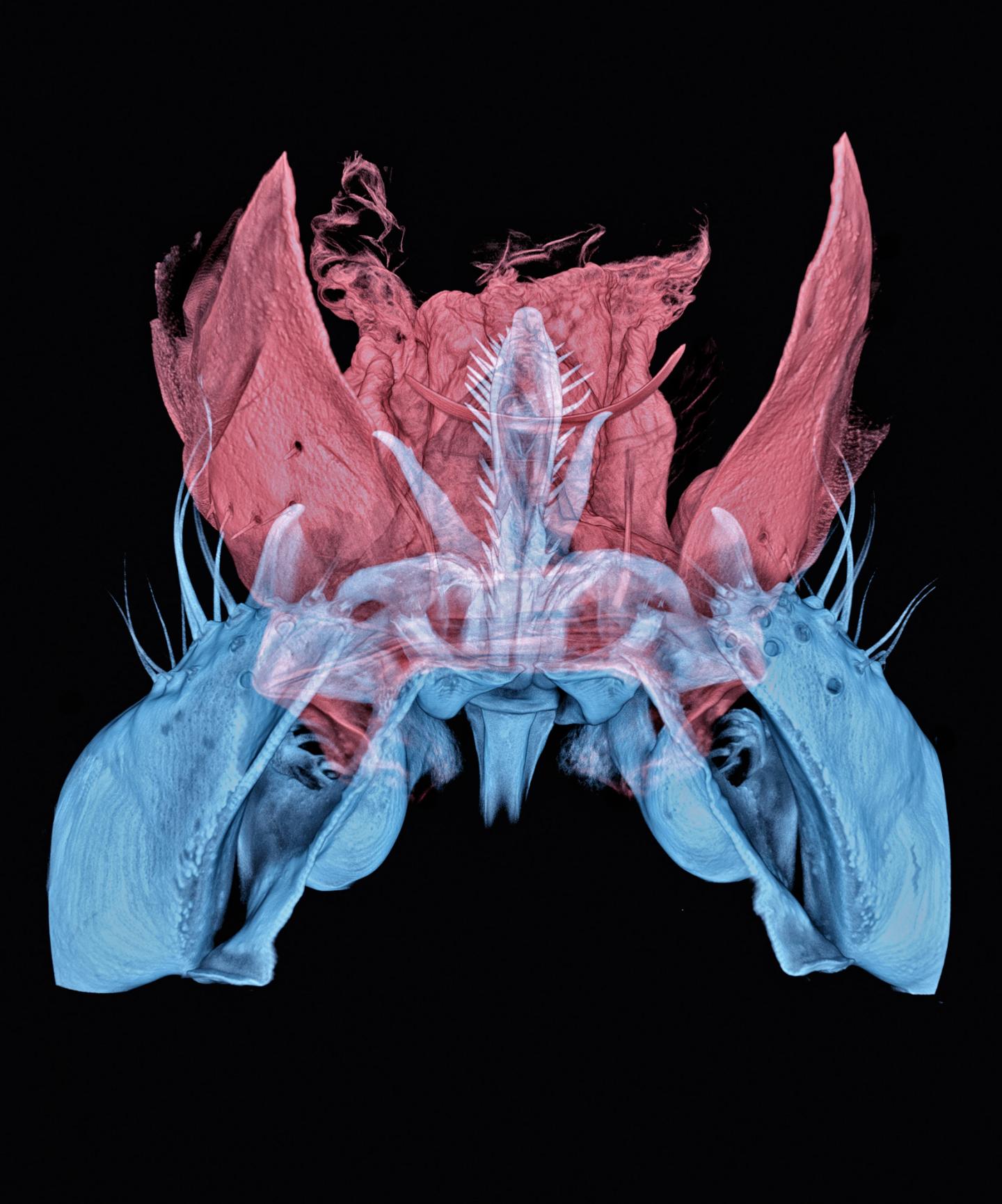
Female fruit flies can feel when a sexual partner is a good fit.

Scientists have long known that proteins in a male fly’s ejaculate make female flies temporarily lose interest in other partners. It’s a trick male flies use to raise the chance that eggs get fertilized with their sperm, not someone else’s. But a new study suggests that the sensation of sex – regardless of sperm – can also make females reject other partners, researchers report May 6, 2019, in the journal Neuron.

It could be a quick way a female fly determines whether she should keep trying to mate or whether she can take a break, says study coauthor Ulrike Heberlein, a senior fellow at the Howard Hughes Medical Institute’s Janelia Research Campus. When a female fly has uninterrupted sex, a pair of neurons exclusive to females carry the “stop mating” messages from sensory neurons in the abdomen up to the brain, the team found.

The phenomenon, dubbed the “copulation effect” might be especially important in the wild, where matings can be interrupted, says coauthor Lisha Shao, a research scientist in Heberlein’s lab at Janelia. A mechanism for a female fly to quickly detect that she has successfully mated could be a boon.

The finding was “a bit of an accident,” Heberlein says. She and Shao had initially been hunting for neurons involved in reward circuitry. They’d noticed that certain cells in female flies sent very strong reward messages to the brain when stimulated. But those cells didn’t even exist in males.

The cells must have some sex-specific role, the researchers suspected. In one experiment, they paired female fruit flies with males that couldn’t ejaculate. After mating, females lost interest in other males — even though they hadn’t received any sperm. But when Shao and Heberlein blocked the neurons’ activity, the female flies kept trying to mate. These cells seem to control a new way female flies determine they’ve successfully had sex, independent of the so-called “sperm effect.”

The sperm effect can kill females’ interest in mating for up to a week, but it takes a while to set in, Shao says. This new mechanism appears much more quickly, though it fades faster.

Now, the researchers are figuring out exactly how reward fits in ¬- their original goal. Male flies find mating rewarding only when they ejaculate, past research has shown, but females are more of a mystery, says Heberlein. “The next step is to understand whether sex is rewarding to females.”

###

Citation

Lisha Shao, Phuong Chung, Allan Wong, Igor Siwanowicz, Clement F. Kent, Xi Long, and Ulrike Heberlein. “A neural circuit encoding the experience of copulation in female Drosophila.” Neuron. Published online May 6, 2019.

Media Contact
Meghan Rosen
[email protected]

Tags: BiologyBiomechanics/BiophysicsDevelopmental/Reproductive Biology
Share12Tweet8Share2ShareShareShare2

Related Posts

AI and Physics Collaborate to Design Advanced Hydrogen Storage Materials

June 25, 2026

International Team Including Dresden Scientists Develops Novel Designer Proteins for Advanced Study of Living Tissue

June 25, 2026

New Study Uncovers Key Factors Driving Water Chemistry in Nanoscale Environments

June 25, 2026

Plasma Technology Extends Catalyst Lifespan in Hydrogen Production

June 24, 2026
Please login to join discussion

POPULAR NEWS

  • Saying Goodbye to PGY-6: Pediatric Fellowship Realities

    103 shares
    Share 41 Tweet 26
  • Multi-Hospital Study Reveals Long Covid Burden Is Twice as High as Current Estimates

    92 shares
    Share 36 Tweet 23
  • Detection of EDCs in Breast Milk and Infant Urine Up to Six Months Highlights Early Exposure Risks

    77 shares
    Share 31 Tweet 19
  • New Drug Candidate Developed at McMaster Shows Potential for Treating Brain Cancer

    58 shares
    Share 23 Tweet 15

About

We bring you the latest biotechnology news from best research centers and universities around the world. Check our website.

Follow us

Recent News

Tracking Lanthanide-Labeled Microplastics in Plants

POSTECH Researchers Slash Cost of Reconstituted Cell-Free Systems by 95%

AI and Physics Collaborate to Design Advanced Hydrogen Storage Materials

Subscribe to Blog via Email

Success! An email was just sent to confirm your subscription. Please find the email now and click 'Confirm' to start subscribing.

Join 82 other subscribers
  • Contact Us

Bioengineer.org © Copyright 2023 All Rights Reserved.

Welcome Back!

Login to your account below

Forgotten Password?

Retrieve your password

Please enter your username or email address to reset your password.

Log In
No Result
View All Result
  • Homepages
    • Home Page 1
    • Home Page 2
  • News
  • National
  • Business
  • Health
  • Lifestyle
  • Science

Bioengineer.org © Copyright 2023 All Rights Reserved.