• HOME
  • NEWS
  • EXPLORE
    • CAREER
      • Companies
      • Jobs
    • EVENTS
    • iGEM
      • News
      • Team
    • PHOTOS
    • VIDEO
    • WIKI
  • BLOG
  • COMMUNITY
    • FACEBOOK
    • INSTAGRAM
    • TWITTER
Sunday, September 27, 2026
BIOENGINEER.ORG
No Result
View All Result
  • Login
  • HOME
  • NEWS
  • EXPLORE
    • CAREER
      • Companies
      • Jobs
        • Lecturer
        • PhD Studentship
        • Postdoc
        • Research Assistant
    • EVENTS
    • iGEM
      • News
      • Team
    • PHOTOS
    • VIDEO
    • WIKI
  • BLOG
  • COMMUNITY
    • FACEBOOK
    • INSTAGRAM
    • TWITTER
  • HOME
  • NEWS
  • EXPLORE
    • CAREER
      • Companies
      • Jobs
        • Lecturer
        • PhD Studentship
        • Postdoc
        • Research Assistant
    • EVENTS
    • iGEM
      • News
      • Team
    • PHOTOS
    • VIDEO
    • WIKI
  • BLOG
  • COMMUNITY
    • FACEBOOK
    • INSTAGRAM
    • TWITTER
No Result
View All Result
Bioengineer.org
No Result
View All Result
Home NEWS Science News Biology

FEFU scientists are developing genetic methods to understand malignant tumors

Bioengineer by Bioengineer
August 31, 2020
in Biology
Reading Time: 2 mins read
0
IMAGE
Share on FacebookShare on TwitterShare on LinkedinShare on RedditShare on Telegram

IMAGE

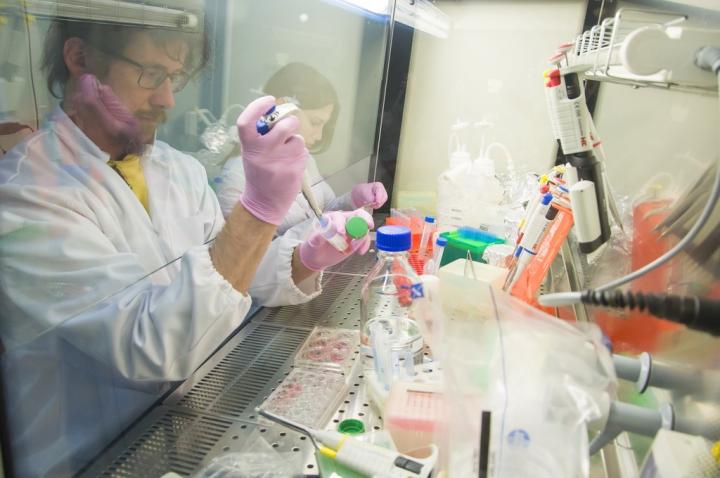
Credit: FEFU press office

Scientists of Far Eastern Federal University (FEFU University) get started studying the formation and survival mechanisms of the brain malignant tumors cells, i.e. glioma, to reveal new ways for diagnosis and therapy for this fatal disease. This research was supported by the grant from Russian Science Foundation (RSF).

Scientists of the School of Biomedicine (FEFU University) plan to reveal new markers to improve the efficacy of diagnosis of glioma, most common type of brain cancer. Understanding molecular mechanisms behind the tumor growth promises to point to new targets for the personalized therapy in the near future.

Researchers will design genetically modified models of brain tumors (gliomas), with and without most typical according to medical practice primary mutations of the IDH1 and TP53 genes. Scientists are also interested in the role of these mutations in the subsequent molecular changes and in the overall tumor development.

This research project uses glioma cells isolated from real patients. Scientists plan correcting IDH1 and TP53 genes mutated in tumors back into “wild”, unaltered genes, as well as introducing mutations into the these normal genes to mimic the tumor situation.

“Our ultimate goal is to identify new potential drug targets in tumor genes mutated and to establish new markers for more precise diagnostics. To do this, we will create laboratory models of the most frequent mutations in gliomas occurring in real life. Using such models, we hope not only to understand roles of mutations in the IDH1 and TP53 genes in tumor development but also to effectively test new antitumor compounds that can suppress the mechanisms of tumor cell survival triggered by mutations. If the study succeeds that willbe a huge step towards personalized therapy of gliomas based on the patient’s individual mutation profile”, said Alexander Kagansky, head of the grant research, who is leading the Center for Genomic and Regenerative Medicine at FEFU School of Biomedicine.

The study supported by Russian Science Foundation (RSF) will be carried out within 3 years in the frame of the priority area of the Strategy for Scientific and Technological Development of the Russian Federation, i.e. personalized medicine and high-tech healthcare. The project will be done in collaboration with Moscow Institute of Physics and Technology.

###

Media Contact
Alexander Zverev
[email protected]

Tags: BiochemistrycancerMedicine/Health
Share12Tweet8Share2ShareShareShare2

Related Posts

Amino Acids Emerge as Powerful Stress Shields for Farmed Fish

Amino Acids Emerge as Powerful Stress Shields for Farmed Fish

September 27, 2026
Ancient trees are not genetic treasure chests, swamp cypress study suggests

Ancient trees are not genetic treasure chests, swamp cypress study suggests

September 26, 2026

Scientists uncover a stress-triggered molecular switch that drives depression

September 26, 2026

Blocking the Growth Hormone Receptor Extends Mouse Lifespan, Landmark Study Finds

September 26, 2026
Please login to join discussion

POPULAR NEWS

  • Near-Perfect Long Reads Reveal Hidden Mosaicism Left Behind by CRISPR Gene Editing

    29 shares
    Share 12 Tweet 7
  • Machine Learning Meets Forensic DNA: SNPs That Identify Relatives and Separate East Asian Populations

    29 shares
    Share 12 Tweet 7
  • AI-Powered Virtual Screening Uncovers Potent New Dual CDK4/6 Cancer Inhibitor

    29 shares
    Share 12 Tweet 7
  • Oral Wnt-blocking pill plus lenvatinib shows promise in endometrial cancer after immunotherapy fails

    29 shares
    Share 12 Tweet 7

About

We bring you the latest biotechnology news from best research centers and universities around the world. Check our website.

Follow us

Recent News

Near-Perfect Long Reads Reveal Hidden Mosaicism Left Behind by CRISPR Gene Editing

Machine Learning Meets Forensic DNA: SNPs That Identify Relatives and Separate East Asian Populations

AI-Powered Virtual Screening Uncovers Potent New Dual CDK4/6 Cancer Inhibitor

Subscribe to Blog via Email

Success! An email was just sent to confirm your subscription. Please find the email now and click 'Confirm' to start subscribing.

Join 85 other subscribers
  • Contact Us

Bioengineer.org © Copyright 2023 All Rights Reserved.

Welcome Back!

Login to your account below

Forgotten Password?

Retrieve your password

Please enter your username or email address to reset your password.

Log In
No Result
View All Result
  • Homepages
    • Home Page 1
    • Home Page 2
  • News
  • National
  • Business
  • Health
  • Lifestyle
  • Science

Bioengineer.org © Copyright 2023 All Rights Reserved.