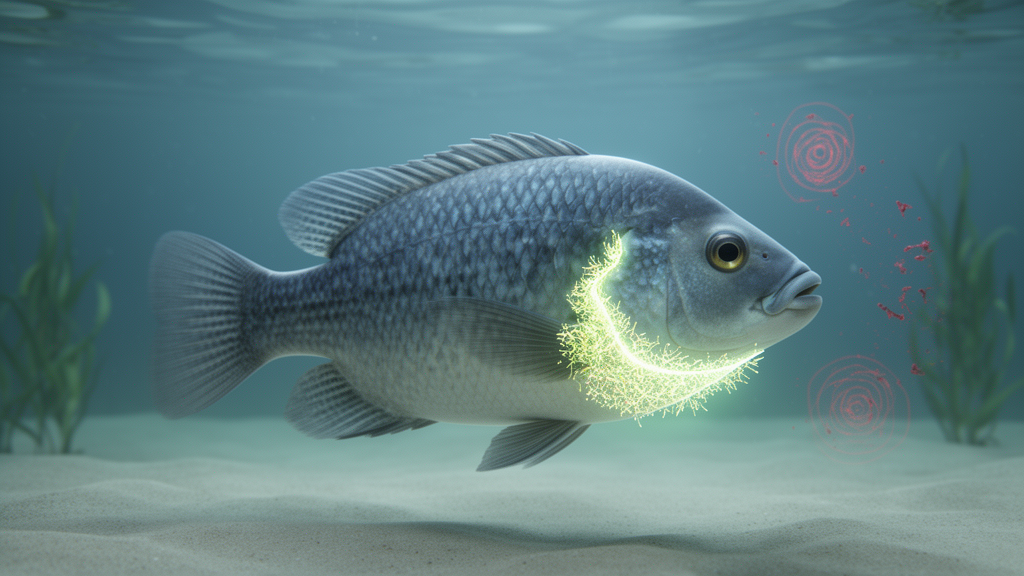
Diets supplemented with formic acid, black seed oil, or alpha-lipoic acid strengthened antioxidant defenses and immune responses in Nile tilapia and were associated with reduced transcript abundance of key virulence genes in Aeromonas hydrophila recovered from challenged fish, according to a study published in BMC Veterinary Research. The work, published on 23 October 2026 as an open-access research article, also reported reduced post-challenge mortality, particularly after 30 days of feeding, compared with a challenged basal-diet control.
The researchers compared the three functional additives against florfenicol, an antibiotic used as a reference treatment, in fish challenged intraperitoneally with A. hydrophila STN-1 at 1 × 10⁵ CFU/mL. The bacterial strain had been isolated from naturally diseased tilapia, molecularly identified, and deposited in GenBank under accession number PV866787. Fish were assigned to five dietary groups: a basal diet, or diets supplemented with florfenicol at 15 mg/kg body weight, formic acid at 10 mL/kg diet, black seed oil at 20 mL/kg diet, or alpha-lipoic acid at 600 mg/kg diet. Each group was fed for a short-term period of 15 days and a long-term period of 30 days before challenge.
Compared with the challenged basal-diet control, all three supplemented diets significantly increased catalase, superoxide dismutase, reduced glutathione, total antioxidant capacity, total protein, immunoglobulin M, and lysozyme activity (p < 0.05). The same diets significantly reduced malondialdehyde levels and improved liver and kidney function indicators (p < 0.05). At the molecular level, the supplemented diets were associated with significantly reduced transcript abundance of the virulence-associated genes hemolysin (hlyA) and aerolysin (aerA) in A. hydrophila recovered from the fish.
The three additives showed distinct profiles. Formic acid displayed the strongest in vitro antibacterial activity, alpha-lipoic acid exerted marked antioxidant effects, and black seed oil improved redox balance and immune responsiveness. Mortality after challenge was reduced in the supplemented groups, with the effect particularly pronounced after 30 days of feeding.
A. hydrophila is described in the study as a major opportunistic pathogen responsible for disease outbreaks and economic losses in Nile tilapia aquaculture. The authors state that the findings support formic acid, black seed oil, and alpha-lipoic acid as promising functional feed additives for enhancing host defense and reducing reliance on antibiotic-based disease control in tilapia aquaculture. The article is being shared early as a peer-reviewed, accepted manuscript carrying a permanent DOI, subject to further edits before the final Version of Record.
Subject of Research: Dietary formic acid, black seed oil and alpha-lipoic acid in Nile tilapia challenged with Aeromonas hydrophila
Article Title: Functional dietary additives enhance host defense and modulate virulence associated-gene transcript abundance in Aeromonas hydrophila-challenged Nile tilapia
Article References: Seoud, S. S., Hussein, E.-S. A.-S., Refaey, M. M., Elshopakey, G. E., & Abdelkhalek, N. K. (2026). Functional dietary additives enhance host defense and modulate virulence associated-gene transcript abundance in Aeromonas hydrophila-challenged Nile tilapia. BMC Veterinary Research. https://doi.org/10.1186/s12917-026-05937-3
Image Credits: AI Generated
DOI: 10.1186/s12917-026-05937-3
Keywords: Nile tilapia, Aeromonas hydrophila, formic acid, black seed oil, alpha-lipoic acid, aquaculture, functional feed additives, virulence genes, antioxidant defense, immunoglobulin M, lysozyme, florfenicol
News Source: Juliet Wilcox. (October 29, 2026). Feed Additives Boost Tilapia Defenses and Dampen Virulence Genes in Challenged Fish. Scienmag.