


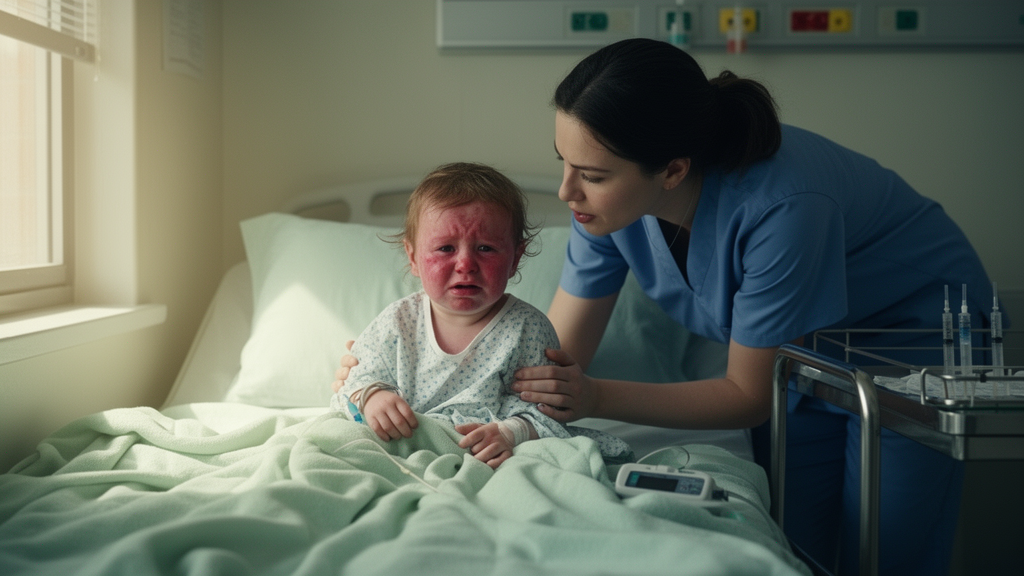
One in six children experienced emergence agitation after elective general anaesthesia at a tertiary hospital in a low- and middle-income country, according to a prospective observational study published in BMC Anesthesiology. Among 119 children aged 1 to 18 years followed over one year, agitation occurred in 19 cases, an incidence of 16.0 percent with a 95 percent confidence interval of 10.5 to 23.6. The rate was 19.7 percent in children aged 1 to 6 years and 11.3 percent in those aged 7 to 18 years. The study was conducted at a single tertiary centre and was sized to estimate incidence, with the analysis of associated factors described as exploratory.
Emergence agitation is a frequent disturbance during recovery from general anaesthesia in children, and reported incidence varies widely in the literature. Data from low- and middle-income countries have been limited, which the researchers cite as a gap this study addresses. The condition manifests as disturbed behaviour during emergence from anaesthesia, and its measurement in this study relied on a standardised scoring tool applied during the recovery period.
The study defined emergence agitation as a Paediatric Anaesthesia Emergence Delirium score of 12 or higher, and reported incidence with a 95 percent confidence interval. Postoperative pain was assessed using the FLACC scale or a numerical rating scale according to age. Preoperative anxiety was screened across generalised anxiety, social phobia and separation anxiety domains using age- and gender-normed T-scores. Group comparisons used chi-square, Fisher exact and Mann-Whitney U tests, and factors associated with agitation were examined using multivariable modified Poisson regression with robust error variance, reporting crude and adjusted relative risks with 95 percent confidence intervals.
On univariable analysis, social phobia, shorter fasting, postoperative pain, anaesthesia-naïve status and surgical specialty were associated with emergence agitation. After multivariable adjustment, three factors remained associated: postoperative pain carried an adjusted relative risk of 3.72 (95 percent CI 1.47 to 9.42, p = 0.006), shorter fasting duration showed an adjusted relative risk of 0.81 per hour (95 percent CI 0.68 to 0.97, p = 0.021), and surgery in a combined orthopaedic, ophthalmic and oral maxillofacial category carried an adjusted relative risk of 2.54 (95 percent CI 1.14 to 5.65, p = 0.022).
Social phobia was associated with emergence agitation in the crude analysis but not after adjustment. Age, gender, volatile agent and airway device showed no association with the outcome. The authors note that pain was recorded concurrently with the outcome, so this association is concurrent rather than predictive, and that the inverse association with fasting duration remains unexplained. These exploratory findings, they conclude, require confirmation in adequately powered multicentre studies.
The study’s single-centre design and modest sample of 119 children limit the precision of the estimates, as reflected in the wide confidence interval around the 16.0 percent incidence figure. Because the analysis of associated factors was exploratory rather than powered, the adjusted relative risks should be interpreted with caution. The concurrent measurement of pain means the temporal relationship between pain and agitation cannot be established from these data, and the authors explicitly flag the unexplained direction of the fasting association.
The findings add to a small but growing evidence base on emergence agitation in low- and middle-income settings, where previously reported incidence figures have varied widely. Similar recent work in other paediatric surgical populations has examined the magnitude of emergence agitation and its associated factors, as well as prevalence in children undergoing ophthalmic and ENT surgery, though those studies used different designs and populations. The present study’s use of a standardised Paediatric Anaesthesia Emergence Delirium threshold of 12 or higher provides a consistent definition against which future multicentre comparisons can be made.
For anaesthesia teams in comparable settings, the results identify postoperative pain management and surgical specialty as factors that remained associated with agitation after adjustment, while suggesting that preoperative social phobia screening may not independently predict the outcome once other variables are accounted for. The authors emphasise that confirmation in adequately powered multicentre studies is needed before these associations can be considered established. The study was published as open access on 22 October 2026 and is citable under a permanent DOI, with the final version of record to follow.
Subject of Research: Incidence of and factors associated with emergence agitation in children after elective general anaesthesia at a tertiary hospital in a low- and middle-income country
Article Title: Incidence and factors associated with emergence agitation among children following general anaesthesia: a prospective observational study from an LMIC tertiary hospital
Article References: Sharafat, M. A., Ilyas, S., Mirza, H., Inam, M. A., Khan, A. A., Sohaib, M., Ghaffar, W. B., & Dogar, S. A. (2026). Incidence and factors associated with emergence agitation among children following general anaesthesia: a prospective observational study from an LMIC tertiary hospital. BMC Anesthesiology. https://doi.org/10.1186/s12871-026-04254-4
Image Credits: AI Generated
DOI: 10.1186/s12871-026-04254-4
Keywords: emergence agitation, paediatric anaesthesia, general anaesthesia, postoperative pain, preoperative fasting, social phobia, modified Poisson regression, LMIC tertiary hospital, prospective observational study, Paediatric Anaesthesia Emergence Delirium, BMC Anesthesiology, surgical specialty
News Source: Ophelia Keating. (October 30, 2026). Emergence agitation hits one in six children after general anaesthesia in LMIC study. Scienmag.



